
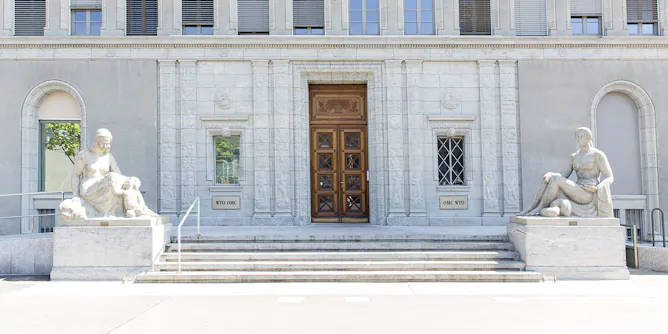
The president again threatened to drop out of the World Trade Organization if it doesn’t ‘shape up.’ But a careful review of case filings show the US isn’t treated any differently than its other members.
Articles on Free trade agreement
Displaying 21 - 40 of 92 articles
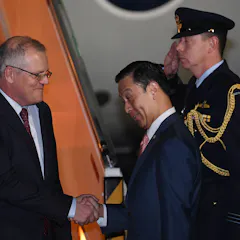
Under the free trade agreement, Australian universities will be able to have majority ownership of an Indonesian university.
Trump has often talked about leaving the World Trade Organization. An economist explains what it is and what would happen if the president had his way.
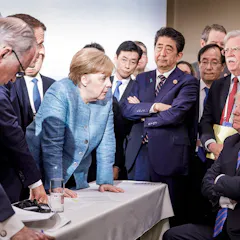
International trade policy requires three traits to be successful and lead to mutual prosperity. Trump’s is missing all three, as he showed at the G-7 summit.
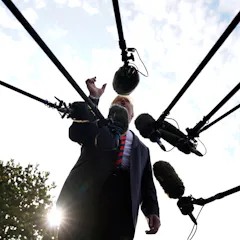
A political scientist and economist explores the causes and consequences of Trump’s scattershot trade policy.

Smaller Australian businesses are more productive than larger ones, but have disproportionately low levels of exports and wages.
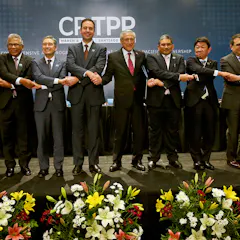
Trump, who withdrew the US from the Trans-Pacific Partnership when he became president, briefly appeared to consider joining the trade accord again.
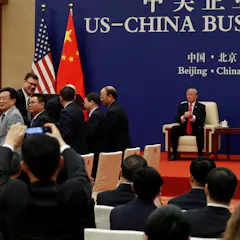
A closer look at the US-China trade relationship shows why Trump’s ‘targeted’ tariffs are likely to hurt American workers and businesses as well.

Continental free trade area’s potential impact includes boosting intra-Africa trade, manufacturing exports, job creation and poverty alleviation.

While the tariffs are unlikely to stem Chinese intellectual property theft or reverse the steep trade deficit, they are certain to hurt American companies and consumers.
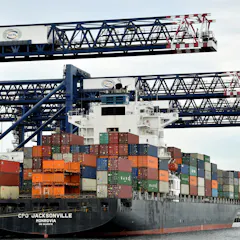
Smaller businesses contribute a huge amount of Australia’s national output but a tiny proportion of our exports.

American lawmakers in the 1930s learned the hard way what happens when a country raises tariffs and makes other unilateral trade decisions.
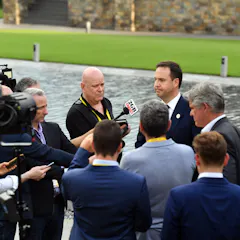
Many provisions in the Trans-Pacific Partnership have been suspended after the United States pulled out. But there’s still much to debate about the regional free trade agreement.

New Zealand is currently pushing to certify and protect Manuka honey. Should Australia follow suit with King Island Beef?
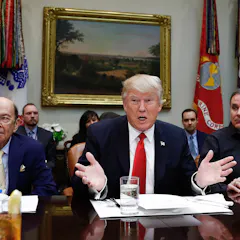
The Trump administration’s new deal with China, which won’t benefit many workers, shows the pitfalls of pursuing bilateral agreements at the expense of multilateral ones like NAFTA.

The need to connect African markets to aid development will once again be discussed at the World Economic Forum. The debate needs to move beyond the usual rhetoric.
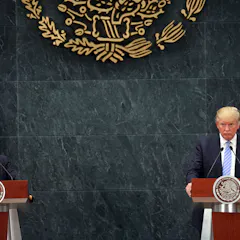
A former ambassador to Mexico explains how Trump’s rhetoric is sparking a backlash that could endanger U.S. economic and national security.
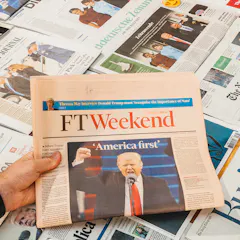
Trump’s ‘America first’ rhetoric implies that the internationalism and ‘enlightened self-interest’ that built the postwar order was a big mistake. The evidence and basic economics disagree.
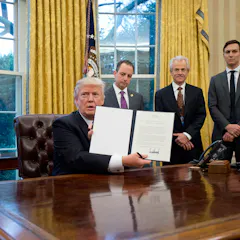
Trump formally pulled out of the Trans-Pacific Partnership and signaled his intention to begin renegotiating NAFTA. Here’s some context.
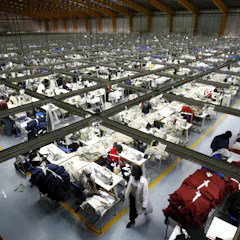
Africa needs to learn from the experiences of others who have negotiated free trade pacts. In particular it needs to ensure its process is inclusive and does not pander to a few special interests.
Top contributors
-

Associate Professor of Political Science, Georgia State University
-
Honorary research associate, University of Sydney
-
Professor of Public Health, La Trobe University
-
Assistant Professor of Economics, University of California, Merced
-
Director and Professor, Australia-China Relations Institute (UTS:ACRI), University of Technology Sydney
-
Associate Professor of Economics, Dartmouth College
-
Professor of International Relations, American University School of International Service
-
Associate Professor, Political Science, Bryant University
-
Lecturer in Economics, Bachelor of International Business, Monash Business School, Monash University
-
Fellow, Australian National University
-
Adjunct professor, Department of Health Policy & Management, George Washington University
-
Industry Professor and Chief Economist, University of Technology Sydney
-
Adjunct Associate Professor at the Centre for International Security Studies, University of Sydney
-
Associate Professor, Department of Political Economy, University of Sydney
-
Director of the Center for Latin American Studies and Professor of Letters and Science, University of California, Berkeley