

Growing use of technology and our willingness to trust it is putting Australians at greater risk of being scammed.
Articles on Fraud
Displaying 41 - 60 of 246 articles

Super funds may be missing a basic safeguard to protect retirement savings.

To ensure the civil service is staffed by qualified people, human resource management in the public sector must be professional.

The final part of our Scam Factories podcast series, tracks how people escape from Southeast Asia’s brutal scamming compounds.

The second episode of Scam Factories, a podcast series from The Conversation Weekly taking you inside Southeast Asia’s brutal fraud compounds.

The first episode of Scam Factories, a three part podcast series from The Conversation Weekly taking you inside Southeast Asia’s brutal fraud compounds.
People around the world have lost billions of dollars to scams. But the scammers are often victims, too. We’re taking you inside their world.

The world’s library of scientific papers is becoming contaminated as fraudsters use ‘paper mills’ to game scholarly publishing for profit.

Science sleuths are stepping up efforts to detect bogus science papers. This includes building tools that comb through millions of journal articles for signs of tortured phrases spawned by AI.
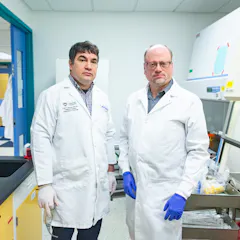
‘Paper mills’ are contaminating the world’s scholarly output with fake papers that hinder research. Lifesaving biomedical fields are especially hard hit.

Romance fraud affects both men and women. Victims are not naive, but often share similar psychological and behavioural profiles.

Today’s scams aren’t like yesteryear’s.

Seniors are vulnerable to fraud, especially when they have little social interaction and are not comfortable with technology. Here’s how to help them protect themselves.

Even an investor who lost US$1 million was willing to talk to Billy McFarland about Fyre Festival II

And why we need to rethink the way we report on this type of fraud.

The world of romance scams – when people exploit a relationship for financial gain or other crimes – is brutal. Raising awareness can help everyone stay safe.
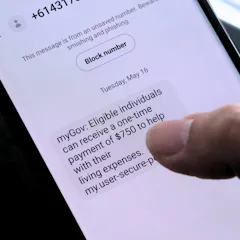
Has anyone tried to hack into your account, or have you received fake myGov messages? It’s that time of year.

Next time you go shopping, leave your checkbook at home.

Scholars have long measured the impact of a paper by counting the number of times other scientific articles cite it. Researchers have just detected a new kind of citation fraud.

Unfortunately, there’s no cure for scammers – but you can build immunity against them.
Top contributors
-

Associate Dean (Learning & Teaching) Faculty of Creative Industries, Education and Social Justice, Queensland University of Technology
-
Professor, Research Centre for Business in Society, Coventry University
-
Associate Professor of Accounting, University of Dayton
-
Associate professor, Département des sciences comptables, Université du Québec à Montréal (UQAM)
-
Professor of Sociology (Criminology, Victimology and Security Studies), University of Ibadan
-
Professor of Psychology, Scripps College
-
Professor of Security and Fraud, University of Portsmouth
-
Professor of Computer Science, Institut de Recherche en Informatique de Toulouse
-
Lecturer, Chinese Studies, The University of Melbourne
-
PhD Candidate in Technology Facilitated Modern Slavery, Ca' Foscari University of Venice
-
Host, The Conversation Weekly Podcast, The Conversation
-
Associate Professor of Business, Boston University
-
Professor in Accounting (forensic accounting), Université du Québec à Montréal (UQAM)
-
Senior Lecturer, Department of Psychology, Aberystwyth University
-
Professor of Computer Science, Université Grenoble Alpes (UGA)