

Fanon’s famous book was translated to isiZulu by South African writer and scholar Makhosazana Xaba.
Articles on Frantz Fanon
Displaying 1 - 20 of 32 articles

A psychiatrist and revolutionary, Frantz Fanon wrote fiercely against racism and colonialism. His ideas continue to inform political movements yet his misogyny and embrace of violence are problematic.

Opinions differ widely about the true character of the EFF and what it really stands for since it gained seats in parliament in 2014.

The founding story of Museveni’s government remains persuasive for a great many people 37 years later.

Art stolen from African kingdoms is a knowledge system plundered by colonialists, who must take historical responsibility.
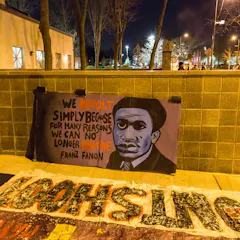
Fanon left a remarkable imprint, his views influencing many in the field of mental illness as well as pan-Africanist and anti-colonialism thinkers.

When a patriarchal society is combined with a history of colonialism, women in that country are at heightened risk of gender-based violence.
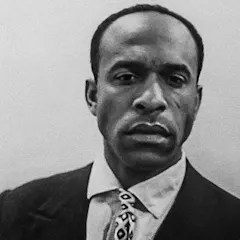
Fanon was brutally honest in his criticism of militants and Africa’s post-independence elites.

There is no linear approach to the process of decolonisation. But any attempt must start with looking at how the internet spreads knowledge and ideas about Africa and Africans.

The White Lotus is a tense, new drama about the lives of the rich and privileged, set in a Hawaiian resort. But the protagonists are not lying around reading airport novels.

Former presidents Obasanjo and Mbeki have arguably made the most important contribution to Africa in the 21st Century by promoting peace, democracy, regional integration and pan-Africanism.

The Portuguese colonisers were not the only ones who could use radio for control. A new book tells how popular radio broadcasts from Angola’s liberation fighters were used as weapons in the struggle.
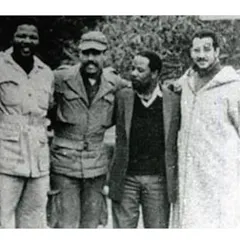
The Algerian revolution had a profound effect on both Mandela and Fanon’s thinking about colonisation, oppression and freedom.
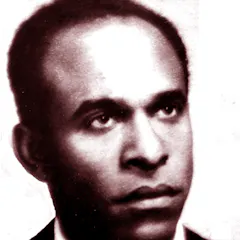
Fanon found in Algeria that what the colonial law courts considered a failure of integration by mental patients was in fact an elemental resistance to European rule.

Frantz Fanon recognised mental illness as a real experience and offered an understanding of it being influenced by society and culture.

Hollywood will allow the world of the Black Panther to be black, only if it doesn’t hurt white people’s feelings.

“Critique of Black Reason” offers readers insight into how the construction of race and racism underpins our understanding of modernity.

Universities play a major role in procuring the human and intellectual resources needed for fulfilling the various goals of the UN’s Agenda 2030.

World soccer is the story of hyper-capitalism. What would fan and revolutionary thinker Frantz Fanon have thought about the state of the sport?

Generational rebellion is an enduring feature of all societies. Indeed, it is the dynamic through which societies renew themselves and move forward.
Top contributors
-

Professor of Interdisciplinary Studies, Emerson College
-
Distinguished Reserach Professor, Southern Centre for Inequality Studies, University of the Witwatersrand
-
Professor of Psychology, University of the Witwatersrand
-
Senior Research Fellow, Institute of Commonwealth Studies, School of Advanced Study, University of London
-
Research fellow, University of the Free State
-
Professor of African Literature, University of the Witwatersrand
-
PhD student, UCL
-
South African visual artist and senior lecturer of Art History and Visual Culture at Rhodes University, Rhodes University
-
Lecturer in Political Science, Nelson Mandela University
-
Professor of Political Science and Chair of the South African Research Initiative in Gender Politics, Stellenbosch University
-
Assistant Professor in the history of Southern Africa, Durham University
-
Associate Professor, School of Education, Aarhus University
-
Associate professor, University of the Witwatersrand
-
Associate Professor in Politics, Rhodes University
-
PhD Candidate, University of the Witwatersrand