

The qualities forged by his intense involvement in the struggle for democratic practices shaped his approach to conflict and strife, wherever it occurred.
Articles on Steve Biko
Displaying 1 - 20 of 43 articles

Travelling remains time-consuming, precarious, and shockingly dangerous for most South Africans 30 years after apartheid has ended.
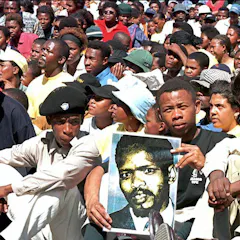
The history of scientific racism can help us to improve medical ethics.
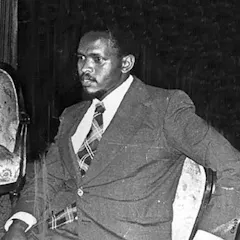
Steve Biko married reason with proselytising in ways that made him an excellent organiser. He understood the importance of organising and the need for faith in action.

Rick Turner and Steve Biko both critique the limitations of white liberalism, arguing that it fails to address the root causes of oppression.
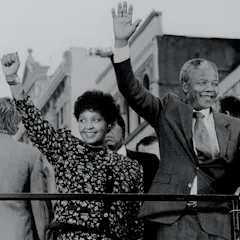
Would South Africa have been torn apart by civil war without the myth of Nelson Mandela?

Struggle songs are relevant even in the post apartheid context because they continue to be an important way in which people deliberate on issues.
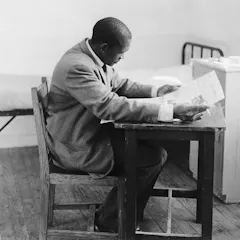
Robert Sobukwe was once perceived to possess more revolutionary potential than Nelson Mandela.
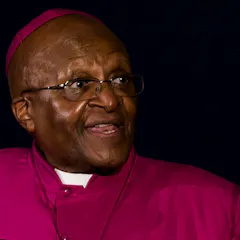
Archbishop Desmond Tutu didn’t stop his fight for human rights once apartheid came to a formal end in 1994. He continued to speak critically against politicians who abused their power.

Jackson Mthembu’s death drives home the seriousness of the COVID-19 pandemic in the country.
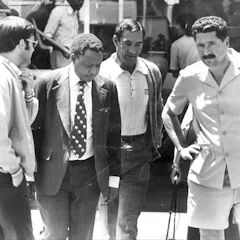
Journalists need to hold firmly to the ethical standards that assure audiences their work is reliable and credible.

His appearance on behalf of the families of mine workers shot by the police at the Marikana Commission of Inquiry was just one of his efforts to seek justice for the poor and marginalised.
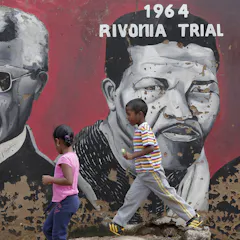
South Africa’s history shows that mobilising white privilege can be a useful tool for advancing the struggle against racism.

An ongoing study shows that storytelling can positively increase self-awareness in young people, especially if they can relate to the stories. But in Africa access to story platforms is limited.

It seems that former president FW De Klerk continues to find it hard to accept that apartheid was a crime against humanity.
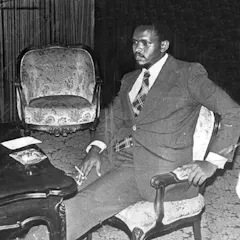
Black consciousness in South Africa changed blacks and whites.

The book depicts how Onkgopotse Tiro’s time at Turfloop amounted to a revolutionising political script for generations to come.
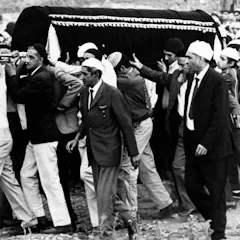
In South Africa’s criminal justice system post-1994, the Timol case is the first to enact what can be properly understood as restorative justice.

Political books touches a certain chord in South African society that makes them bestsellers.
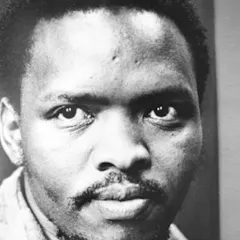
Fifty years after the founding of South African Students’ Organisation this anti-apartheid movement remains a model for student activists.
Top contributors
-

Political Scientist, University of the Western Cape
-
Distinguished Reserach Professor, Southern Centre for Inequality Studies, University of the Witwatersrand
-
Associate researcher, University of the Witwatersrand
-
Assistant Professor in the history of Southern Africa, Durham University
-
Professor of Urban Governance, University of the Witwatersrand
-
Professor of Public Affairs, Tshwane University of Technology
-
Senior Lecturer, Department of Historical and Heritage Studies, University of Pretoria
-
Senior Lecturer in History, University of Dundee
-
Associate Professor and Head of the Department of English Literary Studies, University of Cape Town
-
Visual/forensic artist, PhD researcher, Liverpool John Moores University
-
Associate Professor of Computer Science, Rhodes University
-
Senior Lecturer, Rhodes University
-
Professor of Political Science and Chair of the South African Research Initiative in Gender Politics, Stellenbosch University
-
Professor of African Literature, University of the Witwatersrand
-
Associate Professor in the Department of Journalism, University of the Witwatersrand