

The veil has long been a form of resistance.
Articles on Frantz Fanon
Displaying 21 - 32 of 32 articles
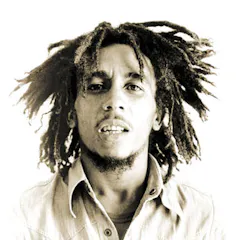
More than three decades after his death reggae icon Bob Marley’s music remains meaningful. It still has the potential to catalyse conversation not often had in the postcolonial world.
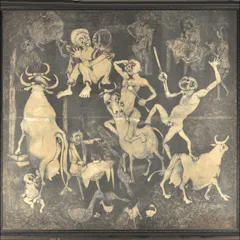
‘African Guernica’ is an incredibly powerful work of art in many ways, importantly filling that space between the visible and the visible.
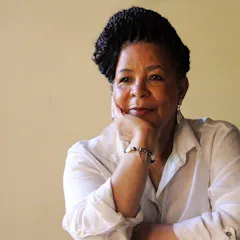
Qunta advocates a reparations fund to accelerate corrective policies, that schools be freed from colonial indoctrination and that African culture should be mainstreamed, especially African languages.
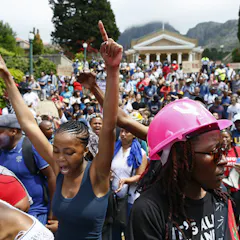
Women students have not been afraid to embrace the label of feminist, leading a wave of university protests in South Africa during 2015 and 2016.
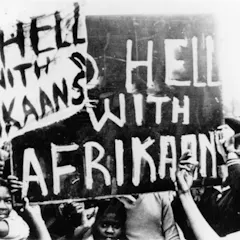
Forty years after the students uprisings of 1976, South Africa is again in the midst of a political movement led by students.They have changed the tenor and shape of political discussion around education.
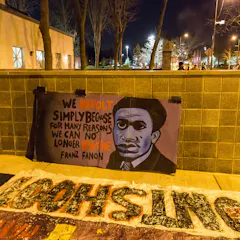
For the revolutionary Frantz Fanon it was not enough to celebrate the achievements of decolonisation. It was necessary to educate, to strain at the limits of national freedom and to provoke debate.
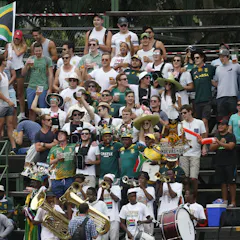
If South Africans are to make the radical changes they must to become truly great, the new generation will have to find a way of understanding the country’s past in its profound complexity.
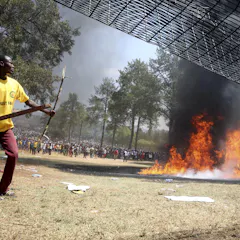
Two narratives have emerged from student protests in South Africa: reform on the one hand - and revolution on the other. Which narrative will triumph?
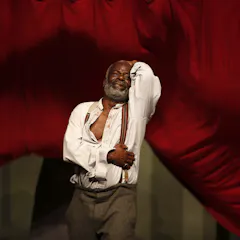
Is there a place for Shakespeare in African schools, or is his time long past?
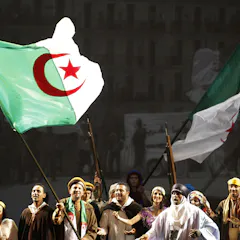
Franz Fanon’s writings were forged in the crucible of the Algerian liberation war which inspired struggles against racism and colonialism around the world. Half a century on, he continues to inspire.

The late Black Consciousness leader Steve Biko and political philosophers Frantz Fanon and Achille Mbembe top the list of writers who get routinely abducted by discerning pirates of the book world.
Top contributors
-

Professor of Interdisciplinary Studies, Emerson College
-
Distinguished Reserach Professor, Southern Centre for Inequality Studies, University of the Witwatersrand
-
Professor of Psychology, University of the Witwatersrand
-
Senior Research Fellow, Institute of Commonwealth Studies, School of Advanced Study, University of London
-
Research fellow, University of the Free State
-
Professor of African Literature, University of the Witwatersrand
-
PhD student, UCL
-
South African visual artist and senior lecturer of Art History and Visual Culture at Rhodes University, Rhodes University
-
Lecturer in Political Science, Nelson Mandela University
-
Professor of Political Science and Chair of the South African Research Initiative in Gender Politics, Stellenbosch University
-
Assistant Professor in the history of Southern Africa, Durham University
-
Associate Professor, School of Education, Aarhus University
-
Associate professor, University of the Witwatersrand
-
Associate Professor in Politics, Rhodes University
-
PhD Candidate, University of the Witwatersrand