
The catastrophic story is familiar, but the insight, and the ending, offer an opportunity, and perhaps motivation, for modern readers.
Articles on Frankenstein
Displaying 1 - 20 of 34 articles

Maggie Gyllenhaal’s The Bride! offers less a story about the bride of Frankenstein, and more a commentary on the lesser-known sad second life of Mary Shelley.
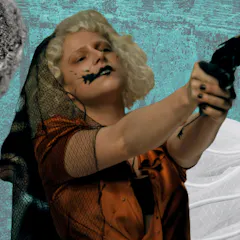
New film The Bride! brings the character to life in moody 1930s Chicago.
Our natural landscapes need wolves. And right now, wolves need all the good PR they can get.
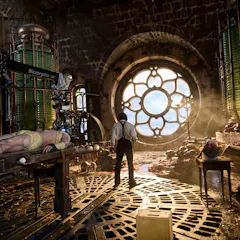
Modern anatomy reveals why Victor Frankenstein’s reanimation experiment was doomed from the first incision.

Del Toro’s film presents the Arctic of the 1800s as a barren wasteland, which overlooks the existence of Indigenous peoples who have lived there for millennia.

A monster movie, new stories from Virginia Woolf, menopausal punk, a Lee Miller retrospective, and portraits of one of Van Gogh’s closest friends.
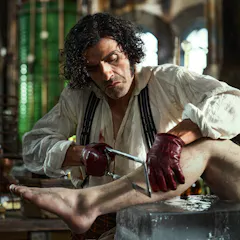
Guillermo del Toro’s retelling of the story about a scientist trying to create life is a visual treat and a rousing adaptation.

Guillermo Del Toro’s ‘Frankenstein’ reconsiders the cultural imagining of ‘the monster’ and how stories reflect attitudes about difference — especially difference in embodiment.
Students in this literature course read a range of novels, short stories and more on grave robbing, murder, terror and grief.

Literature is full of dysfunctional families. We asked critics to nominate the most troublesome fathers.
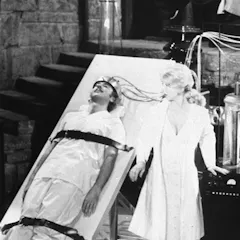
Other Frankenstein parodies are more about the gags than well-crafted narrative and character. That’s where Young Frankenstein excels.

She has largely been airbrushed from history, but a new novel seeks to make Claire Clairmont visible by imagining her life after Byron.
Monsters reveal how societies define and punish deviance. Wintering’s widows make me think about the women I know who are strong and wise in ways neither recognised nor endorsed by the mainstream.
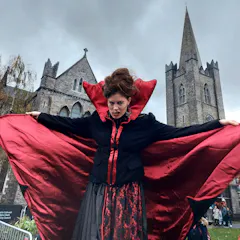
A recent addition to the “spooky” calendar of events are Gothic festivals, inspired by Gothic literature classics such as “Dracula”.
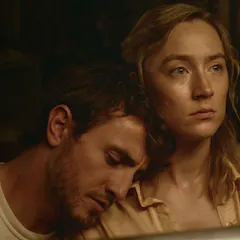
Set in the not-so-distant future, Foe poses questions about humanity and what it means to be human in the face of environmental collapse.

The possibilities of ‘more human than human’ artificial intelligence and the dangers of playing God and are not new – they’re the subjects of one of the world’s first science-fiction novels.
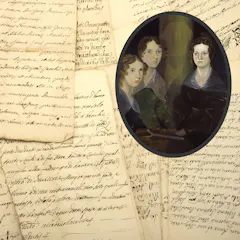
New research shows that literary relatives tend to share a similar writing style.
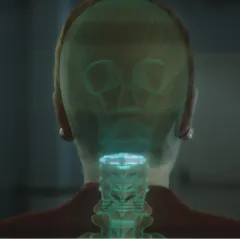
Leaving our earthly bodies and living forever as a machine isn’t just a thing of modern science fiction. These transhumanist ideas date back to the 18th century.

In the project Erasing Frankenstein, students, educators and incarcerated women collaborated to created an erasure poem of Mary Shelley’s classic text, and publicly showcase their work.
Top contributors
-

Professor of Romantic Literature, University of Sheffield
-
Assistant Professor of Philosophy and Religion Studies, University of North Texas
-
Postdoctoral Researcher, Institute for Climate and Society, Dublin City University
-
Professor of Continental Philosophy, Anglia Ruskin University
-
Senior Teaching Fellow in Archaeological Practice, University of Bristol
-
Professor of History, Department of History & Welsh History, Aberystwyth University
-
Professor of Media Practice, University of East Anglia
-
Leo S. Bing Chair in English and American Literature, USC Dornsife College of Letters, Arts and Sciences
-
Senior Lecturer in Media, Glasgow Caledonian University
-
Doctoral Student in Biochemistry, University of Washington
-
Professor of English Literature, University of Dundee
-
Head of Italian Studies, University of Warwick
-
Robert Wallace Chair of English in the School of Culture and Communication, The University of Melbourne
-
Sessional Academic, Literature and Culture; Professional & Creative Writing Teacher, The University of Queensland
-
Lecturer in Film Studies, Queen's University Belfast