
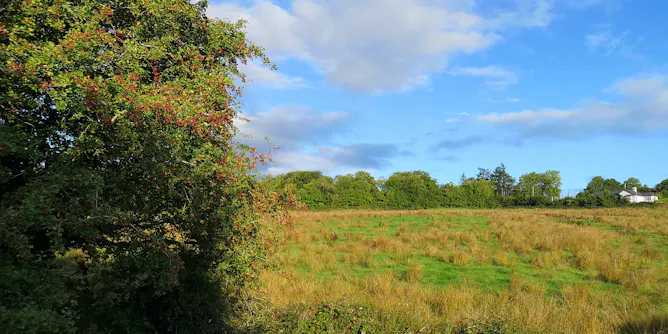
Forests benefit everyone – but farmers carry the risk.
Articles on Forests
Displaying 21 - 40 of 502 articles
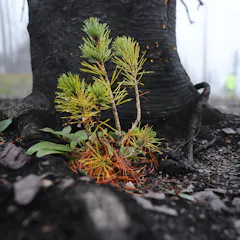
The dead remains of foundation species can boost or deter how well future generations are able to grow and thrive.
While some progress has been made since these goals were established in 2017, it is uneven. Only seven of the 26 targets have been broadly met.
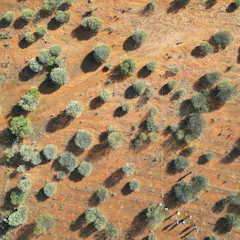
Critics have taken aim at an Australian scheme meant to encourage forest regrowth. But independent assessments show the regeneration schemes are working
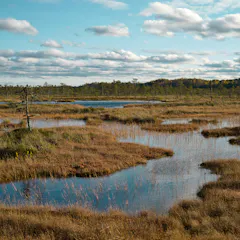
Europe is rethinking security: as geopolitical tensions rise, Russia looms and climate risks intensify, can restoring nature help defend both nations and the planet?
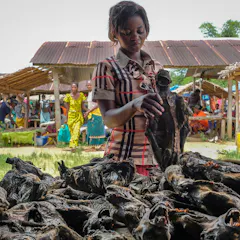
The meat of wild animals, or wild meat, is a big part of the diets of millions of people in central Africa.

Wildfires can cause contaminants to seep into waterways, polluting the drinking water that communities rely on.
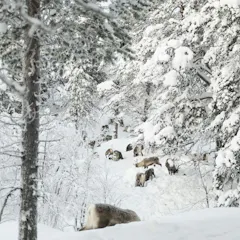
Reindeer herding and forest management can be better integrated to benefit nature restoration, conservation and commercial wood production.

Three of the four new chameleon species found in Mozambique are probably at high risk of extinction.
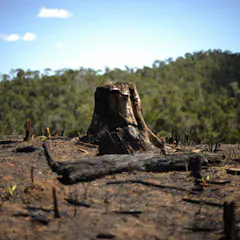
In the past 11 years, we’ve lost roughly 300 million hectares of forest. Three ecologists explain why our current conservation strategies aren’t working.
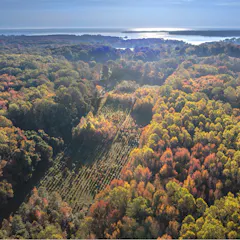
The tree mix matters. Near Chesapeake Bay, scientists have been experimenting with mini-forests for over a decade. The surprising results show how biodiversity pays off.
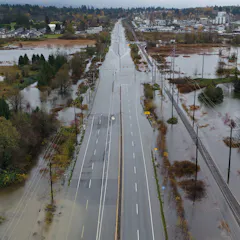
Large floods happen naturally, however, adding or removing forests can change not only their sizes but also how often they occur.
Carbon removal strategies may conflict with biodiversity conservation, but careful choices could bring benefits.
A single tropical tree can create as much cooling as several air conditioners, and across forests can cool a whole region.
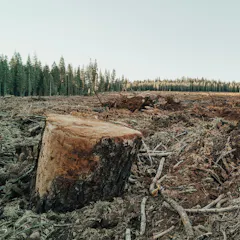
The way we manage forests can undermine their ability to retain water, leading to excess runoff.
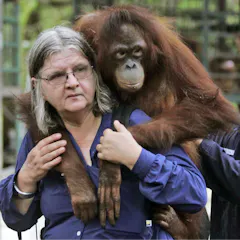
With Jane Goodall and Dian Fossey, Galdikas changed the face of science and opened the world’s eyes to how similar humans are to orangutans and other primates.
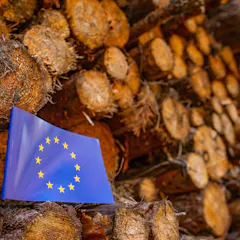
For the EUDR to succeed, this delay must serve as a catalyst for both political and practical reforms — unlocking meaningful progress for forests, farmers, and truly transparent, fair trade.

Old-growth forests store 78-89% more carbon than managed forests do.
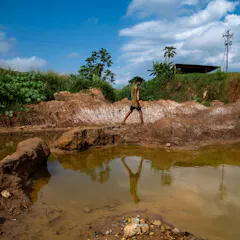
The Orinoco Basin is one of the most biodiverse places on the planet. It’s also rich in oil, gold and critical minerals crucial to modern technology.
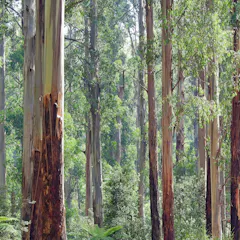
There’s a new plan to manage Victoria’s forests. But if it uses machines to ‘thin’ trees this could affect wildlife and increase bushfire risk.
Top contributors
-

Distinguished Professor of Ecology, Fenner School of Environment and Society, Australian National University
-
Distinguished Research Professor and Australian Laureate, James Cook University
-
Research Associate, University of New South Wales, and Adjunct Associate Professor, Curtin University
-
Professor, University of Tasmania
-
Chief Research Scientist, CSIRO Environment; Executive Director, Global Carbon Project, CSIRO
-
Research Fellow, Fenner School of Environment and Society, Australian National University
-
Professor in Conservation Science, School of the Environment, The University of Queensland
-
Professor Emeritus of International Environmental Policy, Tufts University
-
Master of University House and Professor of Forestry, Australian National University
-
Professor Emeritus of Global Change Biology and Terrestrial Systems Science, Oregon State University
-
Agente de transfert de connaissances pour le Centre de recherche sur la boréalie (CREB), Université du Québec à Chicoutimi (UQAC)
-
Professor in Forest and Landscape Dynamics, The University of Melbourne
-
Honorary Professorial Fellow, The University of Melbourne
-
Associate Professor of Civil Engineering, Boise State University; United Nations University
-
CGIAR