

In his National Press Club address, Former Treasury Secretary Ken Henry made the case for urgent, ambitious nature law reform to boost productivity while saving species.
Articles on Forest restoration
Displaying 1 - 20 of 24 articles

New research found regrowth in Queensland provided valuable habitat after 15 years, on average, with some species benefiting from trees as young as 3 years of age.
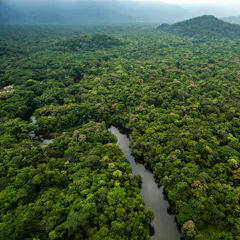
It’s vital we find cost-effective ways to get and keep more trees in the ground. Our research looked at where natural regeneration is likely to be successful due to environmental conditions.
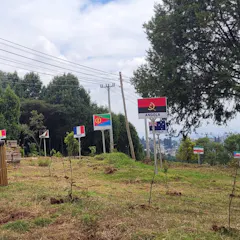
The Great Green Wall is great in theory but too complicated to achieve without more localised planning.
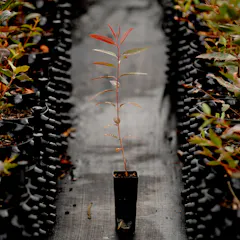
Nature can provide solutions to problems such as biodiversity loss and climate change. But the best nature-based solutions are resilient to disturbance such as fire or drought and future change.

The SUPERB project, part of the EU’s Horizon programme, aims to restore thousands of hectares of forest landscape across Europe.
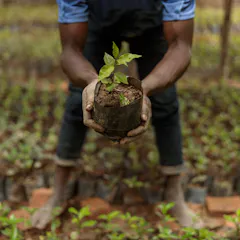
When forest communities have secure rights and tenure, the results can be miraculous.

REDD+ is a UN program to fight deforestation. But, have local and indigenous communities received their equitable benefits?

Plantations of exotic trees from the mid-19th century onwards devastated Indian ecosystems.

The optimal trade-off between restoring habitat and crop production hinges on pollinators. A new study shows giving pollinators more natural habitat on the farm leads to big increases in production.
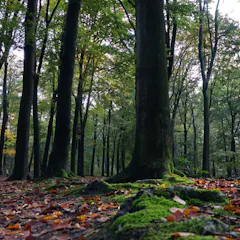
Acoustic technology allows us to listen to the sounds produced by the creatures in forest soils. A new study shows it’s a reliable way to monitor the biodiversity and health of the soil and forest.
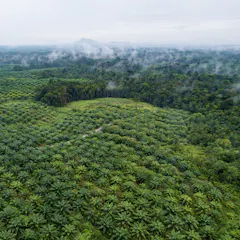
As a researcher of sustainability transition, I still believe we can create a more sustainable palm oil industry in Indonesia, where millions of small farmers rely on palm oil for their livelihood.
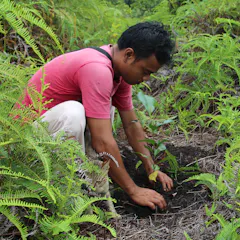
As climate change worsens, it’s essential to restore our forests and ensure that the ones we plant are resilient. A global research network, the Tree Diversity Network, is working to make it happen.

Invasive mammals have already removed some native bird species from our cities. It’s why urban forest restoration and predator control are crucial to support the ‘ghosts of predation past’.
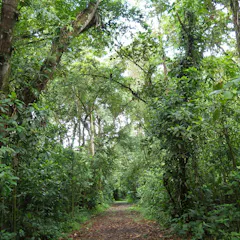
As governments and corporations pledge to help the planet by planting trillions of trees, a new study spotlights an effective, low-cost alternative: letting tropical forests regrow naturally.
Secondary forests are growing on deforested land in the Amazon – but not enough to offset emissions from logging.
New Zealand recently became the first country to make climate-related financial disclosures mandatory, but it has some way to go to scale up investment in climate resilience.
A new study finds more deciduous trees like aspen are growing in after severe fires in the region, and that has some unexpected impacts.
Restoring western forests – thinning out small trees and dead wood – is an important strategy for reducing the risk of massive wildfires. But these projects aren’t fast, easy or cheap.

The current state of our climate shouldn’t be dismissed as a ‘new normal’. The hard truth is many of our ecosystems will not recover from the damage.
Top contributors
-

Professor Emerita of Ecology and Evolutionary Biology, University of Connecticut
-
Postgraduate Researcher, Climate Adaptation, University of Manchester
-
Senior Lecturer in Social Sciences and Public Policy, Auckland University of Technology
-
Adjunct Professor of Biology, University of Saskatchewan
-
Professor, forest ecology and management, Ghent University
-
Senior Research Fellow in Climate Science Communication, Climate Futures Program, University of Tasmania, University of Tasmania
-
Researcher and consultant on sustainability transition, Wageningen University
-
PhD Candidate in Environmental Science, Lancaster University
-
Associate professor conservation ecology, Ghent University
-
Senior Research Officer, Center for International Forestry Research – World Agroforestry (CIFOR-ICRAF)
-
Professor of Functional Ecology, Wageningen University
-
PhD student, University of Manchester
-
Professor of Restoration Ecology, University of Waikato
-
Professor of environmental sciences and engineering, EPFL – École Polytechnique Fédérale de Lausanne – Swiss Federal Institute of Technology in Lausanne
-
Assistant Research Professor, Northern Arizona University