

Once algorithms go live on markets, they start behaving in ways that programmers could not have foreseen.
Articles on Foreign exchange
Displaying 21 - 40 of 44 articles
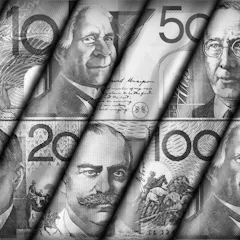
President Trump’s decision to slap tariffs on US$300 billion of China’s exports has set up a currency war that has engulfed Australia.

The odds of winning are no better than even, and the costs of losing are enormous. We ought to limit forex to traders who can demonstrate their expertise.
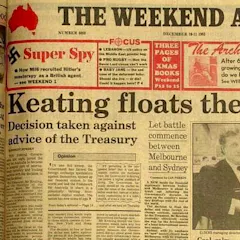
Floating the dollar 35 years ago was a leap into the unknown. Here’s how it has served us well.
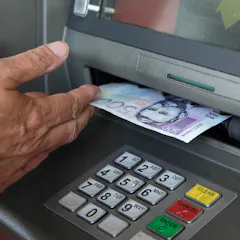
Global travelers are being increasingly asked if they want to pay for local purchases in terms of their home country currency. Here’s why you should resist the strong temptation to do so.

Despite hard work by both governments to overcome mistrust, more is needed to build mutual understanding between Americans and Mexicans. Educational partnerships may hold the answer.

While borrowers may not be thrilled by the Federal Reserve’s decision to raise rates, many of us have plenty of reason to celebrate.
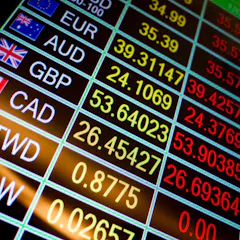
The Australian dollar is special among the major currencies as it generally moves along with the prices of commodities. Because of this the dollar affects companies in different ways.
Where our money comes from is deeply political and the politics involved is often highly complex.
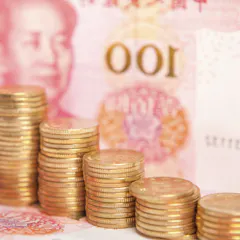
China has introduced new currency and investment controls after foreign exchange reserves hit the lowest level since 2011. This could have a profound impact on our trading relationship.

An enormous 8% drop in the pound was recently rectified in a matter of minutes but the ‘flash crash’ wasn’t merely an algorithm issue.

How countries manage their currencies is now more critical than ever. Nigeria has followed in the footsteps of South Africa by opting for a free-floating exchange rate regime.

A radical tightening of exchange controls against corporations and wealthy individuals offers a short-term solution to South Africa’s balance of payments crisis.
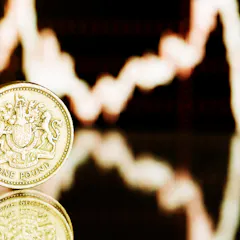
Uncertainty over the outcome of the EU referendum has sent currency markets into overdrive.
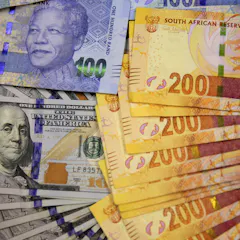
How is it possible that an African country whose currency is one of the top 20 most traded in the world only has the 33rd biggest economy?
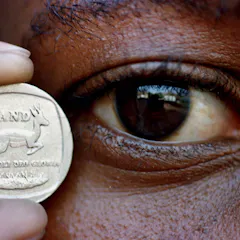
Like any commodity, the value of the rand is determined by the market forces of supply and demand. Its weakening is also affected by a myriad of structural problems facing the South African economy.

Investors are encouraged to make bad financial decisions from the way that saving products are marketed. New research shows that fixing this is a can of ugly worms.
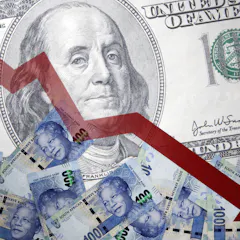
South Africa’s current economic situation is reminiscent of events in 1985 when the economy nearly collapsed. This article, first published last year, looks at the similarities.

Increased regulation is doing little to stem the tide of bank scandals, with fines racking up. It’s time more bankers were held to account.
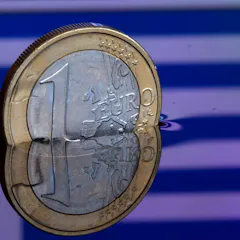
So long as there is uncertainty about Greece’s place in the eurozone, turmoil in financial markets will continue.
Top contributors
-

Senior lecturer, Canberra School of Government, University of Canberra
-
Professor of Economics, Monash University
-
Associate Professor of Business, Boston University
-
Professor of Economics, City St George's, University of London
-
Lecturer in Economics, University of the Witwatersrand
-
Lecturer in the School of Psychological Science, University of Bristol
-
Professor of Finance, The University of Western Australia
-
Senior Lecturer, International Law; Asian Business Law, Monash University
-
Lecturer in Economics, University of Bath
-
Lecturer in Economics, University of the Witwatersrand
-
Visiting Fellow, Macquarie University Applied Finance Centre, Macquarie University
-
Professor of Twentieth Century Literary Studies, University of Southampton
-
Visiting Professor of International Affairs, Hamilton College
-
Deffenbaugh de Hoyos Carlson Professor in the Social Sciences; Professor of Sociology, Wellesley College
-
Professor of Economics, University of the Western Cape