

Japan and the US both want the yen to strengthen, but for quite different reasons. But succeeding in this task has risks of its own.
Articles on Currencies
Displaying 1 - 20 of 35 articles

The US dollar is said to benefit from ‘exorbitant privilege’ in international trade. But history shows that may not last.

The trade wars could eventually undermine the importance of the US dollar, but it isn’t happening yet.
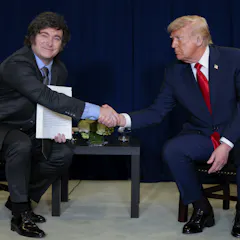
A sharp sell-off of the peso has seen President Javier Milei seek a financial lifeline from the United States. Washington seems happy to help out.
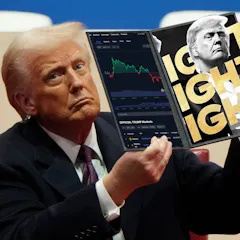
Even by Trump standards, it is extraordinary that an incoming president would create such a large conflict of interest just before assuming office.

New Zealand’s central bank is taking a long, hard look at cryptocurrencies and the role they will play in future business. Here’s what businesses had to say about our digital future.

Does this mean everyone has cheered up about Brexit?
Talk of a joint BRICS currency feeds into ‘decline of the dollar’ rhetoric. But it is the economic bloc’s focus on innovation that will reshape the international system.
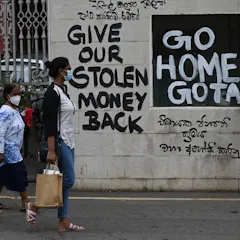
An expert on Sri Lanka’s economy identifies and explains three key challenges that Ranil Wickremesinghe will have to overcome if he hopes to steer the country out of its crisis.

To understand the euro’s weakness, you have to look at the US as well as Europe.
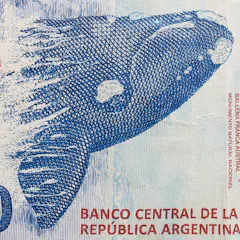
Most countries manipulate their currencies – at least a little – but at the moment that’s not the real reason they are undervalued relative to the dollar.

Bitcoin has been on a downward ride over the last year, steadily trading below US$4,000. It could get worse.

When you look carefully, the history of Bitcoin can be traced through five key narratives.
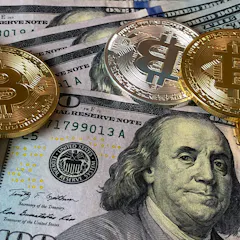
One of the hot questions regarding the bitcoin since the first ones were created in 2009 is its real value. We will try as well to answer to this question using two concepts in economics and finance.
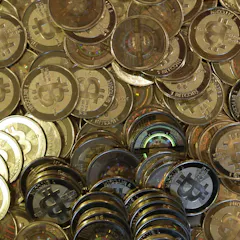
The fate of Bitcoin’s fate is highly unpredictable and dependent on what governments will do in the future.
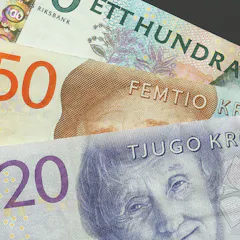
With countries such as China and Sweden are studying plans to create a new form of money – a central-bank digital currency. CBDCs risk revolutionizing both the way money is created and distributed.

Instead of a clear movement toward more formalised economic transactions, demonetisation in India has reinforced the informal economy.
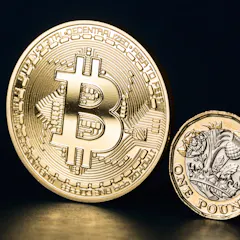
National cryptocurrencies could make payments faster and prevent crime, but they come with their own risks.

Futures trading is driving up the price of Bitcoin but institutional investors remain cautious.

Putting money into the hands of local communities will be a more useful antidote to the whims of world capitalism.
Top contributors
-

Senior lecturer, Canberra School of Government, University of Canberra
-
Professor of Twentieth Century Literary Studies, University of Southampton
-
Distinguished Professor of Management & Global Business, Rutgers University
-
Samuel J. and Augusta Spector Professor of History and African and African American Studies, Brandeis University
-
Professor of International Affairs, Texas A&M University
-
Lecturer in Economics, University of the Witwatersrand
-
S. Walter Richey Professor of Corporate Law, University of Minnesota
-
Professor of Marketing and International Business, Michigan State University
-
Associate Professor and Director; Professional Studies, University of Southern Queensland
-
Associate Professor in Finance, University of Sussex
-
Senior Lecturer in Economics, The Open University
-
Principal Autonomy Specialist & Customer Systems Lead at Agri Automation Australia., University of Southern Queensland
-
Professeur associé en finance, ESSCA School of Management, ESSCA School of Management; École Nationale des Ponts et Chaussées (ENPC)
-
Lecturer in Management and Organisation Studies, Manchester Business School, University of Manchester
-
Reader in Economics, City St George's, University of London