

Japan and the US both want the yen to strengthen, but for quite different reasons. But succeeding in this task has risks of its own.
Articles on Australian dollar
Displaying 1 - 20 of 52 articles

Are recent gains against the US dollar just a blip – or the start of a new trend? A former Reserve Bank economist explains what to keep an eye on for the year ahead.

The US dollar still dominates trade for now. But new research suggests Australia’s banks are unprepared for a world where China’s currency plays a much larger role.
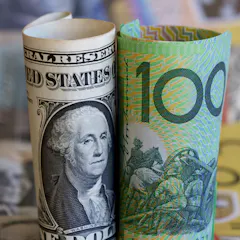
If you’re an Australian travelling overseas, prepare to possibly pay more. But for other groups, including our export industries, a weak Australian dollar can have upsides.

The Conversation’s expert panel expects inflation to continue to fall, but more gradually, and it expects the RBA to be slow in responding. Unemployment should climb and economic growth weaken.
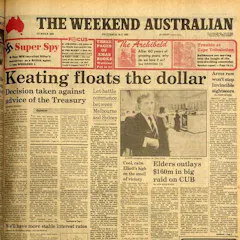
Up until December 9 1983, officials used to announce each morning how much the dollar was worth. Even bankers were shocked about letting the market set the price – but it’s served Australia well.

We hear a lot about the negative impact of rate rises on mortgage repayments while little is made of the benefits of high interest rates.

At the right moment, Australia’s Reserve Bank would be wise to stop taking its lead from the US – holding interest rates here steady, even if they’re still rising overseas.
Floating the dollar 35 years ago was a leap into the unknown. Here’s how it has served us well.

Inflation has been stubbornly low in Australia, and the RBA remains concerned about a high Australian dollar.
All economic data is pointing to disappointing global growth.
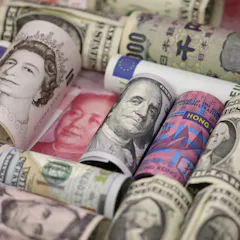
China will not be able to rescue Australia if another crisis hits.

A British exit from the European Union will mean short term volatility on global markets, but the longer term outcomes are more uncertain.
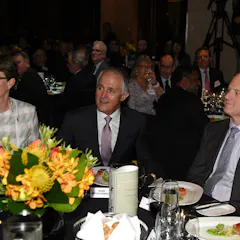
We are all still learning the rules of the “secularly stagnant” global economy.
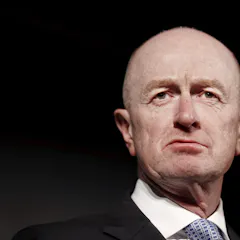
Fears of deflation have prompted the Reserve Bank of Australia to act on the eve of the federal budget.
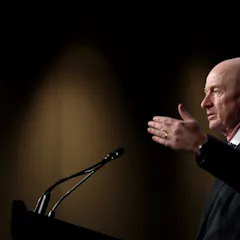
Once again the US-AUD exchange rate has monetary policymakers worried.

Claims that gold is not a safe-haven asset are based on a lack of understanding of what a safe haven is.
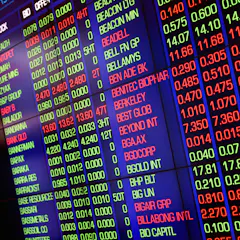
The global sharemarket volatility will weigh on Reserve Bank board members as they consider interest rates.
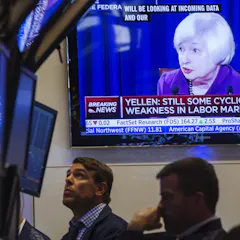
The global economy is in a delicate position, which is why so many are fixated on this month’s US decision on interest rates.
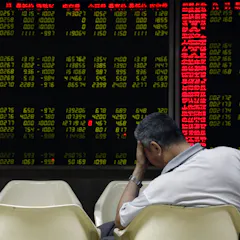
Fears of a currency war have not come to fruition in Asia, making Asia’s current market woes look even more like the effects of contagion.
Top contributors
-

Professor of Economics, Monash University
-
Scientia Professor of Economics, UNSW
-
Associate Professor, Research School of Economics, and Research Associate, Centre for Applied Macroeconomic Analysis, Australian National University
-
University Associate, School of Economics and Finance, University of Tasmania
-
Professor of Economics, The University of Western Australia
-
Professor, Finance, The University of Western Australia
-
Lecturer in Economics, Monash University
-
Visiting Fellow, Crawford School of Public Policy, Australian National University
-
Professor of Economics, Monash University
-
Professor of Economics and Finance, Tasmanian School of Business and Economics, University of Tasmania
-
retired, The University of Western Australia
-
Productivity Growth Program Director, Grattan Institute
-
PhD candidate, The University of Melbourne
-
Professor Emeritus, The University of Melbourne
-
Head of Discipline/Winthrop Professor, Economics, The University of Western Australia