
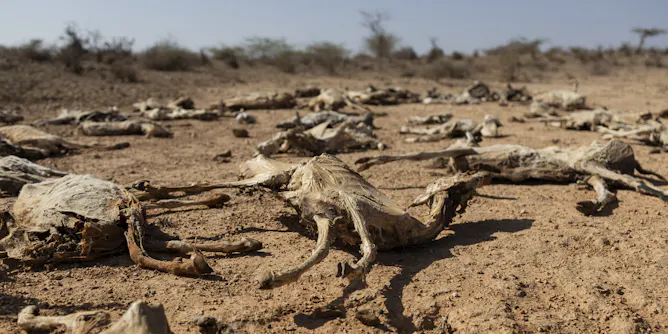
Without rapid cuts to fossil fuels and a shift to clean energy, climate change could drive over a billion into hunger by 2100, hitting Africa hard.
Articles on Food crisis
Displaying 1 - 20 of 31 articles

While sanctions aim to punish regimes, they often punish citizens instead.

Global hunger is still as much of an issue now as it was when Band Aid released its charity single in 1984.

Malawi has lost an energetic, inspirational and progressive future leader.

As global acute food insecurity increases, severe wasting — which already affects 13.6 million children — is expected to rise with it. Treating wasting requires specialized nutrition and medical care.

Fixing Nigeria’s food inflation goes beyond declaring a state of emergency.
The inequitable distribution of the benefits and harms of the food system is a violation of the constitutional right to food.
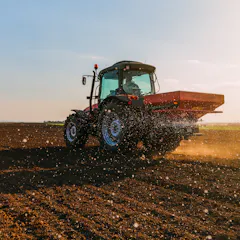
This crucial fertiliser component is mostly found in just five countries.
This year’s G20 faces more difficult challenges than ever before.

Bola Tinubu will be saddled with a near comatose economy. Here are four priorities that would make the difference.
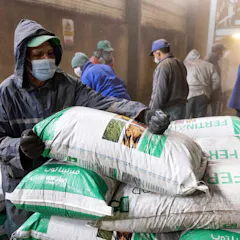
How well Morocco manages challenges to its fertiliser industry will affect its own development and the stability of food supplies across the world.

Negotiations between Russia and Turkey to ensure safe passage of Ukrainian grain hint at a new era of global food diplomacy.
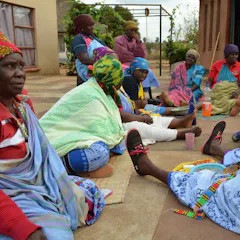
Crisis is a given for resource-poor households globally, but — in the absence of supportive policies — so are these careful strategies of self-provisioning and mutual aid.
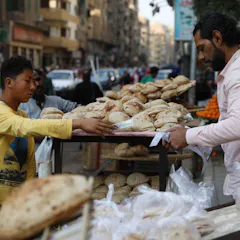
Egypt is already feeling the impact of the war, which has led to recent cancellation of tenders due to lack of offers, in particular from Ukraine and Russia.
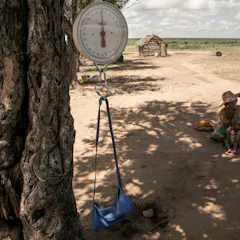
Out of the last six years in Madagascar, five years have had poor or very bad rainy seasons.

The pandemic has disrupted local, regional and national supply chains, making the problem of hunger in India much worse.
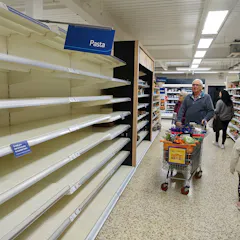
Apart from their functional purpose, products can also impact how we feel, both about ourselves and our situation.
We all need to eat. Experts imagine how the next agricultural revolution can feed us while fighting climate change and habitat destruction, instead of accelerating it.
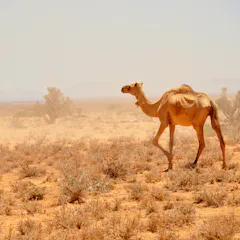
It’s wrong to blame climate change for famine and conflict. These can either be prevented, or the impact minimised, if institutions and mechanisms of good governance are in place.

Australia’s deserts can be a harsh environment but plant life still survives there. So why not use them to develop the next generation of drought-resistant crops?
Top contributors
-

Professor of Economics & Business, Allegheny College
-
Senior Research fellow, Anglia Ruskin University
-
Professor of Food Policy, City St George's, University of London
-
Researcher in the Food Security Program at the Centre for International Security Studies, University of Sydney
-
PhD student, University of Buckingham
-
ARC Future Fellow and Associate Professor of Cultural Studies, The University of Queensland
-
Doctoral Researcher on food governance. Centre of Philosophy of Law, Université catholique de Louvain (UCLouvain)
-
Adjunct Associate Professor, Murdoch University
-
Professor of Food and Social Policy, University of Warwick
-
Professor, Charles Sturt University
-
Dosen Tetap Bidang Politik Pemerintahan dan Kebijakan Publik, Politeknik STIA LAN Jakarta
-
Senior Fellow at the Austrian Institute for European and Security Studies (AIES), non-resident fellow in the Economics and Energy Program at the Middle East Institute (MEI) and Professor, Universidad de Navarra
-
Deputy Director of the HUMLOG (Humanitarian Logistics and Supply Chain Management Research) Institute, Hanken School of Economics
-
researcher, University of Cape Town
-
PhD, Political Economy, Macquarie University