
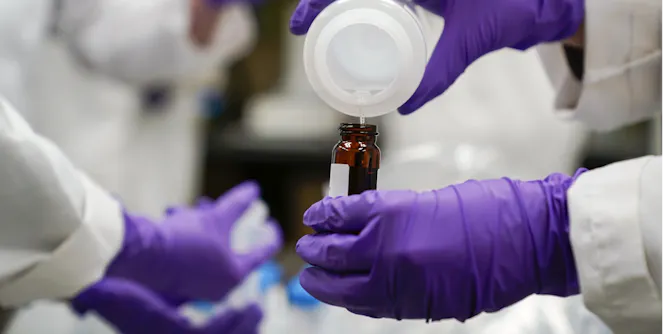
These chemicals are now found on almost every part of the planet, including in the bodies of a large percentage of the American public. An environmental health scientist explains the risks.
Articles on flame retardants
Displaying all articles
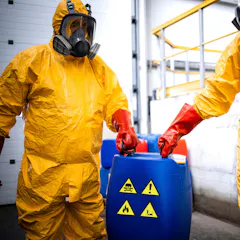
Flame retardants were developed to prevent house fires and help save lives. But they come with some serious health risks.

The Biden administration is finalizing the first federal limits on two compounds, PFOA and PFOS, in drinking water. These so-called ‘forever chemicals’ have been linked to numerous health effects.

Flame retardants are added to consumer products — and end up in the environment and harming aquatic wildlife.
These chemicals are now present in water, soil and living organisms and can be found across almost every part of the planet – including 98% of the American public.

There is abundant evidence of the involvement of endocrine disruptors in reproductive dysfunction in several species, including humans.

Even the tidiest space has some dust. Researchers are investigating just what these indoor particles are made of and their possible implications for human health.

Brief exposure to a family of chemicals used as flame retardants early in life can permanently alter fat levels in the blood and liver, raising the risk of liver cancer and heart disease.

The U.S. Consumer Protection Safety Commission has recommended a wide-spread ban on an entire class of flame retardants. Here’s how Canada could follow suit.
Top contributors
-

Assistant Professor of Environmental Health, Middlebury College
-
LLM Candidate
-
Professeur titulaire, Centre de recherche en toxicologie de l’environnement (TOXEN), Université du Québec à Montréal (UQAM)
-
Professor of Biochemistry, Michigan State University
-
Associate Professor, Institut national de la recherche scientifique (INRS)
-
Professor of Environmental and Soil Chemistry, Michigan State University
-
York Research Chair in Environmental Law & Justice in the Green Economy, York University, Canada
-
Assistant Professor of Environmental Health Sciences, UMass Amherst
-
Senior Post-Doctoral Researcher, University of Galway
-
Professor/Professeure titulaire, Eau Terre Environnement Research Centre, Institut national de la recherche scientifique (INRS)
-
Adjunct Assistant Professor of Biological Sciences, North Carolina State University
-
Professor of Earth Sciences and Executive Director, Environmental Resilience Institute, Indiana University