
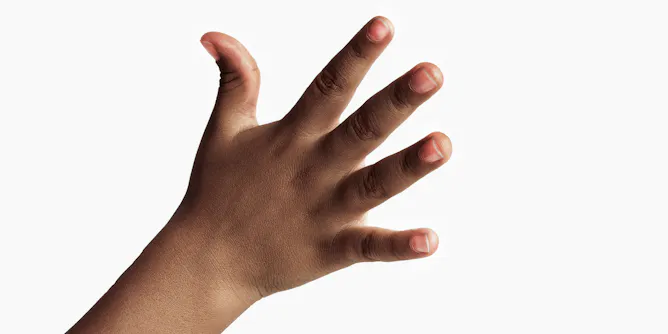
Your fingers’ lengths are just one feature of many that let your hands grasp, press, pull and otherwise interact with the world.
Articles on Fingers
Displaying all articles

TikTokers are promoting ‘pinky time’, a finger exercise they claim can help keep the brain sharp.
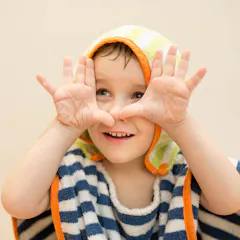
Listen to the The Conversation’s Curious Kids podcast to hear evolutionary biologist Tom Smulders explain.

What muscles feet have, how your brain controls them, and how humans evolved all play a part in why people can’t easily move individual toes.

Having extra fingers or toes is just one example of the rich diversity of variation in our anatomy.
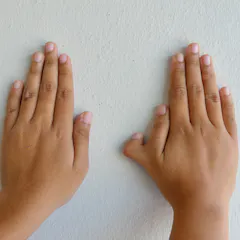
Approximately 6% of people have an extra nipple.
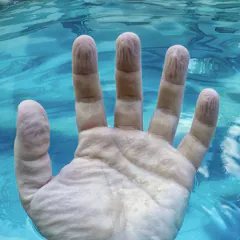
Recent research suggests blood vessels are the key to why fingers and toes turn pruny and pale after being submerged for a while.
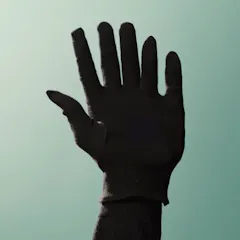
Our body can adopt a sixth robotic finger, which we can move independently of the other fingers and with tactile sensations.
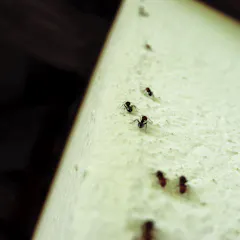
Ant feet are equipped with an array of tools – from retractable sticky pads to claws to special spines and hairs – enabling them to defy gravity and grip virtually any surface.
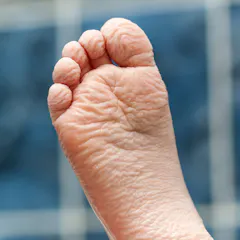
The truth is scientists aren’t exactly sure why our fingers and toes get wrinkly in the bath. But here’s what we know, and what we suspect.
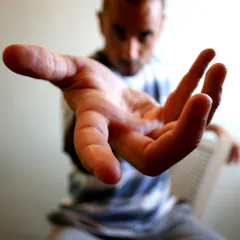
It may seem silly to ask yourself if your index finger is part of your body, but that question is actually perfectly reasonable in neuroscience research - and has led to important insights into key brain…
Top contributors
-

Assistant Professor of Biological Anthropology, University of Tennessee
-
Senior Research Fellow, Neuroscience Research Australia
-
Research Officer, Neuroscience Research Australia
-
Associate Professor of Integrative Biology, University of South Florida
-
Chercheur au Laboratoire d'Informatique, de Robotique et de Microelectronique de Montpellier, Université de Montpellier
-
Associate Professor of Biomedical Engineering, Binghamton University, State University of New York
-
Associate Professor of Science & Medicine, Bond University
-
Professor of Anatomy, Lancaster University
-
Associate Professor and Senior Lecturer, Anatomy, James Cook University
-
Senior Lecturer, Anatomy and Pathology in the College of Medicine and Dentistry, James Cook University
-
Senior Lecturer, Centre for Behaviour and Evolution, Newcastle University
-
Postdoctoral Research Fellow in Cognitive Neuropsychology at Vision and Eye Research Institute, Anglia Ruskin University