
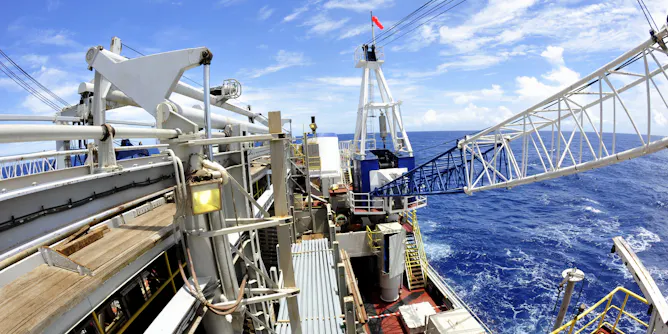
The National Science Foundation says that the JOIDES Resolution has become too costly to fund. But scientists say its $72 million annual budget pales compared with discoveries the ship has enabled.
Articles on Field research
Displaying all articles
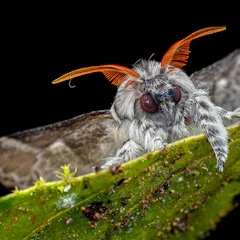
Sometimes it seems the night is just buzzing with insects. But are there really more insects out at night? We analysed all the evidence on insect activity across the day–night cycle to find out.
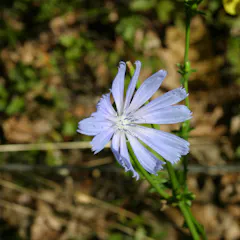
Journals, museum collections and other historical sources can provide valuable data for modern ecological studies. But just because a source is old doesn’t make it useful.

Detailed field notes can help researchers track down rare species.
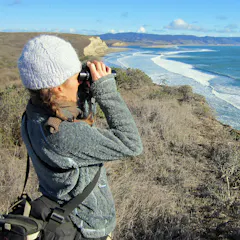
COVID-19 kept many scientists from doing field research in 2020, which means that important records will have data gaps. But volunteers are helping to plug some of those holes.
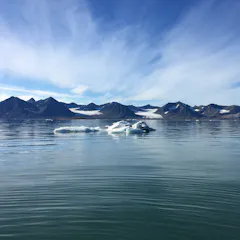
Three scientists describe the fieldwork they’ve had to delay in 2020 because of the pandemic. These are setbacks not just for their careers, but for the body of scientific knowledge.
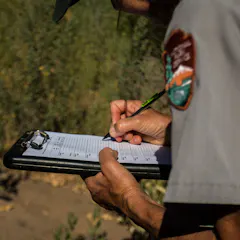
The COVID-19 pandemic is interrupting scientific field work across North America, leaving blank spots in important data sets and making it harder to track ecological change.
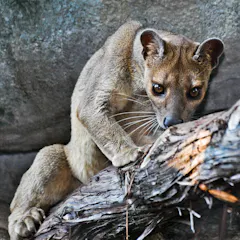
The fossa, Madagascar’s largest predator, is a cat-like carnivore that eats everything from insects to lemurs. Because they are rare and elusive, scientists know very little about them, including how many there are.
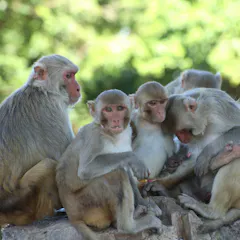
Puerto Rico’s Cayo Santiago Research Station has been a world-famous site for primate studies since 1938. Now scientists are working to save its staff and rhesus monkey colony after Hurricane Maria.

A team of archaeologists strived to improve the reproducibility of their results, influencing their choices in the field, in the lab and during data analysis.
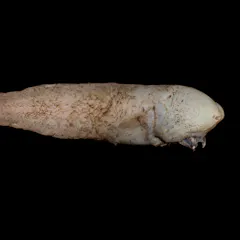
Surveying the bottom of the ocean turns out to be far from easy. But there was something wonderful about seeing animals we have only read about in old books.
Top contributors
-

Professor of Biology, Boston University
-
Assistant Professor of Psychology, University of Michigan
-
Professor of Archaeology, University of Washington
-
Senior Curator of Marine Invertebrates, Museums Victoria Research Institute
-
PhD candidate, Penn State
-
Professor of Ecology, The University of Western Australia
-
Assistant Professor of Environment, Geography & Marine Sciences, Southern Connecticut State University
-
Assistant Professor of Citizen and Data Science, University of Arizona
-
Lecturer, Lúrio University
-
Outreach Coordinator and Liaison to the U.S. Fish & Wildlife Service, University of Arizona
-
Science Coordinator, Acadia National Park, National Park Service
-
Professor of Biology, Indiana University
-
Associate Professor of Microbiology, University of Tennessee
-
Director, USA National Phenology Network, University of Arizona
-
DECRA Fellow and Lecturer, School of Life and Environmental Sciences, University of Sydney; The University of Western Australia