
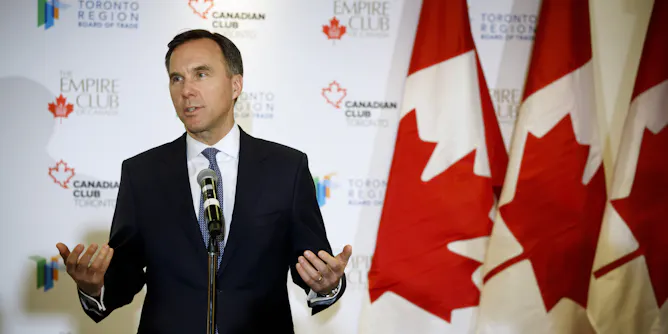
A new agency and money for drugs for rare diseases are only very partial steps on the road towards what Canada really needs: a national pharmacare plan.
Articles on Federal budget
Displaying 81 - 100 of 132 articles

The popular opinion is that presidents win government shutdowns, but a review of polling evidence paints a different picture.
Banned since 2011, pork-barrel spending may well help Congress pass bills on schedule. Now, a powerful Democratic lawmaker said she’d like to resurrect the practice to make passing budgets easier.

It was a week that saw the ABC’s managing director and the chair of its board go, with many questions still to be answered; meanwhile Scott Morrison gave the ongoing controversy over Australia Day a new lease of life.

Climate change, development, past forest management policies and current firefighting practices are creating conditions for large, costly wildfires.

A perfect storm of climate, forestry, development and fire management trends are driving up the costs of fighting wildfires.

The 2018-19 federal budget will be handed down to parliament on May 8. But before that, take our quiz to test out your memories of the previous budgets.

While the White House scrambles to fill the VA’s top post, the agency’s deep issues of inadequate funding and low access for veterans continue to fester.

The long-awaited $1.5 trillion plan fails to address some major obstacles to private investment.

The $1.5 trillion plan he’s proposing would do the most for ventures that don’t really need the government’s help and ignores some major obstacles to private investment.

What’s unique about this shutdown? It happened under a unified government – and that’s bad news for the GOP.
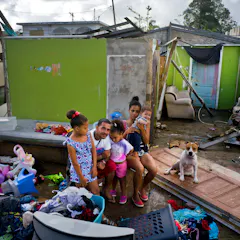
Charitable giving and government aid can shortchange disasters that follow other disasters.

A new study connects the dots between published science and patented innovations, mapping just how society benefits from basic scientific research.

Research dollars don’t stay locked up in academia and government labs. R&D collaborations with the private sector are common – and grow the innovation economy.

New treatments and prevention programs have inhibited the spread of HIV/AIDS since June 5, 1981, when the CDC first reported what would become HIV. Here’s why it’s important not to cut funding now.

In past wars, taxes were increased to cover some of the extra spending. That’s not the case for the war in Iraq and Afghanistan, and the costs are adding up fast.

The current retirement system is unsustainable. We could learn from the way higher education is funded.

The fact that a university has a surplus doesn’t mean it has a profit to be either reinvested or returned to shareholders. Grants, for example, should be spent on the projects they’re intended for.

Countries that have similar banking levies have seen them passed on to customers.
The reason for the constant struggle for funding between the states and federal government relates back to the constitution.
Top contributors
-

Professor of Economics, University of Canberra
-
Senior lecturer, Canberra School of Government, University of Canberra
-
Professorial Fellow, University of Canberra
-
Professiorial Fellow, The University of Melbourne
-
Daniel Patrick Moynihan Senior Lecturer in Public Policy and Public Finance, Harvard Kennedy School
-
Emeritus Professor of Economics (Griffith University) and Teaching Associate (University of Queensland), Griffith University
-
Professor, Centre of Policy Studies and the Impact Project, Victoria University
-
Professor, School of Economics, The University of Queensland
-
Deputy Director and Associate Professor, Centre of Policy Studies, Victoria University
-
Graduate Research Fellow of Sustainable Design and Construction, Stanford University
-
Adjunct Professor, Curtin Law School and Curtin Business School, Curtin University
-
Sr. Associate Vice President for Research and Research Professor, University of Oregon
-
Dean of Business School, University of Southern Queensland
-
Research fellow, Centre of Policy Studies, Victoria University
-
PhD Candidate, Global Projects Center, Stanford University