

The super El Niño could cause 31,400 extra heat deaths in Nigeria alone. Heat warnings, cooling centres and worker protections could help save lives.
Articles on Farmworkers
Displaying 1 - 20 of 26 articles

Agricultural workers are six times more likely to die on the job than the average American worker.

A trove of century-old belongings − from farm tools to pillowcases − tells the story of Filipinos who migrated to California to build a new life, a journey now honored in a Smithsonian exhibition.
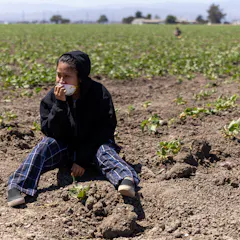
Despite the administration’s claim of streamlining the government to make its operations more efficient, a range of recent federal policies have, in fact, exacerbated food wastage.
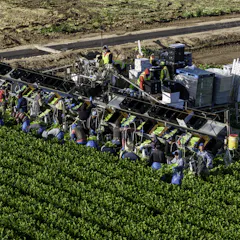
Historically, farm work in the United States has been carefully constructed to appear natural, including the racism and labor exploitation that characterizes it, a scholar writes.
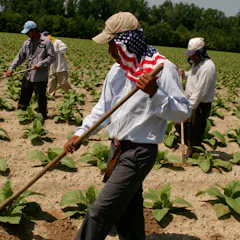
The number of farmworkers in the US with H-2A visas has tripled since 2013.
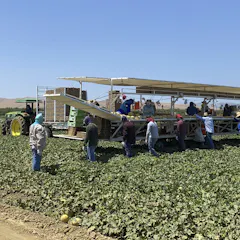
At a time when California’s farm operators are struggling to hire enough people, providing better benefits could attract more workers who are citizens or have legal immigration status.

While immigrants without legal authorization make up about 5% of the U.S. workforce, these workers are concentrated in particular industries, including agriculture.
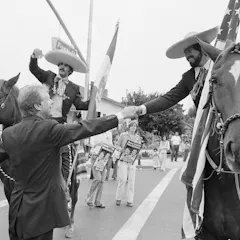
Carter struck a balance between satisfying the needs of employers and protecting American workers from foreign labor competition. That tension has never let up.

The study provides reason for optimism about the effects of minimum wage policies on poverty.
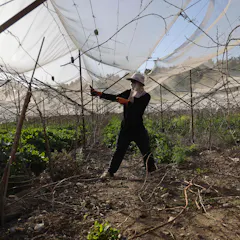
The contours of the Middle East conflict have long influenced Israel’s migrant worker policy.

Most farmworkers were not even aware that the farm they worked on was Fairtrade certified.
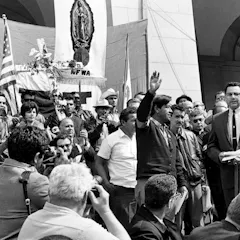
A scholar of religion looks at how faith helped guide the labor rights icon in his organizing endeavors.
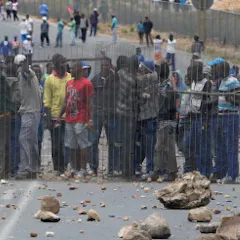
Inequality in organisations is difficult to shift because they are entrenched by the status quo.
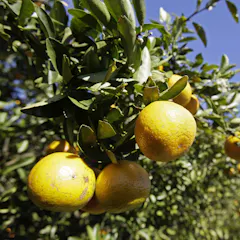
What kind of evidence does it require to get a widely used chemical banned? A professor of medicine and former state regulator explains how the case for chlorpyrifos as a threat to public health developed.
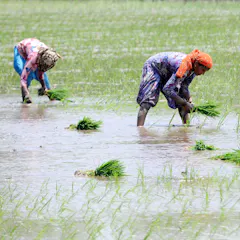
Most Indian farmers are women. But few own their land, and gender inequality limits their access to markets. These issues won’t be fixed by recent agricultural reforms; in fact, they may get worse.
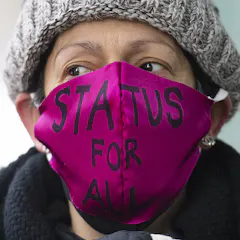
How we treat migrant workers who put food on our tables: Don’t Call Me Resilient EP 4 transcript
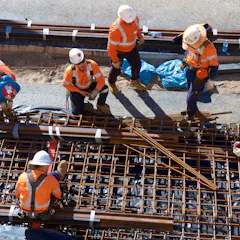
As the climate changes and heatwaves become more frequent and severe, it’s vital we do more to understand who is most vulnerable and how we can reduce their risk.
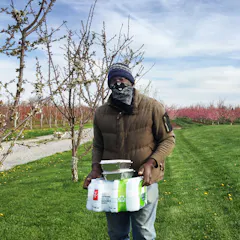
Migrant workers are not inherently more vulnerable to COVID-19, nor more likely to be carrying it than Canadians. Yet our treatment of them this year stigmatizes them and puts them at risk.
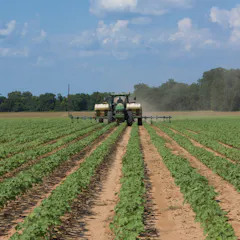
One way that farms can handle shortages of protective gear for workers is by switching to less-toxic pest control methods.
Top contributors
-

Associate Professor of Latin American Studies and Geography, University of Arizona
-
College Professor of Anthropology, Okanagan College
-
Associate Professor of Commercial Law, University of Cape Town
-
Director of Cornell Farmworker Program, Cornell University
-
Researcher in Economics, University of Surrey
-
Assistant Professor, Temple University
-
Thermal Physiologist, National Critical Care and Trauma Response Centre; University Fellow, Charles Darwin University
-
Senior Researcher, Urban Transformations Research Centre, Western Sydney University
-
Doctoral Candidate, Medical Anthropology, University of Toronto
-
Associate Professor of Political and International Studies, Rhodes University
-
Clinical Professor of Medicine, University of California, San Francisco
-
Department of Migration in Global Perspective, The Berlin Institute for Empirical Integration and Migration Research (BIM), Humboldt University of Berlin, Germany., Humboldt University of Berlin
-
PhD Candidate in the Department of Political and International Studies, Rhodes University, Rhodes University
-
Curator of Asian Pacific American History, Smithsonian Institution
-
Assistant Professor, Sociology, University of Victoria