
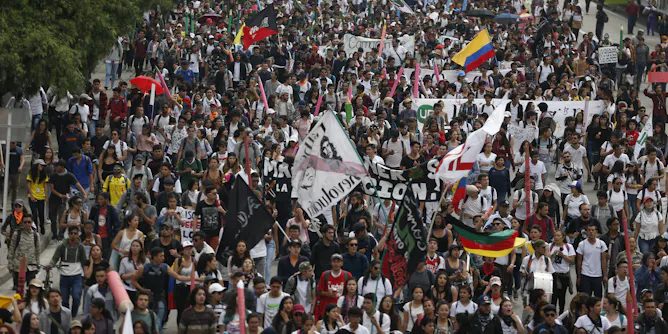
Strikes and rallies have gripped Colombia for months. That’s bad news for its new government but a sign of progress in a country that had little tolerance for dissent during its 52-year civil war.
Articles on FARC
Displaying 21 - 40 of 61 articles
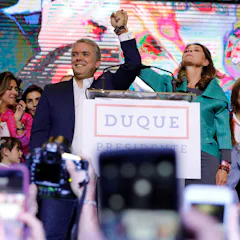
In the most peaceful election in their modern history, Colombians have elected as their next president a conservative who will renegotiate the country’s fragile 2016 accord with the FARC guerrillas.
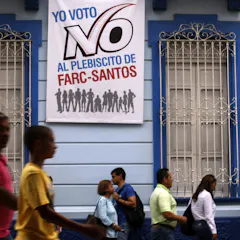
The Colombian government has learned the hard way that simply explaining a complex deal to people won’t win them over.
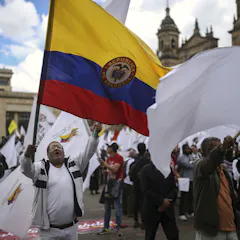
Two candidates from Colombia’s May 27 presidential vote will face off on June 17. One is a former guerrilla. The other is a hard-liner. Their views for the nation’s future couldn’t be more different.
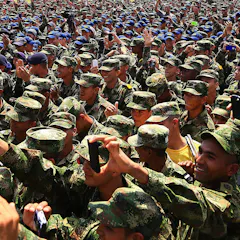
As reports of crimes against humanity mount, Colombia’s post-conflict justice system is still moving desperately slowly.
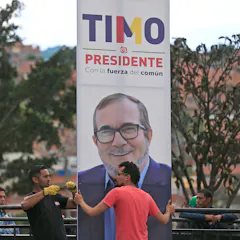
A former FARC rebel commander-turned- presidential candidate has withdrawn from Colombia’s 2018 election. Despite increased violence, the peace accord he signed will probably survive this setback.
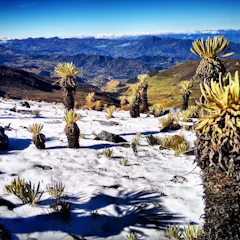
One of Colombia’s most beautiful areas, El Cocuy National Natural Park was for years too dangerous to visit. No more.
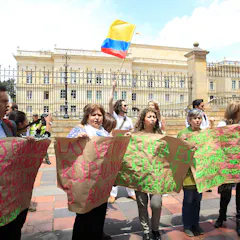
Some of the crucial mechanisms meant to deliver peace in Colombia have yet to be set up.
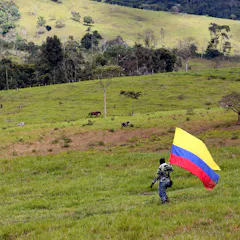
Now the war is over, academia has a special role to play in securing the peace.
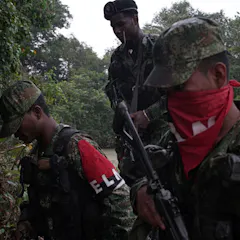
A court decision securing last year’s peace deal and a new ceasefire have invigorated Colombia’s peace process, but there are plenty of ways it could still go wrong.
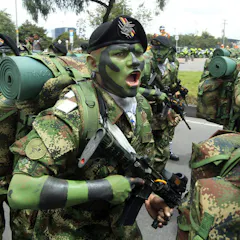
It seems the culprits in a “cash-for-kills” scheme that claimed thousands of lives might find a way to wriggle out of the peace process.
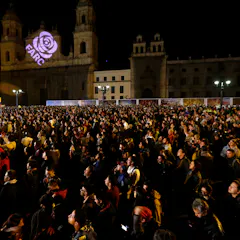
Meet the Commoners’ Alternative Revolutionary Force, Colombia’s newest political party. To move beyond its violent past, the new FARC will need a charismatic leader who can win over voters.
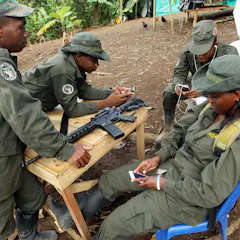
The last time the FARC joined in democratic politics, thousands of its members and leaders were murdered. Will this time be different?
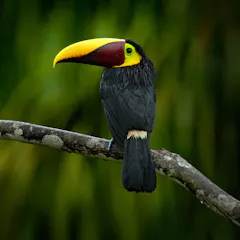
It is a delicate – and dangerous – moment for one of the world’s most ecologically important nations.
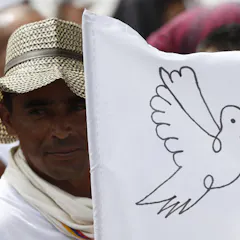
Ending violence is only a first step. Research from Colombian universities sheds light on the role of education in peace-building.
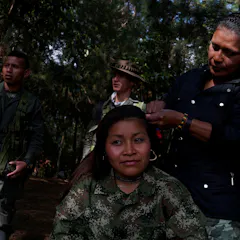
Demilitarised female guerrillas in Colombia are hoping to spark a new women’s movement based in the FARC’s revolutionary ideals.
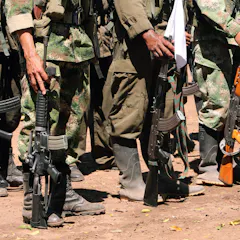
The world will be watching the country’s courts.
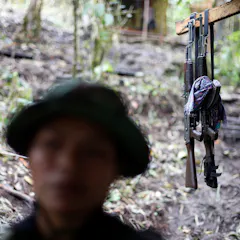
Delays in setting up disarmament camps for former guerillas have cast doubt on the Colombian government’s commitment to peace. But the real problem is its national history.
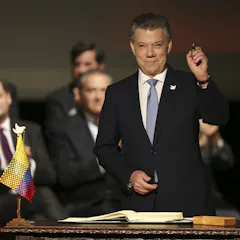
An academic who has worked with the Colombian government says the path to peace was opened by improving quality of life for vulnerable populations.
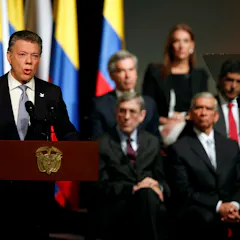
The South American nation is poised to end its 52-year civil war after a halting peace process that has used the weapons of both war and democracy.
Top contributors
-

Honorary Research Associate, Department of Political and International Studies, Rhodes University
-
Visiting Scholar, Weatherhead Center for International Affairs, Harvard University; Director of Studies at the Changing Character of War Centre, and Senior Research Fellow, Dept. of Politics and International Relations, University of Oxford
-
Research fellow at the International Development Department, University of Birmingham
-
Teaching Fellow in Law, University of Birmingham
-
Reader, University of Huddersfield; Independent Social Research Foundation
-
Assistant Professor, Swedish Defence University
-
Research assistant professor, Universidad de los Andes
-
Research and Communications Officer, University of Oxford
-
Professor of Political Science, Georgia State University; Institute for Humane Studies
-
Lecturer in Politics and International Relations, Monash University
-
Senior Lecturer in Spanish, Manchester Metropolitan University
-
Professor of International Humanitarian Studies, The Fletcher School, Tufts University
-
Postdoctoral Research Fellow, Freie Universität Berlin, Global Security Programme, University of Oxford, University of Oxford
-
PhD Candidate, Trinity College Dublin
-
Professor of Economics, Royal Holloway, University of London