
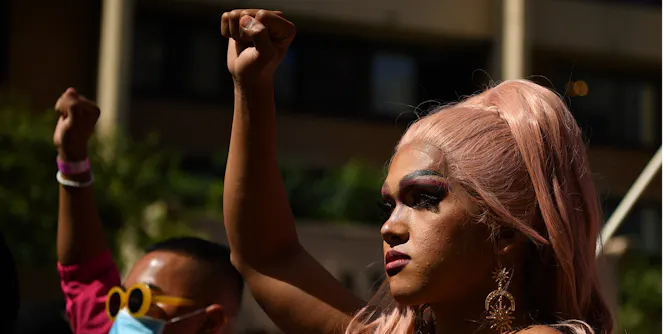
LGBTQ+ communities experience violence and abuse at similar, if not greater rates than cisgender, heterosexual women. Their stories need to be heard.
Articles on Family violence
Displaying 101 - 120 of 221 articles

We have laudable goals on eradicating violence against women and children, but we are nowhere near achieving them. Here’s what needs to happen.
Research undertaken for the National Summit on Women’s Safety has found one in four young Australian women in financial hardship experienced abuse from a current or former partner.
A new book looks at the family court system, just as the Family Court of Australia merges with the Federal Circuit Court.

Prominent cases continue to draw attention to the wrongful imprisonment of First Nations women.
A new survey is the first in Australia to look at the residency and visa status of migrant and refugee women, and the first to ask specific questions about controlling behaviour.
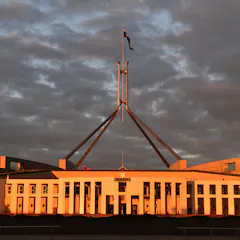
A key part of the budget’s focus on women was a funding boost to help stop domestic violence.

The new SBS documentary is not easy to watch. But it is a big chance to reset the conversation about domestic violence.

There is now a strong body of evidence showing a link between corporal punishment as a child and later involvement in family violence, either as a victim or perpetrator.

Women leaving violent situations need to be able to ensure the safety of their companion animals, and a motion before the Victorian parliament is seeking changes to achieve that.
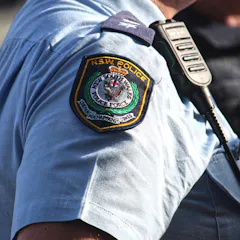
We discovered many more mental health issues were recorded for both victims and perpetrators of domestic violence than we thought. Now it’s time to use our findings to improve public safety.

Following the 2009 Victorian Black Saturday bushfires, more than half the women in one study reported experiencing domestic and family violence. Many had never experienced it before.

‘Catching a baby’ or caring for new parents on Christmas Day is special, midwives say. But Christmas can also be a vulnerable time for many women, especially so during a pandemic.

As federal parliament heads off on its Christmas break, a cloud of uncertainty hangs over the legal community and the Australians who access the family law system.

Australia first needs a better understanding of what coercive control is and how to respond to it. If law reform is rushed, victims will be put at risk.

New research shows women on temporary visas are trapped in family violence by a lack of financial support, safe accommodation, and the threat of their visa being revoked.

A concerning number of children in Australia have experienced trauma. Being more sensitive to what this means can help both the child and the teacher.

Frontline services report that more women are using online or telephone support for family violence during the second lockdown, while more men are also seeking help for abusive behaviour.

Accommodation providers are reporting huge increases in the numbers of people coming to them for help. They’d love to be able to use newly vacant rental housing, but it’s not a lasting solution.
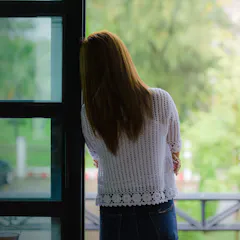
Planning is the most important phase in preparing to leave a violent relationship — and that includes financial planning.
Top contributors
-

Professor (Practice), Faculty of Business and Economics, Monash University
-
Professor of Family and Sexual Violence, RMIT University
-
Eleanor Rathbone Chair of Sociology, University of Liverpool
-
Professor of Social Work; Leneen Forde Chair in Child & Family Research, Griffith University
-
Director of Monash Indigenous Studies Centre, Chief Investigator for the Australian Research Council Centre of Excellence for the Elimination of Violence against Women (CEVAW), School of Philosophical, Historical & International Studies, School of Social Sciences (SOSS), Monash University
-
ARC Future Fellow and Professor of Criminology, The University of Melbourne
-
Emeritus Professor Monash University, Monash University
-
Professor of Law and Deputy Director of the Centre of Excellence for the Elimination of Violence Against Women (CEVAW), The University of Melbourne
-
Associate Professor of Social Work, The University of Melbourne
-
Professor of Family Violence Prevention, The University of Melbourne
-
Managing Director, Her Story Consulting & Postdoctoral fellow, Australian National University
-
Professor, Centre for Women's Studies & Gender Research, Sociology, Monash University
-
CEO, Sentencing Advisory Council
-
Director of the Monash Gender and Family Violence Prevention Hub and Senior Lecturer in Criminology Monash University, Monash University
-
Lecturer in Criminology, University of Liverpool