
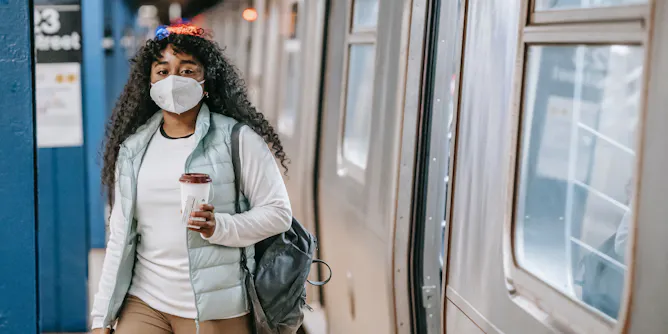
An updated Cochrane Review suggests face masks don’t reduce the spread of COVID in the community. But there are several reasons why this conclusion is misleading.
Articles on Facemasks
Displaying all articles
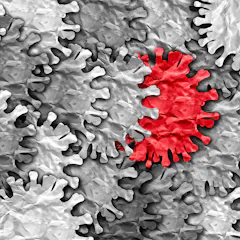
The XBB.1.5 subvariant — nicknamed ‘Kraken’ — is arguably the most genetically rich and most transmissible SARS-CoV-2 Omicron subvariant yet.
The latest COVID wave in the UK might be on the decline, but there will be more to come.
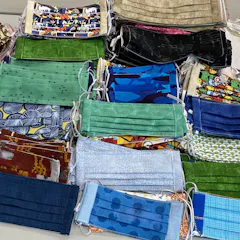
We tested well-fitting cloth masks made from 16 kinds of cotton, on human participants, to see how many provided filtration comparable with a certified medical mask. Most of them did.

Decreases in respiratory infections during the pandemic suggest there may be a continued role for the selective, non-mandated use of measures like masks and social distancing even post-COVID-19.

When early childhood education providers become more entrepreneurial, the quality of their programs improves, research shows.
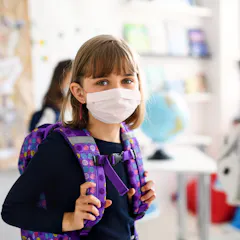
It’s important kids’ masks fit well and are removed and stored properly.
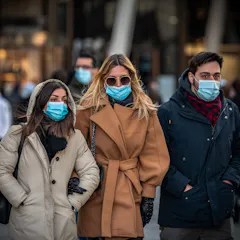
As we likely settle into a long-term relationship with COVID-19, this new relationship will not likely leave masks forgotten.
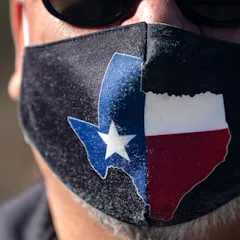
The COVID-19 case spike in the summer of 2020 and earlier attempts to rely on personal responsibility, like wearing seat belts, showed that mandates make a difference.
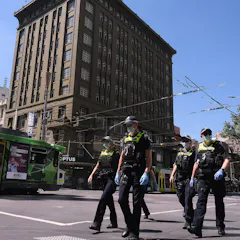
We need to rigorously analyse data from recent lockdowns, so we can respond better to future outbreaks.
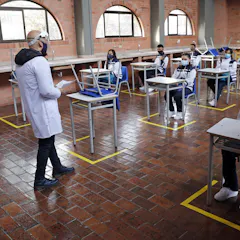
When people start to hear that global case numbers are improving, there’s a tendency to relax — and that’s risky.
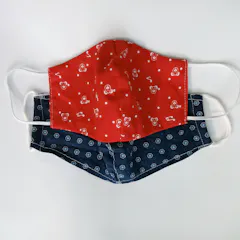
Are two face masks better than one? Adding layers of filtration by double masking is a way of using the masks that we already have, possibly to better effect.
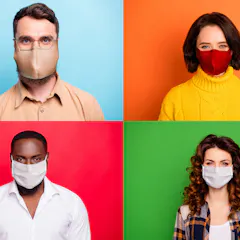
Everything you need to know about fit, filtration and breathability.
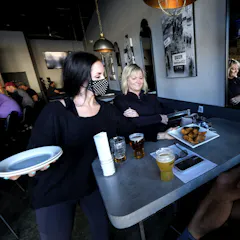
The positive reaction to service workers wearing masks varied by region, with those in the West on the high end and people in the Midwest at the low end.

Why the virus just keeps spreading – and what to do about it.
Top contributors
-

Associate Professor, Chemical Engineering, McMaster University
-
Professor of Medicine, Epidemiologist, Physician, McMaster University
-
PhD Student, Chemical Engineering, McMaster University
-
Chair in Epidemiology, Deakin University
-
Associate Professor of Political Science, Texas A&M University-Texarkana
-
Associate Professor of Health Policy and Management, Texas A&M University
-
Professor in the Division of Epidemiology, University of Toronto
-
Associate Dean for Research and Professor of Health Policy and Management, Texas A&M University
-
Professor of Medicine, Pathology & Laboratory Medicine, and Epidemiology & Biostatistics, Western University
-
Professor of Early Care and Education Leadership, Policy, and Practice, UMass Boston
-
Lecturer, School of Health and Life Sciences, University of the West of Scotland
-
Lecturer in Psychology, Swansea University
-
Professor of Epidemiology, Karolinska Institutet
-
Assistant Professor of Hospitality and Tourism, University of South Florida
-
Professor of Medicine, Pontificia Universidade Católica do Paraná