

Multiple pressures are acting simultaneously in threatening Tapanuli orangutan — from extractive industries to logging to agricultural expansion and, increasingly, climate-related disasters.
Articles on Extractive industries
Displaying 1 - 20 of 21 articles

Climate science is the anti-myth. Researchers have long noted that the human brain struggles with psychologically distant threats.
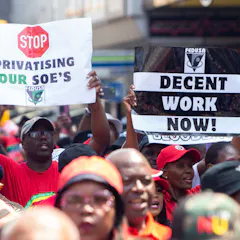
Elites have often shaped or manipulated state policies in ways that protect their interests and reinforce inequality.

Countries have promised to reduce their fossil fuel subsidies to fight climate change, but that’s harder to do than it sounds, as an energy law expert explains.
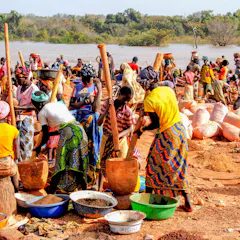
A just transition goes beyond ‘greening’ energy systems. It must also focus on the unrecognised labour – mostly of women – that makes green energy industries possible.
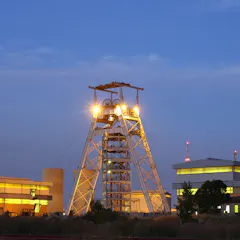
The majority of South Africans want government to regulate the mining industry more tightly to reduce its negative impact on the environment.
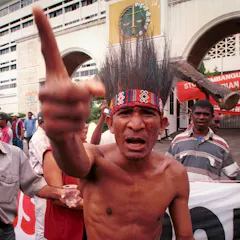
Energy transition minerals are essential to tackling climate change. But First Nations people must have a genuine say in where and how this happens.

For centuries, Pacific Islands have been raided by mining interests with little to show for it. Harnessing their enormous green mineral wealth must be done justly.
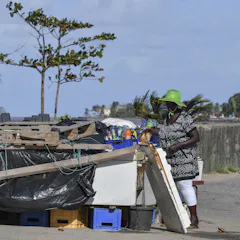
Buyers are avoiding Russian oil in response to the war in Ukraine. Can smaller producers leverage this moment to strike favorable deals with big oil companies?

Nord Stream 2 is a pipeline that will deliver Russian gas to Western Europe – and, by extension, increase Putin’s influence across the continent. That makes Ukraine and some other countries nervous.
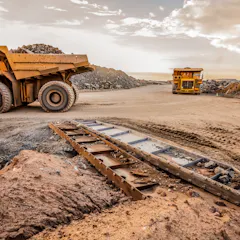
Mining is not just a physical engineering process. It requires social engineering as well.

Historically, western corporate maps have been privileged over Indigenous ones. But given the essential debate of territory in resource conflicts, maps are a crucial tool.
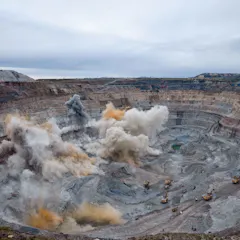
Much of the devastation of our globe’s natural resources traces its origins to early colonialism. These relationships continue to define the extraction of resources that severely impact ecosystems.
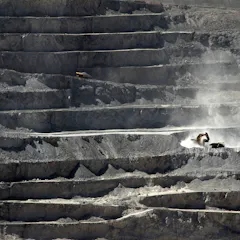
As companies and governments attempt to intensify extraction, cultural resistance offers a space for imagining alternative futures.

‘Social licence to operate’ is a term describing how much community support a project or company has. As the Northern Rivers CSG experience shows, failing to get it can have costly impacts for firms.
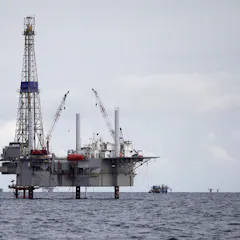
Guyana is on the verge of an oil bonanza that could bring in US$1 million a day. But if it’s not careful, this poor nation – population 750,000 – could fall prey to the dreaded ‘resource curse.’
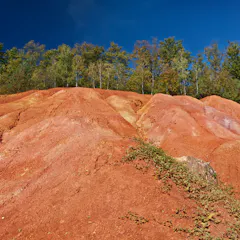
Mining brings some benefits to some but when extraction is over, the lack of wider benefits to all is keenly felt.
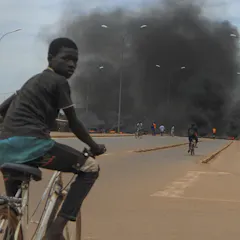
Grassroots protesters are questioning the logic of export-led ‘growth’ and renewed fiscal austerity pushed through the ‘Africa rising’ narrative. They want policies that meet their basic needs.
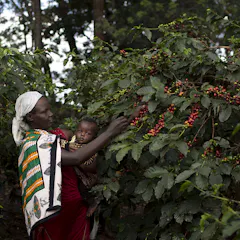
The downturn in the commodity boom will not automatically lead to diversification of Africa’s economies. This can only be achieved through a focus on creating learning economies driven by innovation.
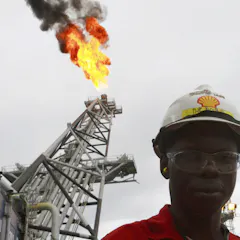
Huge investments have been made to develop Africa’s extractive industry. The challenge now is to forge collaboration between the industry and institutions of higher education to build a skills base.
Top contributors
-

Honorary/Visiting Fellow, Lancaster University
-
Lecturer, School of Environment, Science and Engineering, Southern Cross University
-
Professor of the Practice of International Development, Harvard Kennedy School
-
Qualitative Research Manager, Aluminium Stewardship Initiative (ASI), Honorary Lecturer, Camborne School of Mines, University of Exeter, and Visiting Research Associate, African Leadership Centre (ALC), School of Global Affairs, King's College London, King's College London
-
Lecturer, Queen Mary University of London
-
Professor of International Relations, The University of the West Indies: St. Augustine Campus
-
Senior lecturer, University of Sydney
-
Chair of National Native Title Council and Ngalia Cultural Leader | EthnoEcologist, Indigenous Knowledge
-
Associate Teaching Professor of Political Science, Penn State
-
Professorial Research Fellow, The University of Queensland
-
Assistant Professor of Government and International Affairs, Augustana University
-
Assistant professor, Utrecht University
-
Associate professor, Department of History, McGill University
-
Professor and Director, Centre for Social Responsibility in Mining, The University of Queensland
-
Professor of Political Economy, University of the Witwatersrand