
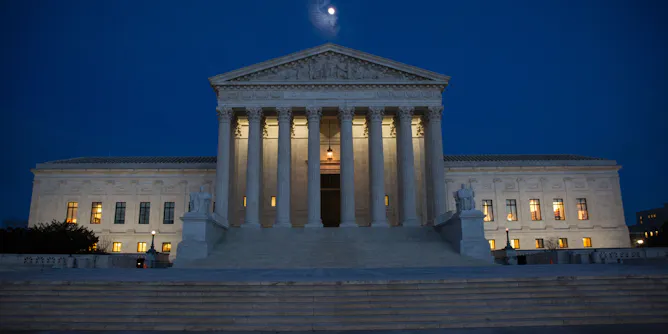
President Trump’s likely to be acquitted by the Senate in his impeachment trial. But the impeachment’s effects won’t end until lawsuits are resolved.
Articles on Executive power
Displaying 21 - 32 of 32 articles
Justin Trudeau will have to change his style of governing in the new minority government. Working in a co-operative government with other political parties could diminish executive dominance.
As the House mounts an impeachment investigation of President Trump, examples from Central and South America show that ousting an executive leader from office doesn’t always have the intended effect.
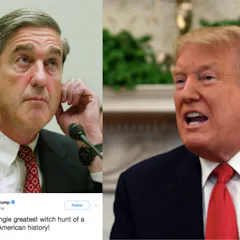
Legally, a person can obstruct justice even if he committed no other crime – though it is harder to prove. It all depends on the intent behind pressuring investigators, say, or firing an FBI director.
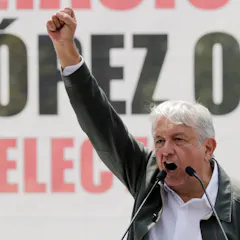
Mexicans want leftist Andrés Manuel López Obrador to transform the country. But the months leading up to his inauguration sent worrying signs about how he he will use the massive power of his office.
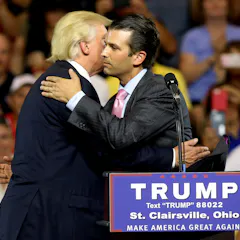
Presidents past have used this nearly limitless power to halt criminal prosecutions before. What’s to stop Trump?

In a free society, it ought never to be lawful for a government to detain people by executive order alone.
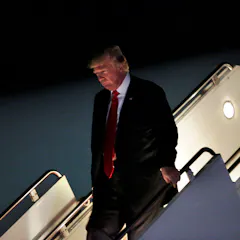
Ousting an executive leader from office doesn’t always have the intended effect, as these examples from Central and South America show.
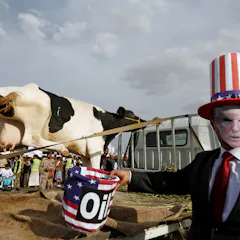
Congress is trying to curb the president’s ties to human rights abusers, harkening back to landmark legislation of the 1970s.
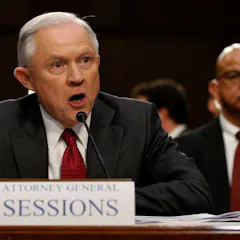
Laws that limit presidential power won’t enforce themselves – Congress must act.

The corporate veil, traditionally friend of directors and foe of outsiders, may have turned double agent.
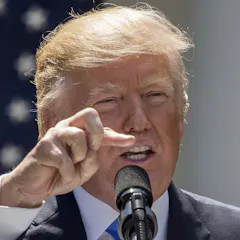
Research shows that context matters for understanding what a person’s words mean – especially when power dynamics are involved.
Top contributors
-

Associate Professor of Political Science, Rochester Institute of Technology; Institute for Humane Studies
-
Associate Professor of Political Science, The Ohio State University
-
Professor of Political Science, Concordia University
-
Senior Lecturer in Human Rights, Constitutional Law and Legal Theory, University of Wollongong
-
Senior Lecturer in Law, Charles Sturt University
-
Professor, American University School of International Service
-
Assistant Professor of Government, American University School of Public Affairs
-
Professor from Practice, University of Michigan
-
Professor of Law and Adjunct Professor of Political Science, Wayne State University
-
Professor of Law and Director, Health Law Program, University of Nevada, Las Vegas
-
Associate Professor, Faculty of Law, Monash University
-
Associate Professor of Instruction, The University of Texas at Austin
-
Professor in Company Law, University of South Africa
-
Lecturer in Security, Development and Leadership in Africa, King's College London
-
Associate Professor - Department of Accounting and Corporate Governance, Macquarie University