
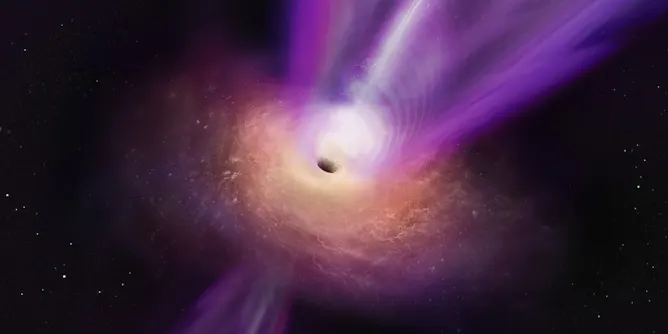
Black holes are a mainstay in sci-fi movies. How do these massive black holes, spread throughout our universe, actually work in real life?
Articles on Event horizon
Displaying all articles
Advanced technologies and the information they collect have revealed how black holes form and behave.
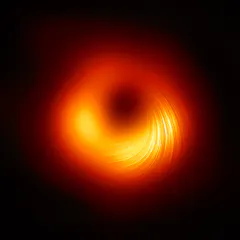
New research can help explain how black holes can produce powerful jets.
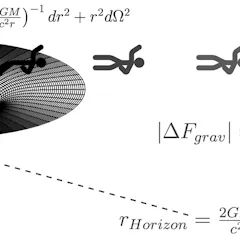
If you are a sci-fi junkie you’ve probably wondered what would happen if you were unlucky enough to fall into a black hole. How well you’d fare all depends on the type of black hole.
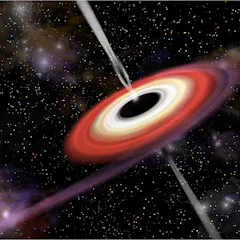
If you got too close to a black hole, it would suck you in and you’d never be able to escape, even if you were travelling at the speed of light.
This point of no return is called the event horizon.
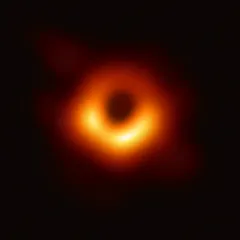
Scientists turned Earth into one giant telescope to capture the uncapturable.

Who wouldn’t want to travel in time, glimpsing the dinosaurs or peeking at humans 2,000 years from now? Now physicists have designed a time machine that seems deceptively simple.
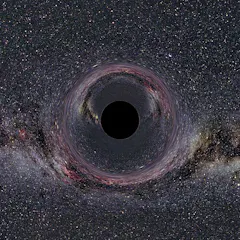
The first ever picture of the Milky Way’s black hole is expected to be a bright crescent shape rather than a disk.

Peruse the astrophysical literature and you could be forgiven for thinking black holes exist. But do they really? What makes a black hole special is its event horizon: a no-return gateway to an unknowable…
Top contributors
-

Professor of Theoretical Physics, Australian National University
-
Professor of Extragalactic Astronomy, Head of the Astrophysics Group, University of Bath
-
Professor, Physics & Astronomy, Bishop's University
-
Professor of Physics, University of Rhode Island
-
Professor and Director of the Centre of Excellence for Data Science, AI and Modelling, University of Hull
-
Assistant Professor of Physics, Grinnell College
-
UKRI Stephen Hawking Fellow, UCL
-
Assistant Professor of Physics, Grinnell College
-
Postdoctoral Research Fellow, Astrophysics, The University of Queensland
-
Astrophysics PhD Candidate, Penn State