
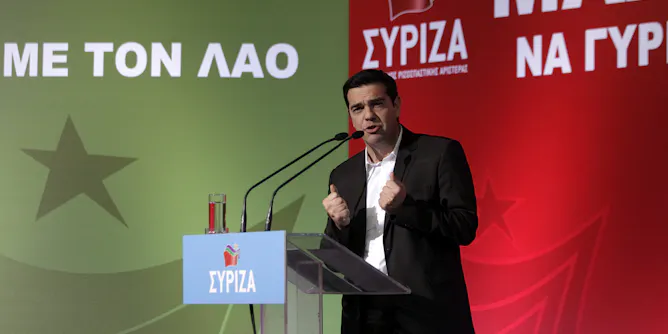
Greece is set for a January 25 election after the national parliament failed to elect a new president and already there is an air of crisis in a country that after five years of instability and austerity…
Articles on Eurozone
Displaying 161 - 180 of 238 articles
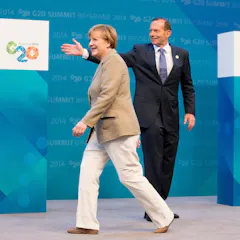
Shortly after the G20 summit in Brisbane, German Chancellor Angela Merkel and Australian Prime Minister Tony Abbott announced initiatives to increase trade and investment relations between Germany and…
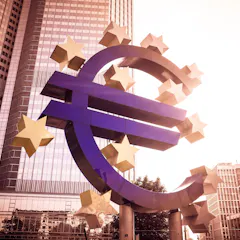
The crisis of growth in the eurozone economy is now in its seventh year and the outlook is truly grim. But a new consensus is gradually emerging that could help lift euro countries out of this ongoing…
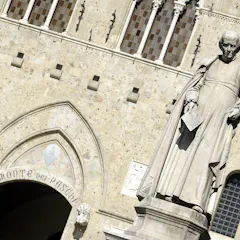
The results of the long-awaited European Banking Association (EBA) “stress tests” show that 25 banks were found wanting. Altogether, the banks were about €25 billion short of the capital required to be…
The European Central Bank (ECB) has announced the results of “stress tests”, which assess whether or not banks will fail, or require a taxpayer-funded bailout, if the economy were to turn sour. 130 banks…
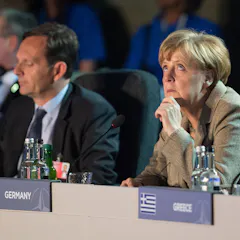
The long and slow-stunted recovery of the eurozone economies is a major source of concern for the IMF and international bankers. Six years after the collapse of Lehman Brothers signalled the onset of the…
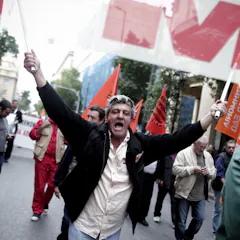
The latest round of talks between Greek ministers and the financial institutions managing the largest loan a country has ever taken have just ended in Paris. It might seem odd that the latest talks to…
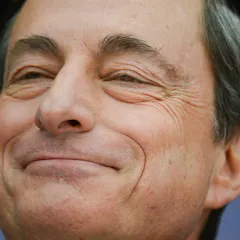
In July 2012 European Central Bank president Mario Draghi famously announced that the ECB would do “whatever it takes” to rescue the Euro. And he added: “Believe me, it will be enough.” In fact, it has…
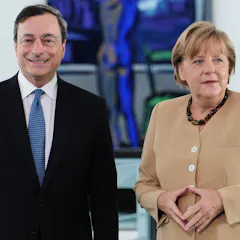
We are in a new phase of the post-crisis world. Growth is disappointing with Italy in recession, France close to it, and even Germany lagging. It is a useful reminder that recovery in a debt-overhang economy…
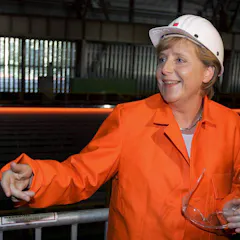
With France remaining economically stagnant, Italy falling back into recession, and Greece and Portugal still struggling to stand on their feet, the international community often looks to Germany, not…
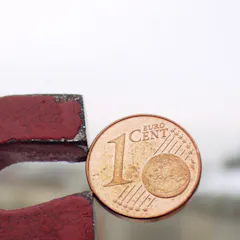
It’s not unusual for central banks with economies to revive to let their interest rates go negative in “real” terms by keeping them below the rate of inflation. The eurozone, the US and the UK have done…

I was trained as an economist, but that does not mean I think economics determines absolutely everything. However on occasion the impact of economic factors proves so strong that the causality is obvious…

What do the latest growth figures teach us about Europe? First, the overall growth performance of the European Union is worse and more fragmented than expected. GDP in vulnerable countries such as Greece…
Europe is back on the agenda in Scotland. William Hague wrote to the Scottish government calling for a plan B in case EU membership is refused. Meanwhile Alex Salmond warned EU member states that there…

The World Bank’s Global Economic Prospects report released this week is moderately optimistic about the short-term outlook of the global economy. World Bank economists anticipate an improvement in most…

In recent weeks there has been a spate of good economic news emanating from Ireland. The most significant was that in the latest 12-month period, employment increased by around 3%, an exceptional and surprising…
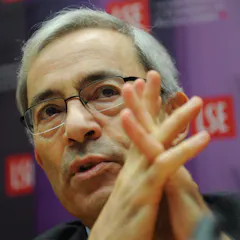
One of the most exciting things about working at the LSE is that we get to hear some of the world’s top thinkers and policymakers. One occasion that I recall vividly is the visit of two great Europeans…
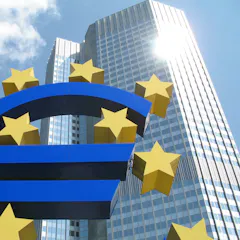
The EU has made progress on the construction of a banking union, by agreeing on common rules for dealing with failed banks. The downside is that these rules won’t kick in until 2015: the Eurozone faces…

The EU Commission’s autumn economic forecasts are due tomorrow. What makes this event special this year is that there are rumours about a possible change in the Commission’s approach to calculating the…

The eurozone crisis appears to have a new victim: Slovenia. To avoid the need for a bailout, the IMF has called on the country to immediately recapitalise its banks. This should worry the rest of Europe…
Top contributors
-

Dean of Business School, University of Southern Queensland
-
Professor of Economics at Maastricht School of Management and Jean Monnet Chair, Technical University of Cologne
-
School of Social Sciences, Monash University
-
Professor of Financial Economics, University of Leicester
-
Professor of Finance, University of Liverpool
-
Professor of Business Ethics, Warwick Business School, University of Warwick
-
Principal and Vice Chancellor, University of Glasgow
-
Senior Lecturer in Global Studies, Social Science & Planning, RMIT University
-
Senior Lecturer, Department of Politics, University of York
-
Irish Research Council Post-Doctoral Fellow in European Integration and Employment Relations, University College Dublin
-
Honorary Professor, Department of Economics, University of Stirling
-
Associate Professor in International Politics, University of Birmingham
-
Professor, International Studies, Swinburne University of Technology
-
Professor of Economics, University of Athens
-
Associate Professor of Economics, Western Sydney University