

The EU aims to launch the currency by 2029, but digital literacy and security are possible barriers.
Articles on European Central Bank (ECB)
Displaying 1 - 20 of 106 articles

And a US blockade of the strait of Hormuz is unlikely to ease the situation.
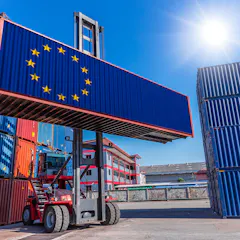
As new targets designed to help the EU economy work towards autonomy are unveiled, Europe’s “old growth” model and its R&D multinationals’ reliance on foreign markets come under review.
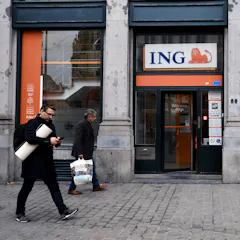
Private banks are launching a euro-pegged cryptocurrency. It could spell disaster for Europe’s economy.

Fears abound that cutting rates could tank European currencies, but there’s a a greater risk for them to take seriously.

A gap has opened up between inflation in the US compared to other regions like Europe and China.

Market expectations for rate cuts sooner rather than later have been dashed but some economies remain in danger of recession.

The world’s central banks face a range of dilemmas, not least whether high inflation – and therefore high interest rates – will become permanent.

Different rates of inflation indicate high prices have become ‘embedded’ in these economies.

Central banks are now taking digital currencies seriously, and the EU is exploring the idea. While an “e-euro” could increase monetary security and stability, the venture is not without risks.
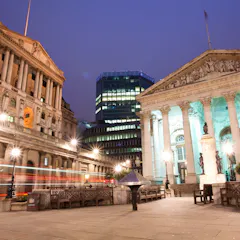
The Bank of England is factoring more than sky-high inflation into its base rate decisions right now.

The slow disappearance of cash has advantages, but it can also exclude the most vulnerable from socio-economic activity. It’s also a privatisation that deteriorates the symbolic dimensions of money.

Central banks are reaching into their toolkits to shore up the global financial system.
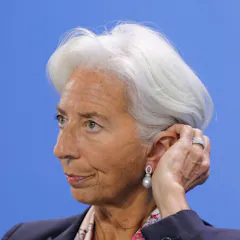
The banking crisis has been caused by the interest rate rises, and further hikes were supposed to be a no no.

Central banks have been signalling that rate rises are going to get more aggressive again, but can the economy actually take it?

What will happen to the euro zone’s rising prices in 2023? Here’s an overview of the factors which might influence inflation’s acceleration or deceleration.

Price inflation has hit countries differently, but most central banks and governments are concerned about the rising cost of living in 2023.

Central banks are raising interest rates to tame inflation, but 2023 will increasingly turn a technical decision into a political challenge.
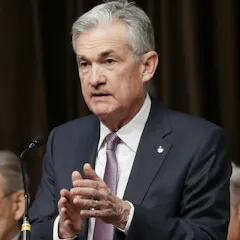
Central bankers are set to slow down their rate hikes.

Australia’s most important public financial institution, the Reserve Bank, runs on rules from the 1950s. For a 21st century economy, managing climate change needs to be added to its 3 key objectives.
Top contributors
-

Senior Lecturer in Economics, The Open University
-
Dean of Business School, University of Southern Queensland
-
Professor of Economics at Maastricht School of Management and Jean Monnet Chair, Technical University of Cologne
-
School of Social Sciences, Monash University
-
Principal and Vice Chancellor, University of Glasgow
-
Professor of Finance, University of Liverpool
-
Maître de conférences en finance, IAE de Nice, Université Côte d’Azur
-
Maître de Conférences en Finance, Université Côte d'Azur, IAE Nice - Université Côte d'Azur
-
Assistant Professor of Finance, Trinity College Dublin
-
Scientia Professor of Economics, UNSW
-
Professor of Economics and Political Science, University of California, Berkeley
-
Professor of Financial Economics, University of Leicester
-
Professor of Economics, University of Leeds
-
Associate Professor of Business, Boston University
-
Professor of Economics, Skidmore College