
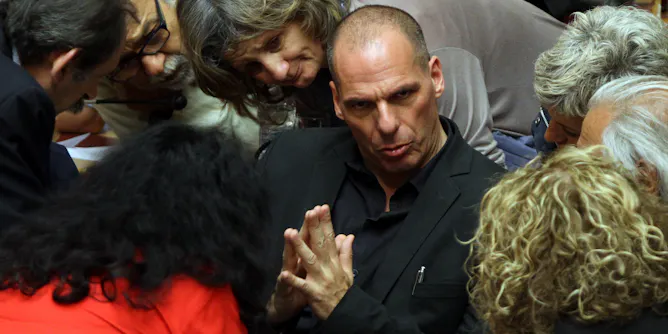
It might seem like Greece and Europe are arguing about money, but it’s really all about vengeance.
Articles on Eurozone
Displaying 101 - 120 of 238 articles

Debt relief should not be a divisive bargaining tool. Better that it is a formal part of a structured approach to risks in a currency union.
A famed game theory parable involving mutually assured destruction explains the Greek debt crisis and could explain the outcome of the Greek referendum this Sunday.

Conflating economic policy with morality is what could ultimately bring the EU unstuck.

A Greek default and exit from the eurozone might cost the UK the odd billion here and there, but the real risks are in a nervous banking sector and the devastating potential of Brexit.
Greece is set to become the first advanced economy to default on the IMF in its 71-year history.
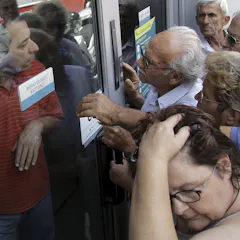
The Greek government shut all banks in the country on June 29 after the European Central Bank capped emergency funding to the lenders. Cash withdrawals from ATMs are now limited to €60 a day (about US$67…
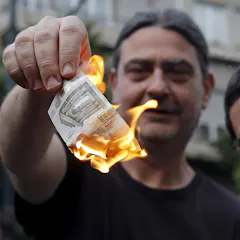
An analysis conducted in 2007 showed how severe the consequences would be if a country left the euro. How have eurozone officials let it get this far?
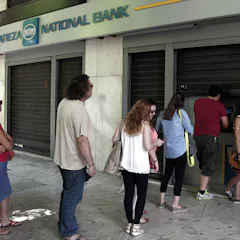
With the ECB freezing the level of emergency liquidity assistance it is providing to Greek banks, the nightmare scenario for Greece is already beginning to unfold.
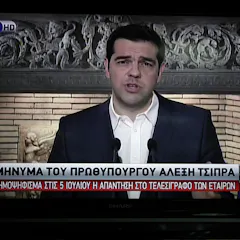
Austerity has crippled the Greek economy and Greek society. To accept more is a decision that should be given to the Greek people.
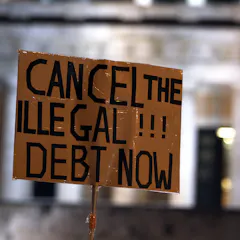
The Greek parliament’s Truth Commission on Public Debt has declared much of Greece’s €320 billion debt to be “odious” and illegal.

Investment for profit and development should lie at the heart of a solution for the imbalances in Greece and Europe.
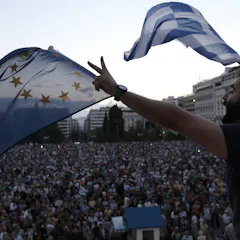
Whether Greece reaches a new bailout agreement or not, the country is in for a rough ride.
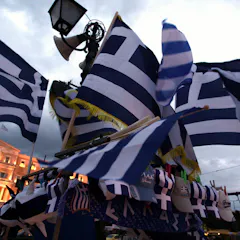
A continent in shock; a country on the brink; and a model for punitive debt negotiations that serves no one but the banks.
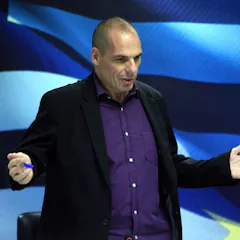
Like Diogenes the Cynic, Greece’s Syriza government have been intransigent in negotiations with powers stronger than them.
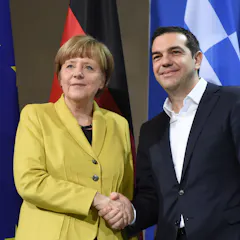
In order for Greece to move forward, Tsipras’ government needs to take the opportunity being offered it and accept the political cost.
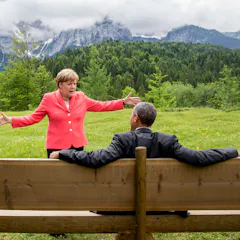
Much of the focus on Greece has been on how to deal with its debt. Yet the debt will not be tackled simply through cutting public spending.

Greece has undergone significant reforms in the last five years. A look at the effects on the country shows why Syriza’s rejection of further austerity is not unreasonable.
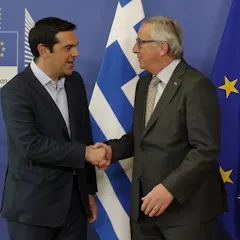
Nobody will gain anything from prolonging the current stand-off; it is time for all parties to contribute towards a pragmatic agreement.
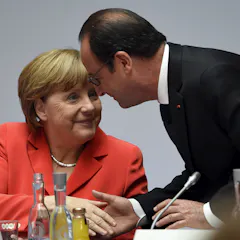
The EU membership renegotiations are already leaving David Cameron behind, but he can still seize the initiative again.
Top contributors
-

Dean of Business School, University of Southern Queensland
-
Professor of Economics at Maastricht School of Management and Jean Monnet Chair, Technical University of Cologne
-
School of Social Sciences, Monash University
-
Professor of Financial Economics, University of Leicester
-
Professor of Finance, University of Liverpool
-
Professor of Business Ethics, Warwick Business School, University of Warwick
-
Principal and Vice Chancellor, University of Glasgow
-
Senior Lecturer in Global Studies, Social Science & Planning, RMIT University
-
Senior Lecturer, Department of Politics, University of York
-
Irish Research Council Post-Doctoral Fellow in European Integration and Employment Relations, University College Dublin
-
Honorary Professor, Department of Economics, University of Stirling
-
Associate Professor in International Politics, University of Birmingham
-
Professor, International Studies, Swinburne University of Technology
-
Professor of Economics, University of Athens
-
Associate Professor of Economics, Western Sydney University