
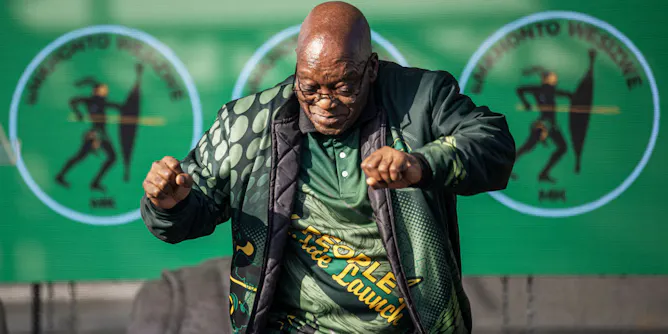
There’s confusion in South Africa about what’s driving the popularity of Jacob Zuma and his uMkhonto weSizwe party.
Articles on Ethnicity
Displaying 21 - 40 of 115 articles

Rwanda’s preoccupation with security is at odds with its desire for unity.

This bias in science journalism seems not to be due only to pragmatic concerns about time zones or the language spoken in the country where the scientist is based.
Young people have little desire to bring up their parents’ divisions, but older Rwandans remain fearful of a resurgence of tensions.

The environment sector is notoriously dominated by white men. But diverse voices and critical discussions about climate policies are key to making good, inclusive decisions about the future.
As in the federal and state governments, local elected officials are more likely to be white than their constituents. At times, such as with school boards, the differences are particularly stark.
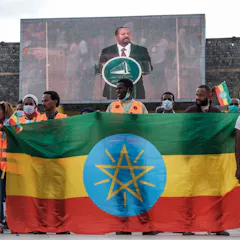
After more than 30 years of federalism, ethnic conflict in Ethiopia hasn’t been resolved – but neither has the country disintegrated.
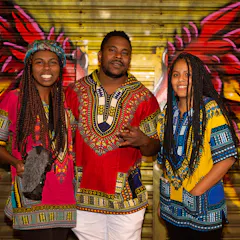
Primary identities are foundational and serve as the core part of an individual’s identity.
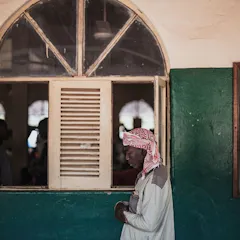
The overwhelming majority of Muslims in Mozambique reject the violence of the insurgents and their quest for a caliphate.
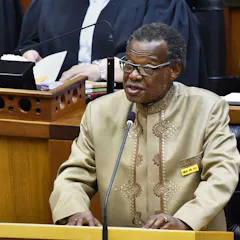
Buthelezi should not be dismissed as a mere stooge during apartheid. Yet, he deserves little praise as an advocate for human rights and civil liberties.
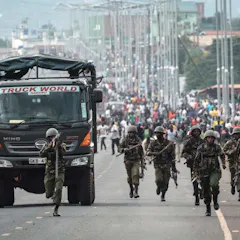
Kenya’s inability to move past ethnic ideology has made it difficult to develop alternative bases for political organisation.
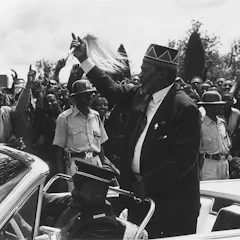
Jomo Kenyatta and his successor Daniel arap Moi set the tone for ethnic and authoritarian politics which Kenya has wrestled to free itself from in recent decades.
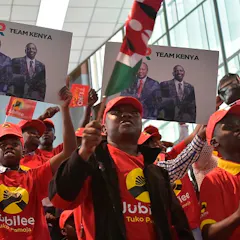
The fluidity of the country’s short-lived coalitions is a major cause of instability in Kenya.
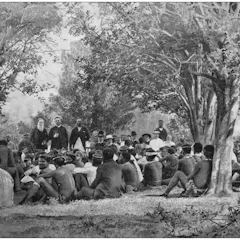
Missionaries and African translators working on local versions of the Bible divided South Africa’s ethnic groups by language.
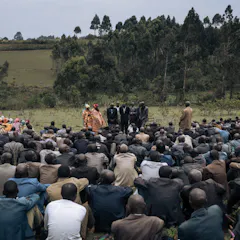
The Banyamulenge have been viewed as strangers in their own country – the violence targeting them revolves around this misconception.
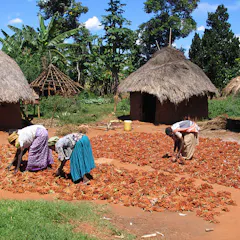
Lowering spatial inequalities can reduce economic and social inequities.

Labels that reflect our gender, racial or age-specific biases can often undermine others.
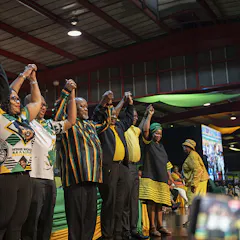
Mzala’s distinctive intellectual contribution combined a sophisticated grasp of revolutionary theory with the reality of ethnic nationalism.
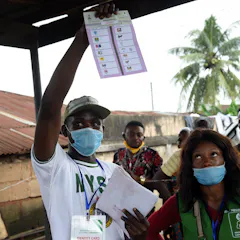
Ethnicity, religion, money, history and insecurity are among the forces that will be at play.
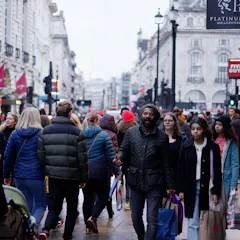
Instead of framing discussions about the UK population in terms of a white majority and “non-white” minorities, complexity should be the focus. Britain is increasingly diverse and less segregated.
Top contributors
-

Emeritus Professor of Sociology, University of Technology Sydney
-
Senior Lecturer of Political Science, Georgia Gwinnett College
-
Economist and Postgraduate Supervisor, University of Lancashire; Keele University
-
Distinguished Reserach Professor, Southern Centre for Inequality Studies, University of the Witwatersrand
-
Extraordinary Professor, Department of Political Sciences, University of Pretoria
-
Professor of Human Geography, Queen's University Belfast
-
Associate Professor of International Studies, University of Nottingham
-
Associate Professor of International Education and Politics, New York University
-
Professor of Comparative Politics, University of Warwick
-
Lecturer, Annenberg School for Communication and Journalism, Research Director Annenberg Institute of Sports, Media and Society, USC Annenberg School for Communication and Journalism
-
Professor of Sociology and Global and Africana Studies, University of Tennessee
-
Distinguished Professor of Sociology and Demography, Penn State
-
Director and Co-founder, Institute for the Study of "Race" & Social Justice and Professor of Sociology, University of New Mexico
-
Visiting Researcher in Journalism, Media and Cultural Studies, Cardiff University
-
Associate Fellow, SMC University