

Researchers found that when salespeople perceived their leaders as ethical, they felt more committed to the organization.
Articles on Ethics
Displaying 101 - 120 of 879 articles

Even when companies do not face legal liability, public pressure can help force a reckoning with complicity in genocide, slavery and other atrocities.

German philosopher Paul Tillich’s writings about affirming oneself in the face of anxiety, repression and meaninglessness ring as true today as in the 1950s.

‘Pañcatantra,’ a striking collection of animal fables in which birds, lions and others speak and reason as humans do, guides leaders through 3 ethical positions.

There’s no single, simple way to assess whether bugs feel pain, but research is giving scientists a better understanding of their abilities.

Employees often gravitate toward co-workers their own age, but relationships with colleagues at other stages of life have personal and professional benefits.

The more Americans isolate themselves from people in the other political party, the more stereotypes take over. In turn, that pushes people to isolate even more.

It may seem natural to use phrases like ‘ambitious’ or ‘think outside the box’ in job descriptions. Here’s when and why recruiters should rethink their approach.

To ensure the civil service is staffed by qualified people, human resource management in the public sector must be professional.

Around the world, museums are grappling with the question of what to do with human remains. This includes lifelike copies of those who may have died traumatically.
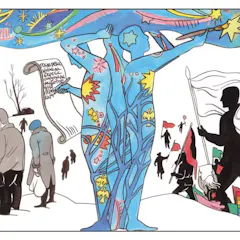
Graphic artist Victoria Lomasko’s journey highlights how censorship has intensified in Russia.

Alcoholics Anonymous helped make the Serenity Prayer famous, but it was written by one of the 20th century’s most influential theologians, Reinhold Niebuhr.

Soft power is a foreign-policy tool to get what a country wants without using force.

Marvel movies like ‘Black Panther’ and ‘Infinity War’ are the starting point for this ethics seminar.
At a time of low trust in government, conflicts of interest can further erode Americans’ confidence in officials.

Repatriation is now a legal responsibility, but also a matter of human rights, an anthropologist writes.

Philosophers have always wrestled with how love can be so morally important, yet so personal and even arbitrary.

For most animals, unlike humans, cars offer threats rather than benefits.

There has been a growing recognition that psychology, as a discipline, must engage more deeply with local contexts.
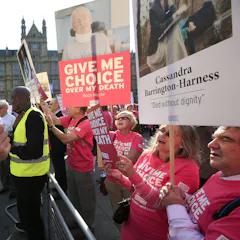
‘Coercion isn’t as bad or as problematic as is made out.’ A philosopher explains why.
Top contributors
-

Chen Su Lan Centennial Professor in Medical Ethics, National University of Singapore; Distinguished Visiting Professor in Law, University of Melbourne; Uehiro Chair in Practical Ethics, The University of Melbourne
-
Deputy Director, Institute for Ethics, Governance & Law, Griffith University
-
Associate Professor of Philosophy, Deakin University
-
Professor of Philosophy and Director of Applied Ethics Center, UMass Boston
-
Consultant Neonatologist and Professor of Ethics, University of Oxford
-
Lecturer in Bioethics, Monash University; The University of Melbourne
-
Research Fellow, Center for Philosophy and History of Science, Boston University
-
Professor of Bioethics & Medicine, Sydney Health Ethics, Haematologist/BMT Physician, Royal North Shore Hospital and Director, Praxis Australia, University of Sydney
-
Professor of Medicine, Monash University
-
Director of the Master of Bioethics degree program at the Berman Institute of Bioethics, Johns Hopkins University
-
Professor of Bioethics and Humanities, School of Medicine, University of Washington
-
Adjunct Senior Lecturer, Applied Ethics and CyberSecurity, Griffith University
-
Professor of Philosophy, Public Policy and Governance, University of Washington
-
Associate Professor of Pediatrics, University of Cincinnati
-
Senior Lecturer in Digital Ethics; Deputy Director, Centre for AI and Digital Ethics, The University of Melbourne