
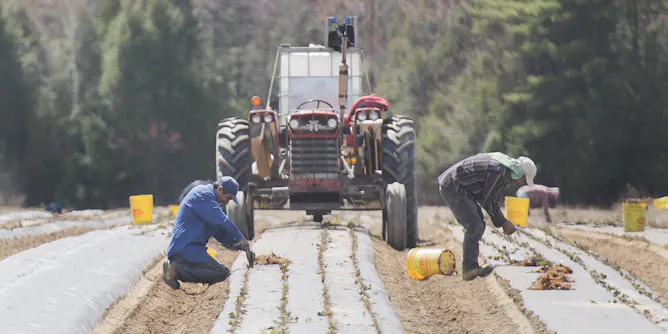
Access to culturally appropriate food may be key for newcomers to build connections with their communities.
Articles on Essential workers
Displaying 21 - 32 of 32 articles
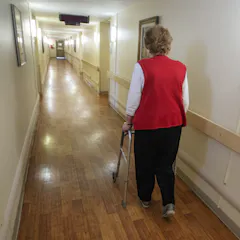
A research project may offer insight into how factors like laundry, food and art may be good places to start in addressing problems in long-term care homes.

Low-wage workers are less likely than high-wage workers to have access to things like masks, hand sanitizer and training on how to prevent COVID-19 transmission.

Many of Canada’s residents, including essential workers, have no choice but to ride transit. Service cuts may cripple their access to essential destinations if governments do not intervene.

The migrant laborers who staff American meat plants, construction sites and delivery services are working through the pandemic – and sending more funds back home than ever.

The risk to workers hasn’t changed, but employers no longer have the same labor market pressures to worry about.
The COVID-19 crisis has raised major questions about the viability of the economic, business and employment models that corporate and industry lobbyists are arguing for a return to.

Younger, unmarried or less educated workers are feeling the brunt of the economic effects of COVID-19. The fallout may deepen already existing inequalities.
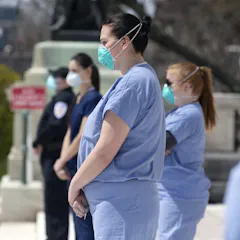
American workers tend to lack many basic benefits that are incredibly common in other countries, a situation the ‘Essential Worker Bill of Rights’ aims to remedy.

Imagine you could only travel if you can prove COVID-19 immunity. The pandemic is already creating new social divides, and it is important we stay alert to their possible ramifications.

An expert predicts a rethink on technology access, reconnecting with the working class, and more.

The government will provide free child care in a move aimed at ensuring parents, especially in essential services, are able to keep working. More than 945,000 families with 1.3 million children will benefit.
Top contributors
-

Professor of Practice and Graduate Program Director, UMass Amherst
-
Associate Professor of Sociology and Director of the Labor Center, UMass Amherst
-
Senior Lecturer (Organisational Behaviour), Te Herenga Waka — Victoria University of Wellington
-
PhD Student, Physical Geography, University of Toronto
-
Researcher, UQ Critical Thinking Project, The University of Queensland
-
PhD Candidate in economics, L’Université d’Ottawa/University of Ottawa
-
Professor of Public Administration, University of Central Florida
-
Doctoral Student - Department of Philosophy, University of Waterloo
-
Professor of Anthropology, American University
-
Assistant Professor, Global Health Policy, University of British Columbia
-
Professor of Sociology and Director of the Center for Employment Equity, UMass Amherst
-
Professeur au département d'études urbaines et touristiques, Université du Québec à Montréal (UQAM)
-
Professor of Management Studies, Te Herenga Waka — Victoria University of Wellington
-
Associate Professor of Health Promotion Sciences, University of Arizona
-
Ph.D. Candidate and Instructor in Geography, University of Kentucky