

Air traffic controllers are considered essential workers and required to work without pay during the shutdown, but there are reports some are calling in sick in greater numbers than usual.
Articles on Essential workers
Displaying 1 - 20 of 32 articles

Successful programs overseas have been highly targeted, financially innovative and used planning systems and public land to provide essential workers with housing they can afford.

With more than 2 million migrant workers finding food processing jobs in rural America, their struggle to find adequate health care remains elusive.

Britain is now desperately short of workers in some sectors. Yet our interviews with 100 women aged 50 and over show how hard it is for them to find secure employment
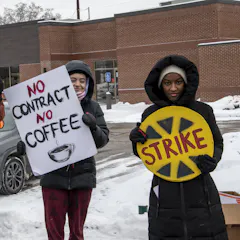
Workers have filed the most union petitions since 2015 and the number of strikes have surged, but whether this turns into a sustained increase in membership rates is still unclear.
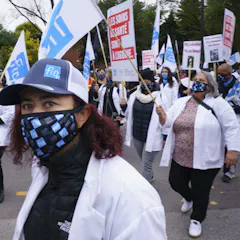
To prevent a shortage of health workers, public expressions of appreciation need to be backed by policies that provide dignity, decent working conditions, accountability and appropriate remuneration.

As the world locked down and a country’s racial reckoning heated up, this social scientist refined her approach to studying the lives of Black moms.

Two years of pandemic have put a severe strain on the mental health of America’s workers. Employers with a plan in place will be best equipped to help them cope.

Death care workers are at high risk for burnout as well as depression and other mental health concerns.

Supermarket employees, still laboring in crisis mode, continue to report significant rises in physical and mental health problems.

Throughout the pandemic, community carers have risked their own health and well-being, but have struggled for even basic support and equipment.

Increasing even part-time remote work disrupts public transit revenue. Agencies need to adapt fare structures and business models to meet the changing work market.
COVID-19 messaging frames staying home as a personal responsibility, but for many it’s a luxury they can’t afford. Like the language used for drug addiction, it stigmatizes low-income people.

Philosophy can help us see how some of the implicit beliefs we hold about work are mere myths. Success isn’t always due to effort, and the idea some jobs are more shameful to have than others.

Thousands of workers at meat- and poultry-processing plants have contracted COVID-19, and hundreds have died. A legal scholar recommends ways to make their jobs safer.

Even though the idea has been rejected earlier in the COVID-19 pandemic, we need to rethink immunity passports. Here’s why.

The absence of effective government policy doesn’t make citizens free. It takes away their power, leaving them less able to act to address their needs. That’s especially clear during the pandemic.

Challenge trials – purposefully exposing volunteers to the coronavirus – could speed up the development of a vaccine. But there are serious ethical concerns with this approach.
Stress and physical conditions make essential work unsafe, especially for Black and Latino employees.
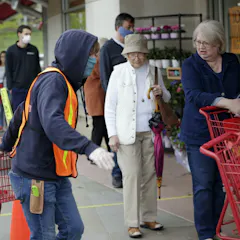
A new survey found that dealing with emotional customers over issues such as wearing a mask is taking an increasing toll.
Top contributors
-

Professor of Practice and Graduate Program Director, UMass Amherst
-
Associate Professor of Sociology and Director of the Labor Center, UMass Amherst
-
Senior Lecturer (Organisational Behaviour), Te Herenga Waka — Victoria University of Wellington
-
PhD Student, Physical Geography, University of Toronto
-
Researcher, UQ Critical Thinking Project, The University of Queensland
-
PhD Candidate in economics, L’Université d’Ottawa/University of Ottawa
-
Professor of Public Administration, University of Central Florida
-
Doctoral Student - Department of Philosophy, University of Waterloo
-
Professor of Anthropology, American University
-
Assistant Professor, Global Health Policy, University of British Columbia
-
Professor of Sociology and Director of the Center for Employment Equity, UMass Amherst
-
Professeur au département d'études urbaines et touristiques, Université du Québec à Montréal (UQAM)
-
Professor of Management Studies, Te Herenga Waka — Victoria University of Wellington
-
Associate Professor of Health Promotion Sciences, University of Arizona
-
Ph.D. Candidate and Instructor in Geography, University of Kentucky