

Our research found high rates of tech-based abuse – so our team is designing a new AI tool to detect and document toxic comments.
Articles on eSafety
Displaying 21 - 35 of 35 articles

The focus of media and political debates has been on teenagers and social media. But studies have shown about one in four Australian kids between eight and12 use social media too.
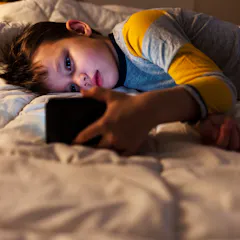
Meta wants Apple and Google to force parents to approve apps on their child’s phone. A better solution would be for the tech giants to cooperate.

While federal politics often seems top down on most issues fighting social media’s grip on children, the pressure now comes from the bottom up.

A sexualised gaze can fall on any image of a child online, no matter how innocently it was shared. But there is room for parents, policymakers and platforms to do more to protect children online.
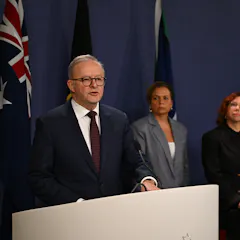
The government will introduce legislation to ban deepfake pornography and devote $925.2 million over five years to establish permanently a program with those eligible able to receive up to $5000.

Tackling violence against women will be the sole agenda item for a Wednesday national cabinet meeting.

In the court of public opinion, Anthony Albanese’s rejection of the up-yours attitude of the man he labels an arrogant egotistical billionaire is Likely to resonate with many Australians.

Is it reasonable to occasionally inspect a 13- or 14-year-old’s device, or does this undermine a new sense of privacy at this stage?

The platform formerly known as Twitter faces a A$610,500 penalty from the eSafety Commissioner.

For women outside urban Australia, technology-enabled abuse can pose more risk than for those in cities.
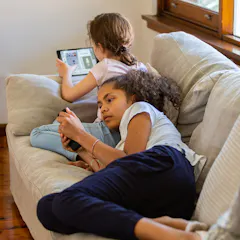
First Nations women are disproportionately more likely to be targets of online abuse. More needs to be done to respond to and support women experiencing technology-facilitated abuse.

When tech companies aim for ‘safety by design’, they can reduce the risk their products will be weaponised for stalking and domestic violence.

More than 30 million people play Roblox every day - and millions also make their own games for the booming kid-friendly digital platform.
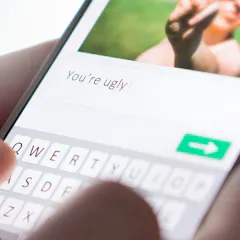
A new Australian study shows if a person has high levels of sadism and high self-esteem, they are more likely to troll.
Top contributors
-

Professor of Information Sciences & Director, Social Change Enabling Impact Platform, RMIT University
-
Professorial Fellow, University of Canberra
-
Adjunct Associate Professor, School of Law; Academic Co-Lead, CSAM Deterrence Centre, University of Tasmania
-
Associate professor, Monash University
-
Professor of Cybersecurity, School of Computing and Information Systems, The University of Melbourne
-
Sexologist & Lecturer and Research Fellow in Communications & Culture, Edith Cowan University
-
Professor in Information Systems, The University of Queensland
-
PhD candidate researching children's play in digital games, The University of Melbourne
-
Professor in Human-Computer Interaction, ARC Future Fellow, University of Sydney
-
First Nations Academic Associate, Australian National University
-
Senior research fellow, UNSW
-
Associate Professor, Federation University Australia
-
Research Fellow, Australian National University
-
Senior Lecturer in Digital Technologies for Learning, University of Wollongong
-
Executive Officer, Kimberley Institute