

Neuroscience labs around the world may need to reevaluate some of their assumptions about whether what works in animals will really produce meaningful treatments for people.
Articles on Epilepsy
Displaying 41 - 60 of 65 articles
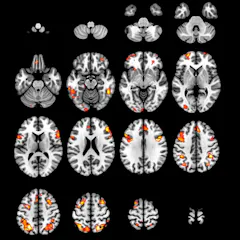
It can be very hard for people to accept that they – or their family member – are not to blame for their mental illness. Seeing the evidence in a scan can make a difference.
Epilepsy affects around 70 million people globally, 80% live in developing countries. A shortage of specialists, equipment and drugs complicates effective treatment and management.

Brain chemicals could explain some of these experiences, but so could bullying and social isolation.
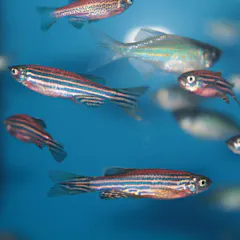
Simpler animal models can give researchers a much clearer picture of human diseases.
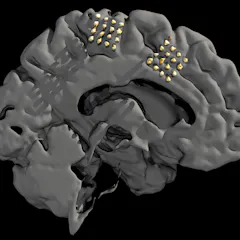
Our brains may be slower at making decisions than computers, but there is a massive evolutionary benefit to this tardiness.

With restrictions to cannabis loosening at the state level, research is badly needed to get the facts in order.

Food-borne diseases will continue to thrive unless Africa’s meat inspection programmes are upgraded.
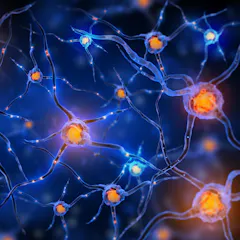
The next generation of neuroprosthetics could communicate directly with the brain to tackle diseases such as epilepsy and blindness.
The brain is the most complex organ and system know to humans. It helps to create a computer model of one to find out how things work, and why things go wrong.
Lyrica, the brand name for a medicine called pregabalin, is an anti-epileptic drug most commonly used to treat chronic nerve pain - a type of pain caused by abnormality in, or damage to, the nerves.

Dravet syndrome, first identified by French psychiatrist and epileptologist Charlotte Dravet over 30 years ago, is severe pediatric epilepsy.

Saying someone has epilepsy is a little like saying they’re ill. Its cause can vary from a brain tumour to an inherited genetic condition, the consequence of injury or a disorder affecting the brain.

The Prime Minister’s Prizes for Science – awarded at Parliament House in Canberra tonight – recognise excellence in science and science teaching. This year, we asked four prizewinners to reflect on…

Two researchers have shared the 2014 Prime Minister’s Prize for Science for their long-standing partnership on cracking the genetics of epilepsy. Sam Berkovic and Ingrid Scheffer, from the University of…
Researchers have developed a method for “silencing” neurons using an external light source. Research done by the Massachusetts…
A new study suggests the treatment pregnant women receive for epilepsy does not adversely affect their offspring. The study…
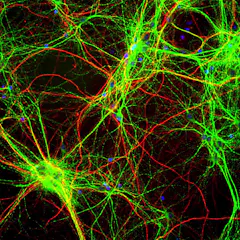
Let’s say Martians land on the Earth and wish to understand more about humans. Someone hands them a copy of the Complete Works of Shakespeare and says: “When you understand what’s in there, you will understand…
Pregnant women taking the epilepsy drug valproate risk having a baby with severe birth defects. Researchers at the University…
New genetic mutations which cause severe epilepsy have been identified. Analysing 4,000 genomes from epilepsy patients, two…
Top contributors
-

Director of Paediatrics, Austin Health; NHMRC Practitioner Fellow; Senior Principal Research Fellow, The Florey Institute; Professor of Paediatric Neurology Research, The University of Melbourne
-
Associate Professor of Neurology, University of Colorado Anschutz
-
Professor of Neuroscience and Neurology, University of Virginia
-
Laureate Professor in the Department of Medicine and Director of the Comprehensive Epilepsy Program at Austin Health, The University of Melbourne
-
Postdoctoral Fellow in Neurology, University of Virginia
-
Professor of Molecular Cell Biology, Royal Holloway, University of London
-
Assistant Professor of Psychiatry and Behavioral Neurosciences, Wayne State University
-
NHMRC Principal Research Fellow, Professor, and Group Leader, Institute for Molecular Bioscience, The University of Queensland
-
Research Associate, University of Connecticut
-
Professor of Neurology, UCL
-
Adjunct Associate Professor, The University of Queensland
-
Professor in Substance Use, Liverpool John Moores University
-
Professor Emeritus of Applied Philosophy, Glasgow Caledonian University
-
Reader in Cognitive Neuroscience, Director of the Sheffield Autism Research Lab, University of Sheffield
-
Postdoctoral research student, KEMRI-Wellcome Trust Research Programme, Kenya Medical Research Institute