

COVID models helped counter the virus but revealed less about the impacts of emergency measures. More sophisticated modelling can help balance those trade-offs.
Articles on Epidemiological modelling
Displaying all articles
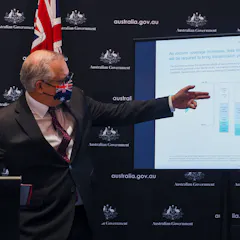
20-39 year olds are ‘peak spreaders’. If we vaccinate them, it reduces the risk for all of us.

COVIDSafe was only able to detect a handful of cases successfully, but that doesn’t mean Bluetooth isn’t a helpful tool for addressing viral spread.

Researchers created an artificial society inside a computer to model what would happen to virus transmission under different policies. It helped inform Victoria’s exit strategy.
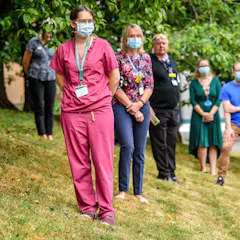
A simple computer model shows that safety measures can significantly impact both the exponential spread of COVID-19 and mortality rates.

There are different types of epidemiological models. Those that rely on understanding of how disease spread are most useful now that most states have passed their peak case numbers.
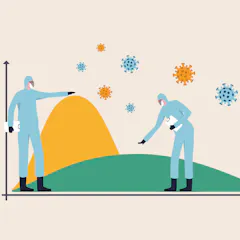
The questions researchers around the world are working on day and night.

Currently, the number of confirmed global COVID-19 cases is doubling about every six days. At this rate, Australia’s health sector will be unable to cope.

Applied Epidemiological Modelling has enormous potential to improve how decisions are made about public health in African countries.
Top contributors
-

Director: SACEMA, South African Centre for Epidemiological Modelling & Analysis (SACEMA)
-
Junior researcher at SACEMA, South African Centre for Epidemiological Modelling & Analysis (SACEMA)
-
Research Fellow, Population Interventions Unit, Centre for Epidemiology and Biostatistics, Melbourne School of Population and Global Health, The University of Melbourne
-
Associate Professor of Data Science, The University of Queensland
-
Lecturer in Simulation and Modelling, Brunel University of London
-
Australian Laureate Fellow, The University of Melbourne
-
Senior Research Fellow, Population Interventions Unit, Centre for Epidemiology and Biostatistics, Melbourne School of Population and Global Health, The University of Melbourne
-
Professor of Biology, McMaster University
-
Director of the Janet and Mark L. Goldenson Center for Actuarial Research, University of Connecticut
-
Professor and Chair of Epidemiology, University of Michigan
-
Chair in Epidemiology, Deakin University
-
Professor of Data Science; Director, Adelaide Data Science Centre, Adelaide University
-
Environmental Epidemiology and Population Health, Brunel University of London
-
PhD Candidate, Adelaide University
-
Research Fellow in Agent-based Modelling, Brunel University of London