
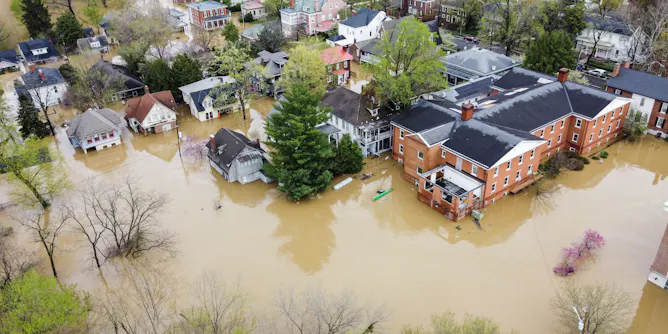
At the same time, Americans have been facing worsening storms, wildfires and deadly heat waves.
Articles on Environment
Displaying 81 - 100 of 306 articles
A major atmospheric river brought record precipitation to the Pacific Northwest, yet the snow and water supply still suffered. It’s a growing problem.
New research shows how identity-driven assumptions can turn common ground into conflict.
While wind and solar energy led in investments globally, liquefied natural gas is also booming. A former climate envoy for Germany explains what’s coming and the countries to watch.
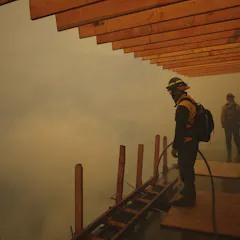
When cities burn, plastics, electronics, cleaning chemicals and much more create a toxic brew. Studies launched during the LA fires a year ago show exposure is often strongest inside homes.
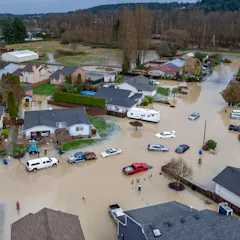
Levees protect more than 7 million buildings in the US today, yet they got a D-plus grade in 2025. A new study found 487 cases where rising water overtopped levees in the past 15 years.
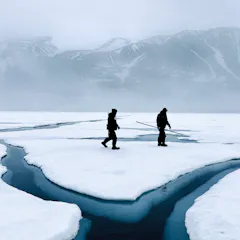
The 20th anniversary of the annual report tracks how sea ice, snow cover and many other vital signs of the Arctic have changed, and the impact that’s having on people and wildlife.

An innovative study mapped preterm births, low birth weights and infant mortality to municipal water wells downstream from PFAS-contaminated sites. The results show the high cost of PFAS harm.
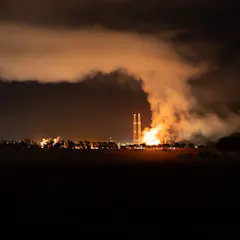
The Moss Landing battery fire became an unintended experiment – showing how burning lithium-ion cells scattered nickel, cobalt and manganese over a protected marsh.

Iran’s sprawling cities and irrigated agriculture, along with tight market controls, have left the country vulnerable to drought. There are steps that would help.
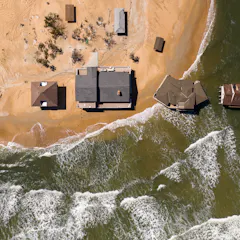
Understanding what happens to Antarctica’s ice matters, because as it melts, sea levels rise, affecting lives and economies around the world.
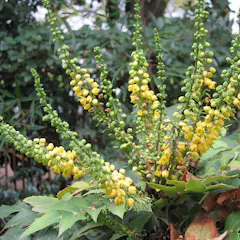
The people who manage America’s aquifers, wetlands, shorelines and recreation areas rely on federal science as they face new and rising risks in a changing climate.
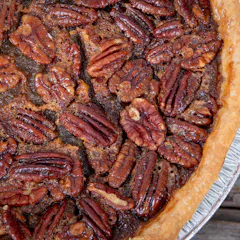
Pecans are a truly American nut: They grew on George Washington’s estate, and they flew to space on an Apollo mission.

When Fusarium graminearum infects wheat, it can pose a risk to humans, animals and agriculture.

Breweries nationwide create waste at several stages of the beer-making process. Repurposing parts of this waste could improve antibacterial drugs.

The crucial reef-building corals were decimated by a marine heat wave in the Florida Keys. Can advances in restoration help them recover?
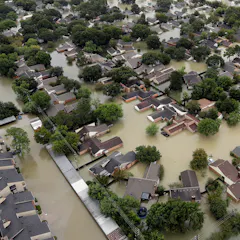
In general, people are moving to safer homes after disasters, but the vast majority are selling, meaning someone else is now taking on that risk. Buyout programs can help.

The Erie Canal solidified New York’s reputation as the Empire State, but it also opened up an expressway for invasive species to reach the Great Lakes.
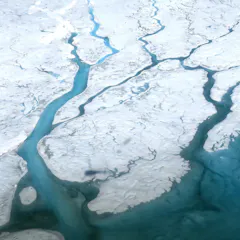
A report warns that coral reefs may have reached their tipping point, and ice sheets, ocean currents and the Amazon are at growing risk. But, what does that actually mean?

Many of these extraordinary places are increasingly at risk due to escalating climate change, invasive species, and and a lack of consistent funding to protect them.
Top contributors
-

Professor in Wildlife Ecology and Conservation, School of Life & Environmental Sciences, Deakin University
-
Professor of Transport Technology and Sustainability, Swinburne University of Technology
-
Senior Fellow in Energy and Climate Change, Grattan Institute
-
ARC Future Fellow and Associate Professor in Climate Science, ARC Centre of Excellence for 21st Century Weather, The University of Melbourne
-
Research Associate, Institute for Climate Risk and Response, UNSW
-
Adjunct Professor of Environmental Geography, CQUniversity Australia
-
Distinguished Professor of Ecology, Fenner School of Environment and Society, Australian National University
-
Professor of Law, Deakin University
-
Professor in Conservation Science, School of the Environment, The University of Queensland
-
Professor, School of Economics, The University of Queensland
-
University Fellow in Biodiversity, Charles Darwin University
-
Professor of Conservation Biology, Charles Darwin University
-
Senior Research Associate, School of Agriculture, Food and Ecosystem Sciences, The University of Melbourne
-
Postdoctoral Research Fellow in Conservation and Wildlife Management, University of Sydney
-
Chief Research Scientist, CSIRO Environment; Executive Director, Global Carbon Project, CSIRO