
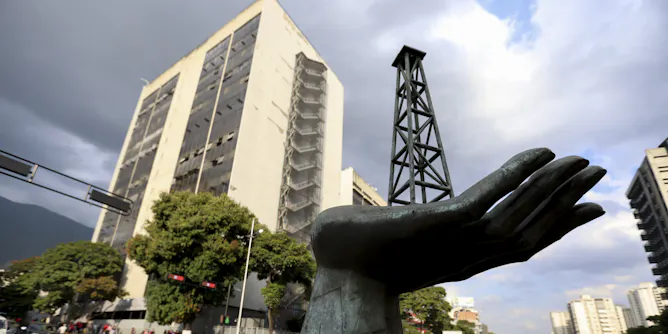
Political chaos, sanctions and technical mismanagement of the oil industry may have taken a heavy toll on the industry.
Articles on Energy
Displaying 61 - 80 of 234 articles
Energy projects are expensive and take a long time to build. Where to build them is often also a difficult, even controversial, question.
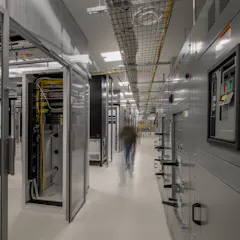
How many data centers will be built – and how much electricity they’ll need – is uncertain. Being prepared costs money, but so does being unprepared.
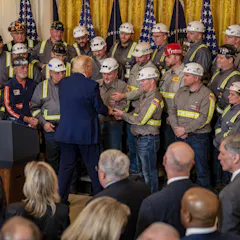
The Trump administration has made several efforts to support the coal industry, but even if coal were free, the economics aren’t in its favor.
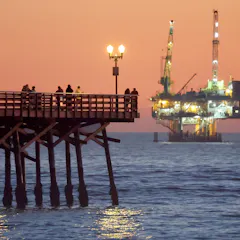
Industry leaders have objected to reversals of long-standing policies, and market forces are moving against the Trump administration’s hopes.
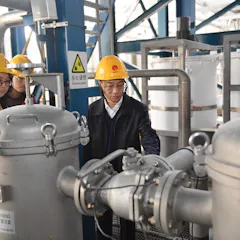
Rising electricity demand has researchers exploring a wide range of methods to generate more power, including a type of nuclear reactor that’s smaller than traditional nuclear plants.
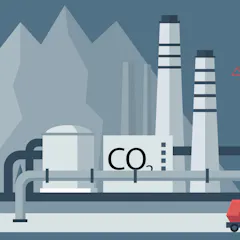
To reduce emissions put into the atmosphere, Google is using carbon capture and sequestration. But not all CCS projects are the same.

More than 12 million US households keep their homes either too cold or too hot, sacrificing comfort because they can’t afford to pay their energy bills.
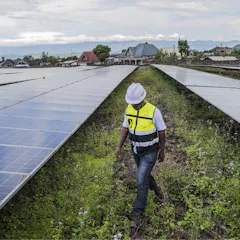
Politics is just one challenge. The cost of borrowing to build wind and solar farms is another, especially in fast-growing developing countries. There are solutions.
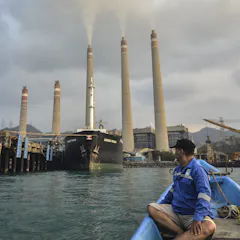
Nearly a third of all countries worldwide have pledged to phase out their unabated coal-burning power. But China and India are still adding coal plants – for now.
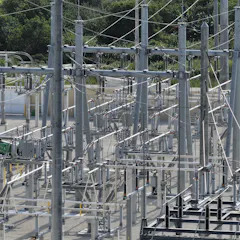
The equipment needed to keep the grid running is hard to make, and materials are limited. And supply-chain bottlenecks are taking years to clear.
Battery researchers are seeking options with better performance, improved environmental sustainability and lower cost than lithium-ion batteries.

Nearly a quarter of US households struggle to pay their energy bills at the same time as America’s social safety nets, including home heat aid, are disappearing.
Many of the canceled grants were investments in the science and infrastructure necessary to keep the lights on in coming years, especially when the grid is under stress.
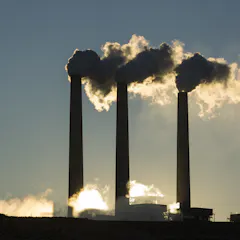
As soon as the 2018-2019 shutdown began, coal-fired power plants started emitting more particulate matter pollution. And when the inspections resumed, the levels dropped back to normal.

The situation had to get pretty bad before people really forced the government to act. But the effort was ultimately successful.
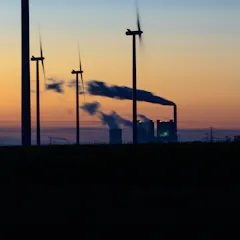
The International Energy Agency expects global renewable energy capacity to double by 2030, even with lower growth in the US, but fossil fuels still dominate.
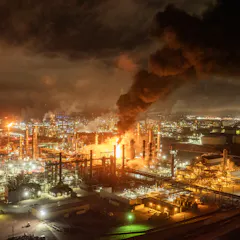
Because of the federal government shutdown and proposed budget, key federal investigations may stop, including into what happened at a Chevron refinery in California in October 2025.

Just a gram of these tiny crystals can have an internal surface area as big as a soccer field. A materials expert explains the almost magical chemistry of MOFs.

The Earth’s own heat can be brought up from underground and used as a source of energy that emits almost no greenhouse gases and can operate 24/7 almost anywhere on the planet.
Top contributors
-

Professorial Fellow, University of Canberra
-
Senior Fellow in Energy and Climate Change, Grattan Institute
-
Professor and Director, Victoria Energy Policy Centre, Victoria University
-
Professor of Transport Technology and Sustainability, Swinburne University of Technology
-
Professor of Law, Deakin University
-
Professor, School of Economics, The University of Queensland
-
Senior Industry Fellow, Environment and Planning, RMIT University
-
Senior Research Associate, Renewable Energy & Energy Systems Analyst, UNSW
-
Research Associate, Institute for Climate Risk and Response, UNSW
-
Lecturer in International Studies, University of Washington
-
Professor of Sustainability, Curtin University
-
Professor of Engineering, Australian National University
-
Adjunct Professor in Sustainability, The University of Western Australia
-
Professor of Public Policy and Director of the Payne Institute, Colorado School of Mines
-
Climateworks Centre Country Lead, Australia, Monash University