
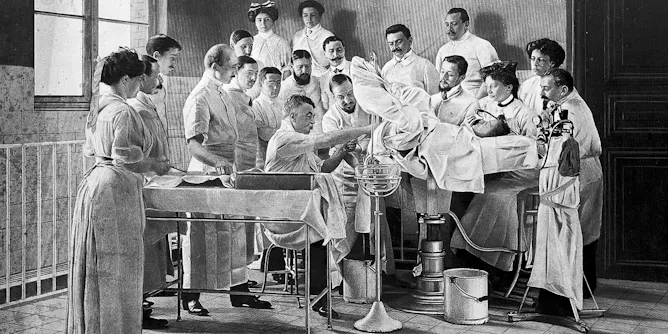
Endometriosis is an age-old condition and yet until recently, the complex disorder remained largely overlooked due to medical and social perceptions of women’s pain.
Articles on Endometriosis treatment
Displaying all articles
Women who had been exposed to violence in their childhood had a twofold greater likelihood of being diagnosed with endometriosis.

In clinical trials, linzagolix has been shown to reduce painful periods and pelvic pain more generally.

The daily tablet can help reduce pain and inflammation caused by the chronic and often debilitating condition.

Many are living with the burden of endometriosis and not receiving treatments that could improve their quality of life. So what might pelvic health physio involve?

A drug newly approved by the Therapeutic Goods Administration for endometriosis is available in Australia.

Clinicians now able to give a clinical diagnosis of “suspected endometriosis” based on symptoms and a physical examination.

Women with endometriosis already wait up to eight years for a diagnosis in the UK. Post-pandemic delays could make this even worse.

GPs don’t always recognise the metaphors and similes women use to describe their pain – which could mean delays in a diagnosis.
Our research revealed around 40% of women with endometriosis have neuropathic pain – a type of pain that doesn’t respond to traditional pain treatments.

Taking sufferers’ accounts seriously is the linchpin to improvement.

Endometriosis affects 10% of women, but many live with painful symptoms of the condition for years without a diagnosis. A lack of non-invasive screening tools and normalisation of period pain both play a role in this.

Endometriosis is cut or vaporised with an electric current or laser. It ranges from a simple, 20 minute operation to complex surgery involving important organs such as the bowel and bladder.

Pregnancy is often mentioned as a treatment or a ‘cure’ for endometriosis. Pregnancy may suppress the symptoms of endometriosis, but it is not a cure.
Top contributors
-

Professor of Medical and Feminist Anthropology, Birmingham City University
-
Associate Professor at NICM Health Research Institute, Western Sydney University
-
Professor of Pharmaceutical Chemistry, Macquarie University
-
Postdoctoral Researcher, Nuffield Department of Women's and Reproductive Health, University of Oxford
-
Associate Professor, Gynaecological Surgeon and Sonologist, McMaster University; Adelaide University
-
NHMRC Leadership Fellow and Head of Women's Health Theme, The Ritchie Centre, Hudson Institute of Medical Research, Hudson Institute
-
Postdoctoral Scientist, Endometrial Stem Cell Biology, Hudson Institute
-
Associate Professor, Pain in Women Group, University of Oxford
-
Postdoctoral Researcher, Pain in Women Group, University of Oxford
-
Postdoctoral Research Scientist, Endometrial Stem Cell Biology, Hudson Institute
-
Pharmacist and PhD Candidate, University of Sydney
-
Adjunct Senior Lecturer, Clinical Trials Network Manager, UNSW
-
Associate Professor, Nuffield Department of Obstetrics and Gynaecology,, University of Oxford
-
Visiting Professor of Physiotherapy, University of Technology Sydney
-
Associate Professor in Physiotherapy, University of Technology Sydney