

Tupac is proof that being young, marginal and Black does not necessarily mean being powerless.
Articles on Empowerment
Displaying all articles

Both genres recently celebrated big birthdays. From their origins in the clubs and jams of the 1970s and 1980s, house and hip-hop have become global cultural forces.
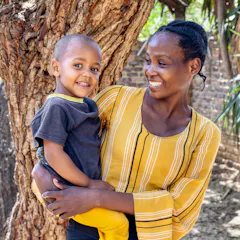
Community-engaged research that includes the meaningful participation of young mothers can make them feel heard and empowered, and it informs better policymaking on teen pregnancy.

A better understanding of Indigenous businesses in Australia could build on the already significant contribution they make to the economy.

An expert on employee motivation explains four challenges companies should address if they truly want to empower their workers.

A leadership expert offers her advice on how to tackle a surprisingly widespread problem.

Skills training in Zimbabwe excludes students from poor backgrounds. The informal sector should be used as a training ground for them.

There is a pervasive message from fashion, tech and the media that women can change their lives if they could be more confident.

When people are invested in one another and share a sense of place, they can respond to terrible events in admirable, courageous ways.

Our study found that some individuals who previously participated in destructive fishing practices can transform into inspiring leaders and influence others to protect coral reefs.

Formally planning ahead in case of illness or injury can provide you a voice when you may no longer have one - here’s our guide
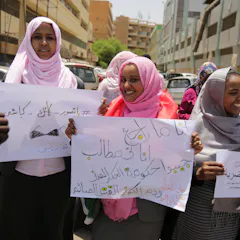
Ensuring meaningful participation of women in the transitional government can be a first step toward achieving gender equality in a future Sudan.

In some West African communities, age and magico-religious beliefs have a huge role to play in a woman’s independence.

The gaps in African government are twofold: governance and education. It is important to focus on both areas to bring about overall improvements.

We don’t actually know how NDIS participants weigh their personal goals and then make choices about achieving them through services, supports, therapies and interventions.
Top contributors
-

Post-Doctoral Research Fellow, Adelaide University
-
Assistant Professor of Management, Purdue University
-
Lecturer in Social Epidemiology and Public Health, University of Stirling
-
Associate Professor, University of Antwerp
-
Professor of Media and Communications, London School of Economics and Political Science
-
Senior research economist, African Development Bank
-
Professor of Social and Cultural Analysis, City St George's, University of London
-
Human Ecology Researcher, Indonesian Institute of Sciences (LIPI)
-
Senior Lecturer in Law, University of Huddersfield
-
Assistant Professor, Global Inclusion and Social Development, UMass Boston
-
Researcher, University of Cape Town
-
Professeure de leadership, EDHEC Business School
-
Lecturer, Social Work, University of Stirling
-
Associate Professor of International Studies, University of Nottingham
-
Professor, specialising in Indigenous leadership, The University of Melbourne