

As the year ends, New Zealand has done well in important global measures of success. But closer to home, the numbers often told a different story.
Articles on Employment
Displaying 261 - 280 of 802 articles

Rates of full-time employment and pay relative to other workers have fallen for the latest generation of new workers. Yet the HILDA Survey shows their reported job satisfaction has risen.

Problems limiting the growth of the sector aren’t self-inflicted. They’re firmly rooted in the country’s development agenda.

The flipside of workers quitting or changing jobs during the pandemic is a huge new talent pool in the market – are employers and recruiters ready to make the most of it?

A record number of Americans are quitting their jobs. But before you opt to join them, you should consider the risks and costs.

Teaching entrepreneurial skills is a staple in business schools. But it can benefit all students – including majors in engineering, agriculture and even the arts.

Enrollment in online courses surged during the pandemic. An expert on online learning behaviors shares what to do before, during and after taking a course in order to reap the most benefits.

These two groups bounced back more quickly in the jobs market than certain other groups, although they may still experience lasting consequences.
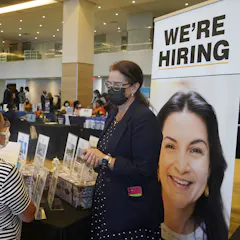
A record share of workers quit their jobs in September. A human resources scholar explains how this is a trend that predates the pandemic.

Jobs, economic growth, wages growth and even home price growth are likely to look less threatening by the time we are asked to vote.

October’s employment report was rosy, with more than 500,000 jobs added in the month. There were also signs that the American workforce was heading back to the old normal.

Some in government and industry aim to fill Australia’s skills shortages with migration policies. But VET numbers are up, suggesting many Australians are re-skilling. We could encourage more of this.
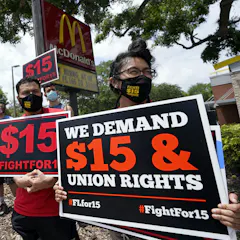
Opponents of a new California law that may lift the minimum wage for fast food workers claim it’ll cost jobs. How raising it affects employment is among the most studied issues in all of economics.

Basically short courses, microcredentials aim to keep people employed and learning throughout life.

Job creation might well have slowed, but a deeper dive into employment data suggests the picture is actually pretty rosy.

The environmental benefits of less commuting and fewer in-person events could be lost.

CC BY-NC-ND11.2 MB (download)
Skills, knowledge and a qualification does not ensure successful employment outcomes for graduates.

Several groups are going to be disproportionately affected when the £70 billion scheme comes to an end.

Accountancy firm KPMG’s plans for greater social balance should be applauded.

Can the structural barriers to low-skilled employment growth be overcome?
Top contributors
-

Professor of Economics and Political Economy, University of Leeds
-
Professor of Economics, The University of Melbourne
-
Professorial Fellow, University of Canberra
-
Professor of Economics, University of Nebraska Omaha
-
Laurie Carmichael Distinguished Research Fellow at the Centre for Future Work, Melbourne; and Professor Emeritus, Griffith Business School, Griffith University
-
Associate Professor, Bankwest Curtin Economics Centre, Curtin University
-
Professor of Economics, University of Canberra
-
Professor of Law, University of Oregon
-
Professor of Employment Relations & HR Management, University of Birmingham
-
Dean of Business School, University of Southern Queensland
-
Professor of Work and Employment, University of Southampton
-
Director of the King's Global Institute for Women's Leadership, Professor of Work and Employment, King's College London
-
Scientia Professor of Economics, UNSW
-
Visiting Fellow, Crawford School of Public Policy, Australian National University
-
Adjunct Senior Lecturer, Applied Ethics and CyberSecurity, Griffith University