

As AI becomes more capable and embedded in daily routines, anxieties surrounding it are likely to intensify.
Articles on Employability
Displaying 1 - 20 of 33 articles

Many employers want staff who can work in a team, manage complex projects and communicate well. They value problem-solving skills and adaptability. Now consider the skills taught in drama class.

Don’t fret the AI job ‘apocalypse’. While we can expect disruption across different industries, this will come with opportunities.
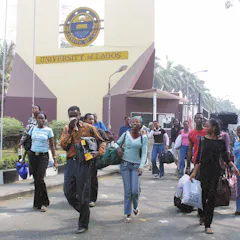
In its present form, the new Higher Education Bill lacks a governance framework that addresses the complaints of fee-paying students.

A series of interviews with recruiters in the banking sector reveals the existence of a dress code to which candidates are expected to conform.

Networking involves a skillset that can be learned and practised. Doing so – online or in person – is crucial to career advancement.
CC BY-NC-ND11.2 MB (download)
Skills, knowledge and a qualification does not ensure successful employment outcomes for graduates.

The question for universities is no longer whether to offer work-integrated learning but how to do it well, especially now that digital technology has expanded the scale of what is possible.

Universities shouldn’t only attend to the knowledge and skills graduates need for work but also the factors that give graduates a better chance of earning a living and participating in society.

Completing two degrees at the same time can increase graduates’ rate of success in finding full-time work by up to 40%.
There are a few things South Africa needs to do to close the gap between what the education system produces and what the job market needs.

When a degree is not enough, how can students make themselves more employable?

Work Integrated Learning includes placements, internships and work experience. It is increasing as students are expected to be more work-ready and to contribute to the economy post-graduation.

To make graduates employable and close the training gap, we need to strengthen links to industry and pay attention to the changing needs of businesses.

Despite the hype about STEM skills, research shows interpersonal, problem-solving and entrepreneurial skills will make you more employable in the 21st century.
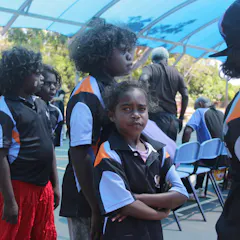
Indigenous students who graduate from university have slightly higher full-time employment prospects than their non-Indigenous peers.

We take a closer look at some of the common claims made this year to see if there is any truth to them.

Teaching students skills such as creative thinking and problem solving will become part of the curriculum from 2017. But in order to assess these capabilities, teaching styles will have to change.

Horrors of job discrimination.
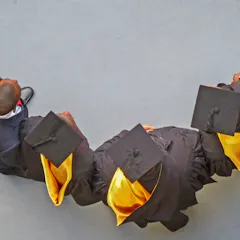
Don’t just rely on your degree certificate to get a job after university. Work on your employability too.
Top contributors
-

Professor of Management and Deputy Vice-Chancellor, University of Bradford
-
Post-doctoral research fellow in the SARCHI Chair Higher Education and Human Development research group, University of the Free State
-
Honorary Senior Fellow, The University of Melbourne
-
Principal Lecturer in Organisation Studies, University of Huddersfield
-
Senior Lecturer in Education, Canterbury Christ Church University
-
Research Scientist in Digital Economics, CSIRO
-
Head of the Centre for Education & Industry, University of Warwick
-
Professor, Environment and Development Sociology, The University of Queensland
-
Executive Director of Postgraduate Programmes, Surrey Business School, Royal Holloway, University of London
-
Director, Access and Open, The Open University
-
Indigenous policy analyst & researcher, Australian National University
-
Policy Analyst, Mitchell Institute, Victoria University
-
Economist, Data61, CSIRO
-
Doctoral Graduate Student in the Department of Immunology, University of Toronto
-
Professor, Higher Education, Institute of Teaching and Learning Innovation, The University of Queensland