
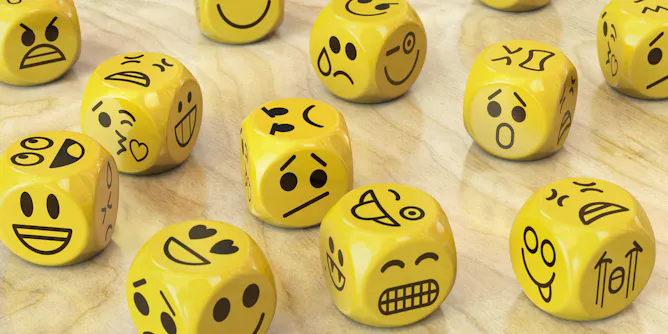
The aim isn’t to get rid of difficult feelings, but to find ways of managing them effectively.
Articles on Emotional regulation
Displaying 1 - 20 of 26 articles

When phone use starts to affect our mood or interfere with relationships, it’s a sign our habits have crossed the line from healthy to unhealthy.

It’s a sentence that can feel heartbreaking to parents. You try to set a boundary with your little one and they lash out.

For children, rocks can be spaceships. Pens can be fairies. And this kind of play can help protect mental health in childhood, according to new research.

Parenting a tween or teen can be very different from parenting a younger child. Here’s how to adapt and stay connected as they gain independence.

People who have rejection sensitivity may experience anger, shame or shut down emotionally when they’re criticised or feel like they’ve been criticised.
Whether you’re walking into a performance appraisal or anticipating a grade, recognizing that feedback is valuable is the first step towards growth.

We need to feel some stress to achieve our best, but if we feel too much, we can flounder. That’s where resilience comes in.

Many people report eating as a way of helping them to cope when experiencing difficult emotions. Here’s what you can do about it.

Less sleep and later bedtimes are linked to a section of the brain involved in emotion regulation suffering reduced growth, along with weaker connections to other brain areas.

Don’t ignore your emotions. They can be important clues as to how politicians are trying to sway you.

Children can have big emotions and sometimes struggle to process them. Here’s what it means for a child to be ‘dysregulated’.

Oral contraceptives modify the menstrual cycle. What’s less well known is that they also reach the brain, particularly the regions important for regulating emotions.

Racial threats and slights take a toll on health, but the continual invalidation and questioning of whether those so-called microaggressions exist has an even more insidious effect, research shows.

Is winning about mental toughness? How about coping with social isolation? Or will it be the one who’s in awe of a sunset?

Emotion-focused parenting programs can enhance parents’ ability to positively affect their children’s emotional development.

A study of over 1,000 children in rural Oklahoma found that social and emotional health may be just as important as diet and exercise in reducing child obesity.

International football tournaments take us on a rollercoaster of emotions. After the stresses of the past 15 months, watching matches with friends can keep us on a more even keel.

Growing core coping skills isn’t just a matter of learning not to be triggered by children’s strong feelings; it’s also about creating positive meaningful activities that promote mutual bonding.
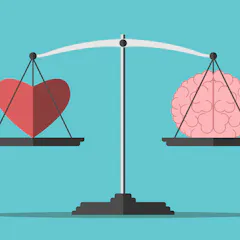
Students who can regulate tough emotions will achieve more. Anxiety will not impair their test performance. They can push through the boredom and frustration to master dull or difficult material.
Top contributors
-

Lecturer, Bangor University
-
Professor of Psychology & Mental Health, Edith Cowan University
-
Adjuct Faculty University of Guelph, Former Chair, Early Childhood Studies and Founder of The Love Model Inc.
-
Professor of Human Development and Family Science, Oklahoma State University
-
ARC DECRA Fellow, School of Psychology, The University of Queensland
-
Associate Professor, University of Sydney
-
Clinical Lecturer, University of Manchester
-
Doctorante en psychologie, Université du Québec à Montréal (UQAM)
-
Associate Professor in Clinical Psychology, Bond University
-
Senior Lecturer in Sport and Exercise Psychology, Sheffield Hallam University
-
Senior Lecturer in Social and Organisational Psychology, University of Sussex Business School, University of Sussex, University of Sussex
-
Assistant Professor of Psychology, Colorado State University
-
Professor, Department of Psychology, Université du Québec à Montréal (UQAM)
-
Adjunct Fellow, School of Psychological Sciences, Macquarie University
-
Assistant Professor in Psychology, Bond University