

A study rooted in Black women educators’ experiences invites us to envision education as a site of liberation, not just endurance.
Articles on Emotional labour
Displaying all articles

In Thunderbolts* we finally see a male superhero ask for help with his mental illness. But, as is common in Hollywood, women are cast as emotional supports for men.

Interviews with academic contract workers shed light on how they make emotional sense out of their precarious jobs and seek to convey authority.

In Canada, where fewer than 10 per cent of kids regularly eat school-provided meals, parents, especially mothers, are left to juggle school lunches, often under major pressure.

To First Nations women, ‘care’ is more broad and all-encompassing than traditional definitions. We need a new approach to capturing, and appreciating, their work, paid and unpaid.

The emotional realities experienced by women coaches are adversely impacting their ability to thrive in a culture that doesn’t recognize or support key parts of their work.

Alva Gotby’s book encourages women to refuse the labour of care – and even suggests abolishing the nuclear family.

Disturbed sleep can worsen depressive symptoms of health care workers whose jobs come with high levels of emotional labor and work-family conflict.

Nurses describe what it is like to work on the NHS frontline – and what the cost is to them.

Women have to take on more unpaid labour – and manage their emotional response to this extra work.

It’s important that employers and employees understand sympathy, empathy and compassion, and consider these emotions’ roles in both job performance and employee relations.

We often talk about ‘emotional labour’ as performed by those who take on the emotional workload within families or relationships. But the term has a specific meaning – and that’s not what it is.
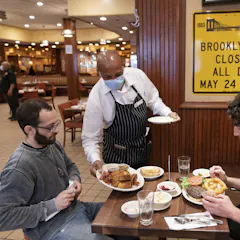
New research shines light on what is driving hospitality workers – like waiters and hotel workers – to abandon the industry as part of the ‘great resignation.’

Many women use closed Facebook groups as an outlet for their fears and frustrations and stresses with life during a pandemic. But running these groups takes a lot of work, and comes with legal risks.
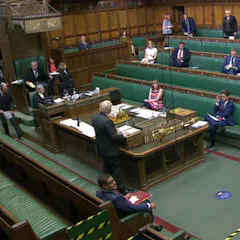
New research shows politicians experience high levels of emotional labour, which not only falls more heavily on women but also impacts their mental wellbeing.

A dream teaching job with seemingly great perks may not be worth it when turbulence creates crushing heartache for educators.
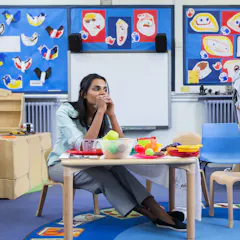
To protect employees from burnout, organizations should recognize which emotions are expected to be managed as a part of the job, and what situations generate emotional labour.
Top contributors
-

Director, Field Experience (Community-Based), Werklund School of Education, University of Calgary
-
Senior Lecturer in Political Science, University of Sheffield
-
Associate Dean and Associate Professor in Social Sciences, University of Canberra
-
Managing Director, Her Story Consulting & Postdoctoral fellow, Australian National University
-
Associate Dean, Teaching and Undergraduate Studies, Brock University
-
Associate Professor of Public Policy, Crawford School of Public Policy, Australian National University
-
Co-Founder and Managing Director of Her Story, lead on U Right Sis? project, Indigenous Knowledge
-
Associate Professor of Consumer Behavior, Auburn University
-
Professor, Academy of Geography, Sociology and International Studies, Hong Kong Baptist University
-
Visiting Professor of Social Inequities and Injustice, Loughborough University
-
Senior Lecturer and Military Families Researcher, CQUniversity Australia
-
Associate Professor of Hospitality Leadership and Marketing Management, Florida International University
-
Assistant Professor of Hospitality Management, University of South Florida
-
Reader (Associate Professor) in Sociology, City St George's, University of London
-
Senior Lecturer, Communication, Edith Cowan University