

University of Canberra Professorial Fellow Michelle Grattan and Assistant Professor Caroline Fisher discuss the week in politics
Articles on Emissions reduction
Displaying 61 - 80 of 99 articles
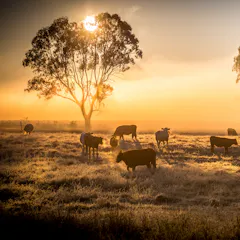
Our new analysis suggests the vast majority of carbon credits granted for regrowing native forests either has not occurred, or would have occurred anyway.
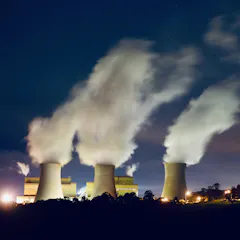
Labor has promised a 43% cut in Australia’s emissions by 2030 and a high-integrity carbon credit market is vital to reaching this goal.
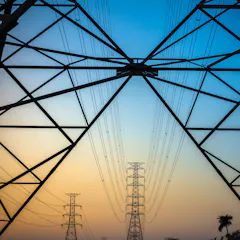
Companies are buying renewable energy certificates to meet their emissions targets, but new research suggests that the bulk of these purchases do not lead to actual emission reductions.
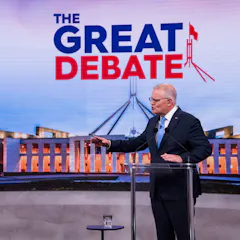
The issues before us are too difficult, too important and too pressing to abandon them to political point-scoring or ideological zealotry.
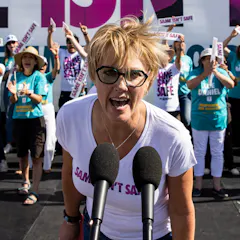
If a minority government needs backing from the ‘teal’ independents and the Greens, it better be prepared to shift the needle on climate policy.
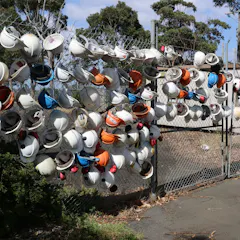
Researchers found barriers to a productive conversation in Australia about the just transition – not least, an almost complete absence of the federal government in talking about or planning for it.
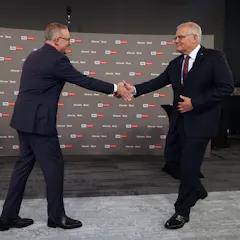
Managing the transition to a net-zero emissions economy must be a priority task for the next government. Our strategic and economic success depends on it.
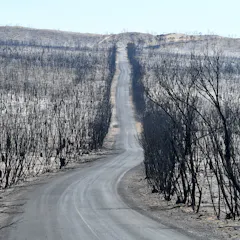
The Coalition’s climate policy is consistent with a very dangerous 3°C of global warming. But one party is comfortably consistent with keeping warming at safe levels.
It wouldn’t be a modern Australian election campaign without the words “carbon tax” being thrown around.So lets clear a few things up.

With the world on track to blow the carbon budget for 1.5°C before the end of this decade, we must use offsetting carefully. It can no longer be a substitute for deep emissions cuts.

While carbon dioxide removal from the air is not a replacement for emissions reductions, it can supplement these efforts. Experts are continually researching the best ways to do this.
The proposal is likely to mean economic and diplomatic costs for Australia, and should ring alarm bells in Canberra.
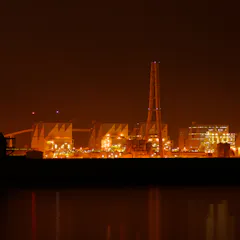
Any climate gains from Japan’s shift will be wiped out entirely unless Australia moves to zero-emissions ammonia production.
Instead of asking about optimism, it’s time to ask what we as citizens are going to do about climate change.

Commercial flights could one day be propelled by sustainable fuels, renewable energy or hydrogen propulsion – but big challenges remain.
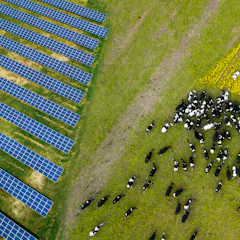
Such tension has played out over many decades between agricultural communities and coal companies. We can avoid history repeating itself if we urgently set the right policies and laws in place.
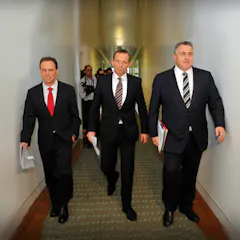
Greg Hunt is best known as Australia’s health minister. But before that he spent years thinking about mechanisms to get emissions down – and if elected, Labor plans to road test the one he introduced.
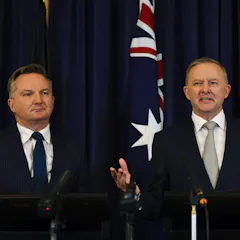
Labor has released their much anticipated “Powering Australia” climate policy, committing to reduce emissions by 43%.
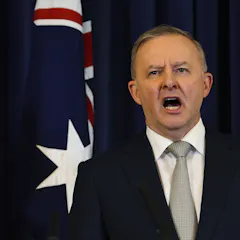
Labor’s 2030 emission reduction target of 43% is more ambitious than the Coalition, but still falls well below what the science says is needed.
Top contributors
-

Research Associate, Institute for Climate Risk and Response, UNSW
-
Professor, Crawford School of Public Policy and Director, Centre for Climate and Energy Policy, Australian National University
-
Professorial Fellow, University of Canberra
-
Professor and Director of Research, ANU Law School, Australian National University
-
ARC Future Fellow and Associate Professor in Climate Science, ARC Centre of Excellence for 21st Century Weather, The University of Melbourne
-
Adjunct Associate Professor, Public and Environmental Policy, University of Tasmania
-
Professor, Australian National University
-
Professor of Transport Technology and Sustainability, Swinburne University of Technology
-
Climateworks Centre CEO, Monash University
-
Climateworks Centre Country Lead, Australia, Monash University
-
Professor, School of Economics, The University of Queensland
-
Adjunct Professor of Transport, University of Technology Sydney
-
Adjunct Professor of Energy, Murdoch University
-
Senior lecturer, Australian National University
-
Honorary Fellow, Australian Museum