

Large datasets can be useful research tools, but current government efforts to gather medical records depend on policy and technology that falls short of protecting people’s privacy.
Articles on Electronic health records
Displaying 1 - 20 of 28 articles
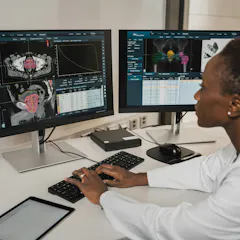
Canada needs to establish clear accountability for health data oversight and co-ordination of electronic health records.

AI tools could help clinicians create our health records. But there’s lots than can go wrong.

Canada has spent billions on health-care software that does not even communicate province to province. Free and open-source software would be a technically superior and far less expensive option.

The shortage of family doctors affects not only patients, but the entire health-care system. A strong primary care foundation increases average lifespan, improves overall health and reduces costs.

There are many uses for digital systems that are not centrally controlled and that allow large numbers of people to participate securely, even if they don’t all know and trust each other.

In health care crises, researchers can avoid waiting for clinical trial results by using data from health care systems to analyze the effectiveness of treatments for COVID-19 and other illnesses.

With outdated delivery systems at many hospitals and clinics, mistakes can lead to costly duplication of services and poor patient outcomes. But there are ways to fix the current system.
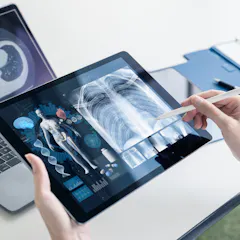
Digital health can improve care, but in Ontario, health data are still fragmented, despite billions of dollars spent over the last two decades to enable fast and secure exchange of health information.

The digitization of health care in Canada has been a bumpy ride — due to lack of focus on governance, and lack of emphasis on interoperability, transparency and accountability.
Know the difference between an EMR, EHR and PHR? Our digital data expert sets the record straight.
Past upgrades to the state’s medical record system have cost tremendous amounts of money, and on at least one occasion, forced clinicians to revert to paper-based methods.
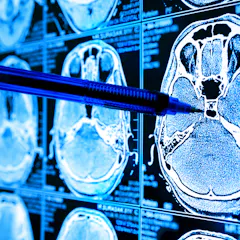
Artificial intelligence holds great promise for medicine, but safeguards are needed to ensure it does not harm patients.

Doctor depression, burnout and suicide have been rising for some time, and overwork was considered the norm. A health care lawyer explains why the legal and regulatory systems must intervene.

The Conversation published a story earlier today that was incorrect. The story, titled “We have less than three months to opt out before the My Health Record system has our details, and no-one told us…
Will nurses eventually be replaced by robots? Nurses themselves need to engage with the ongoing technological revolution in healthcare - to shape the future of the profession.

Letting patients have access to their electronic health records may be a benefit for some. For others, it could create a living hell.

Most people know they can donate their organs after they pass away. But what about their medical data? For National Donor Day, we suggest countries create national databases of data donors.

Although there are significant challenges to making data within My Health Record useful in the management of a person’s health, the move to make it more open is positive.

Technology might make online access to medical records possible, but that doesn’t mean we should.
Top contributors
-

Director of UWA Centre for Software Practice, The University of Western Australia
-
Professor of Cybersecurity, Head of School of Computer Science and Informatics, De Montfort University
-
Professor of Health Law and Bioethics, Case Western Reserve University
-
Professor, Ted Rogers School of Information Technology Management, Toronto Metropolitan University
-
Physician, Research Associate, University of Cologne
-
Director, CSIRO Futures, CSIRO
-
Bioethicist, Department of Health Ethics and Society, Maastricht University and Institute for Biomedical Ethics, University of Basel
-
Lecturer, Cardiff University
-
Professor of Electrical and Computer Engineering, Binghamton University, State University of New York
-
John M. Thompson Chair in Information Technology and Innovation and Professor, Western University
-
Vice President of Clinical Analytics, University of Pittsburgh
-
Associate Professor of Medicine, Epidemiology and Clinical and Translational Science, University of Pittsburgh
-
Clinical Assistant Professor of Medicine, University of Pittsburgh
-
Assistant Professor, Institute of Health Policy, Management and Evaluation, University of Toronto
-
Lecturer in Software Engineering, Monash University