
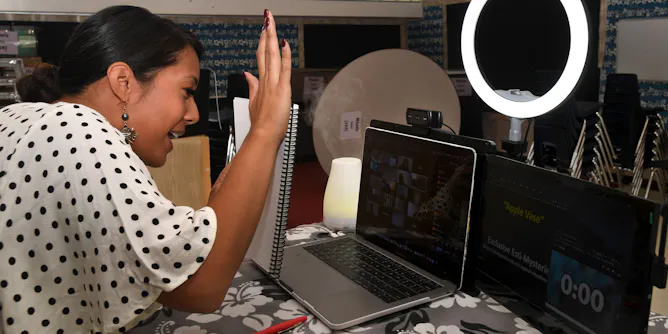
Just because learning is remote in many places doesn’t mean teachers can’t build more meaningful relationships with their students, a researcher who has examined the issue suggests.
Articles on Educators
Displaying 21 - 40 of 42 articles
With caregivers’ faces covered, infants and young children will miss out on all the visual cues they’d normally get during stages of rapid developmental growth.
South Africa’s national lockdown will amplify the needs of children with special education needs and disability.

From being subjected to harassment and threats to getting assaulted or having their cars keyed, many American teachers are being victimized.
A clearer understanding of teachers’ needs is required if schools and universities are to be better prepared for a future where technology is key to teaching and learning.

Transforming knowledge and letting oneself be transformed by the knowledge of others requires slowness, almost an asceticism.
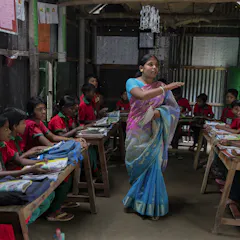
Research from around the world shows that boosting teacher pay can lead to better student learning, but only if it’s accompanied by other things.
Election campaigns inspire hope, but they can also quickly lead to political despair. A scholar says young citizens can learn how to take positive action and stay hopeful.
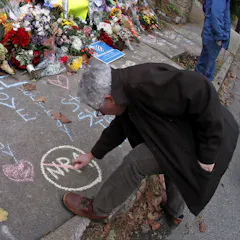
To grasp how extraordinary evils are often committed by ordinary people, we need to consider how we define evil, and most importantly, whom we consider to be the agents of evil.
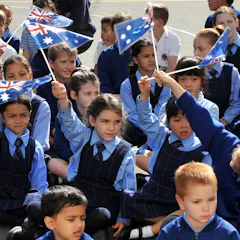
Lifting the standards of rural and remote students to the those of urban students could boost the economy by 3.3%
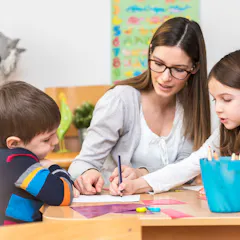
Valuing the skills and contributions of our educators and reversing the high rates of turnover is critical and can only be achieved through fair pay and rewards.
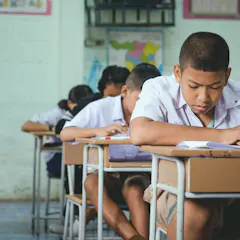
There is no need for all students to sit the same test, that asks the same questions, on the same day. We are smarter than that.
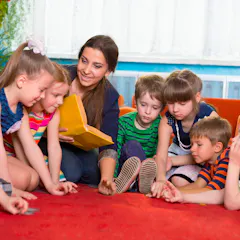
Research shows early childhood educators are among the lowest-paid Australians, with some finding better pay in other fields such as night-time retail work.

Critical thinking is of paramount importance, especially as it applies to research on the internet – and to our energy future. Educators have a duty to ensure students avoid fake news on energy.

Roughly 700,000 students ages 13 to 17 have experienced homelessness in the last year. An education researcher says the obstacles that these students face can threaten their college dreams.
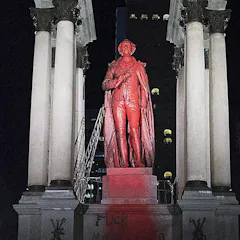
In a time of populism and political polarization, children and young adults need to learn to think critically, with complexity and nuance. History, as a subject, is more important than ever.
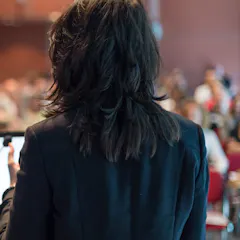
Striking a better gender balance would be easy, but until now universities have not been paying much attention to the problem.
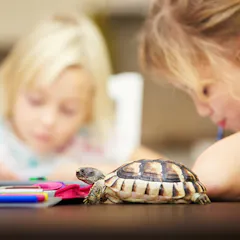
Pressure on schools to make rapid improvements discourages deeper thinking about long-term solutions. Education can learn a lot from “slow” movements.
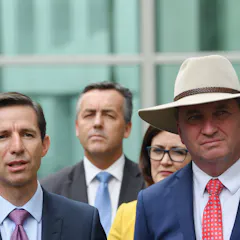
Staffing rural schools has been an issue in Australia for at least 113 years. We need a fresh approach to tackle this persistent problem.
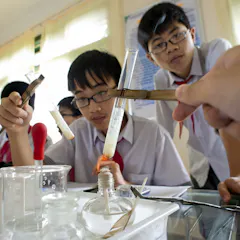
How can we improve the PISA standardised tests?
Top contributors
-

Associate Professor in Education, University of Newcastle
-
Professor (Curriculum Inquiry / Rural Education), University of Canberra
-
Assistant Professor of Educational Leadership, University of Delaware
-
Associate Professor of Education, Queensland University of Technology
-
Professor, Queensland Brain Institute, The University of Queensland
-
Professor of Work and Organisation, Queensland University of Technology
-
Professor and Head of School, School of Early Childhood and Inclusive Education, Queensland University of Technology
-
Associate Professor of Educational Leadership & Policy Studies, University of Oklahoma
-
Scientia Professor of Economics, UNSW
-
Professor of Education and Public Policy, Graduate School of Education, University of California, Riverside
-
Professor in Inclusive Education, Queensland University of Technology
-
Adjunct professor, University of Winnipeg
-
Associate Professor of Education and Counseling, Villanova University
-
Assistant Professor, University of Alberta
-
Professor Emeritus, Faculty of Education, University of New Brunswick