

Canada’s international student cap threatens inclusion in higher education, but social financing — a way for private capital to address social issues — can address this issue.
Articles on Education inequality
Displaying all articles

The UK is offering an elite visa for well-off graduates from elite institutions to stay temporarily in the UK.

Grouping of high schools in Ghana into categories perpetuates inequalities.
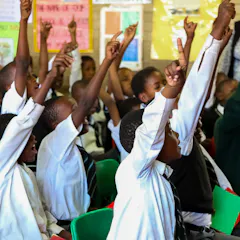
The no-fee school policy in South Africa, while well-intentioned, demands a serious review.
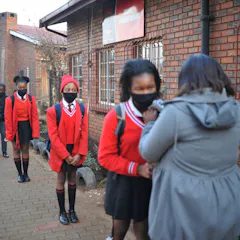
Researchers estimate that COVID-19 disruptions in 2020 set back the education system by five years.
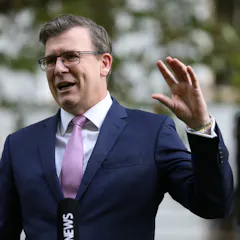
Australian governments have committed a lot of money and effort over the last few decades to improve schooling using “what works”. But this hasn’t worked. So what can we do to improve education?

For a learner to be the best and to win awards, their peers must lose. This expense is far too great to ignore in a country fraught with inequalities.
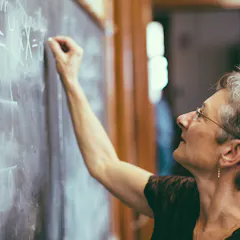
A looming teacher retirement wave means South African universities need to double their annual teacher graduate numbers between now and 2030.
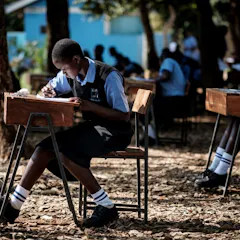
Far too often it is still an education for some and not for everybody.

Our report examines Australia’s educational performance against equity and excellence benchmarks. It finds the inequality gap is large and growing.

After years of neoliberal policies eroding the tax base to pay for high schools, mandatory online learning curriculum from classrooms could be the next international money-maker.

Growth mindset interventions work as well as many educational programs, at a fraction of the cost. And they are just in their infancy, says the Stanford researcher who developed mindset theory.
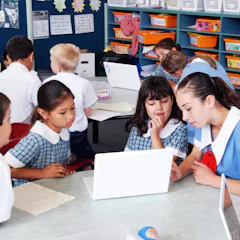
Needs-based funding is necessary, but it can only do so much. It’s much more effective if we don’t have schools with high concentrations of poverty and disadvantage.
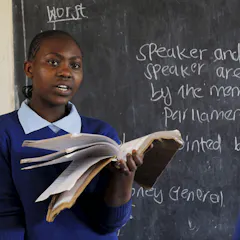
Authors Lutz and Klingholz explore how mass literacy became a revolution that changed the world.
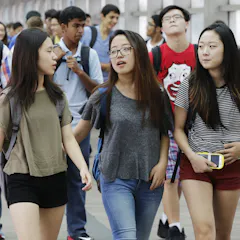
Elite exam schools are some of the least diverse public schools in the US. Here’s how colleges like Harvard could teach high schools like Stuyvesant to improve their admissions process.
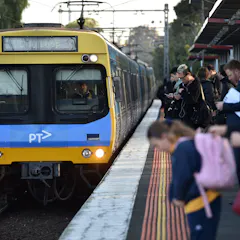
Where you live affects your health and life expectancy. This makes it possible to map health outcomes against train stations, so that you can readily see the inequalities across cities like Melbourne.
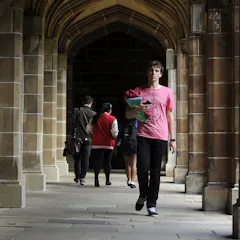
Rather than redressing inequality, universities are exacerbating it. They need to take radical steps to turn this around and offer better education across the socio-economic spectrum.
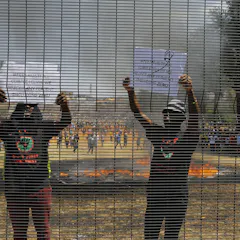
The student protests that rocked South Africa’s universities in 2015 are part of a class struggle as poor and marginalised people fight for their place in an unequal system.

Students in the same grade in the same school receive a very different education based on the socioeconomic status of their parents.
Top contributors
-

Education economist, Stellenbosch University
-
Senior Research Associate, Michigan State University
-
Director and Professor of Education, University of Washington
-
Academic Specialist (GIS Analyst), Community Indicators Victoria, McCaughey VicHealth Community Wellbeing Unit, The University of Melbourne
-
Professor, Director Australian Urban Observatory, Centre for Urban Research, RMIT University
-
Head of Research, faculty of Education, Cape Peninsula University of Technology
-
Honorary Professorial Fellow, Melbourne CSHE, The University of Melbourne
-
Assistant Professor of Psychology, Case Western Reserve University
-
Senior Research Fellow, Healthy Liveable Cities Group, Centre for Urban Research, RMIT University
-
Faculty Director for Professional Education, BU School of Education, Boston University
-
Professor of Psychology, Stanford University
-
Professor of Education Futures, The University of Melbourne
-
Postdoctoral Research Fellow , University of South Africa
-
Director, Peter Noonan Policy Impact Program, Mitchell Institute, Victoria University
-
Deputy Lead of Education Policy, Mitchell Institute, Victoria University