

When public schools are unable to offer advanced subjects, students who had planned to go to uni give up hope.
Articles on Social disadvantage
Displaying 1 - 20 of 41 articles
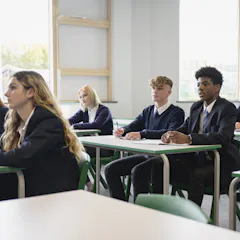
The largest proportion of students attending private schools in New South Wales is still in major cities. But inner regional areas are catching up.
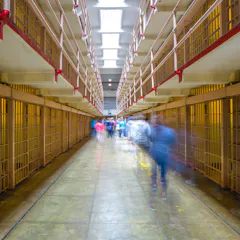
So much of day to day life is not powered by technology, but what happens if you’ve been behind bars for years? It’s time prisoners better prepared inmates for life once they’ve served their time.

Jessica Kirkman introduces readers to her Deaf grandparents’ experience – and to Deaf culture – in her memoir. And Sam Drummond recalls growing up with pseudoachondroplasia (a form of dwarfism) in his.
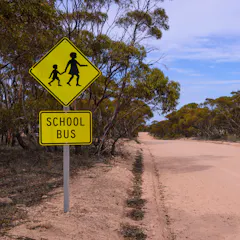
The Australian approach to lifting standards of schooling has a crucial blind spot: the role of the people and communities outside school in supporting students.

Lower participation and poorer performance in cross-country running by students at low-SES schools is troubling, because physical activity and fitness are closely tied to health and well-being.

Our analysis revealed the relative attention our news and opinion pieces gave to First Nations peoples began to grow steadily from around 2005, with a huge peak in 2007.
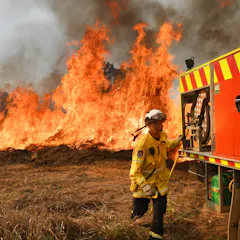
In this era of mega-fires, diverse strategies are urgently needed so we can safely live with fire.
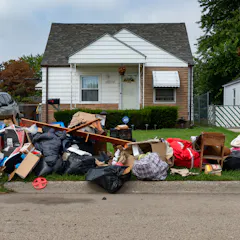
Social disadvantage can cause stress that leads to changes in ‘connectivity’ between brain regions, potentially harming adolescents’ ability to plan, set goals, and self-reflect.
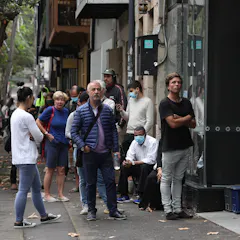
Western Sydney’s growth-driven boom had ended before COVID-19 hit. Some neighbourhood unemployment rates were 2-3 times the metropolitan average, with female workforce participation as low as 43%.

Young people from working class backgrounds in socially deprived areas are far less likely to choose, or have the opportunity, to study languages at secondary school, than their more affluent peers.
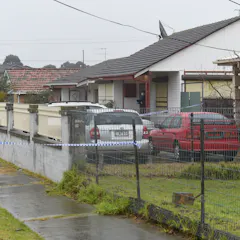
Children growing up in the most disadvantaged suburbs also lack the social opportunities to develop skills and aspirations that would improve their prospects in life.

Community gardening improves people’s health, and our new study has found it does wonders for disadvantaged groups living in social housing.

Australian cities generally minimise negative attributes such as crime, segregation and violence, but developing positive attributes such as inclusivity appears more challenging.

Women have further abortions are not treating it “like contraception” but have good reasons that are often beyond their control

The neediest suburbs get a much poorer deal in Sydney than in Melbourne. A new study provides a suburb-by-suburb breakdown of state investment, including what facilities and services have been funded.
Shape-shifting bodies. Cracking voices. Hairs sprouting in new places. Why do some children enter puberty early?

With the winding back of government support for housing, ‘gateway’ suburbs that have in the past accepted and supported recent immigrants are becoming increasingly unaffordable.

Reintroducing selective education will not solve deep economic and social inequalities.
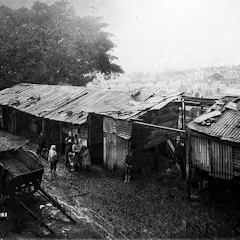
New research finds almost a million Australians are living in poor or very poor-quality housing, with more than 100,000 in dwellings regarded as very poor or derelict.
Top contributors
-

Professor of Economics and Public Policy, ANU College of Arts and Social Sciences, Australian National University
-
Senior Lecturer Teaching and Research, University of Dundee
-
Executive Dean, UniSA Business, Adelaide University
-
Professor, College of Business, Government & Law, Flinders University
-
Professor of Cognitive Psychology, School of Education, La Trobe University
-
Francine V. McNiff Professor of Criminology, The University of Melbourne
-
Professor of Criminology, Griffith University
-
Associate Professor, Adult and Postgraduate Education, Western Sydney University
-
Co-Director, Global Centre for Preventive Health and Nutrition, Deakin University
-
Honorary Fellow in Criminology, The University of Melbourne
-
Professor of Housing & Social Policy, HHAUS Housing, Homelessness & Urban Studies, Swinburne University of Technology
-
Professor of Housing Research, Adelaide University
-
Professor, City Futures Research Centre, UNSW
-
Senior Lecturer, Melbourne Graduate School of Education, The University of Melbourne
-
Lecturer, UNSW