
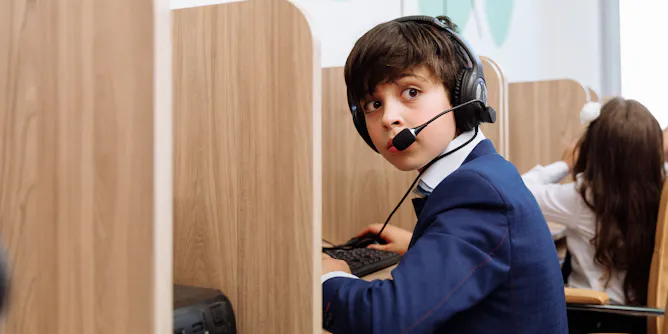
There is no comprehensive national data on how much time an Australian child spends on a device at school. The rules are just as patchy.
Articles on EdTech
Displaying all articles

The industry is rife with AI non-events that were wildly promoted and highly anticipated, but failed to deliver.

In Africa, four countries cover the lion’s share of IA-related investments. But a few other countries on the continent are displaying undeniable potential in the field.
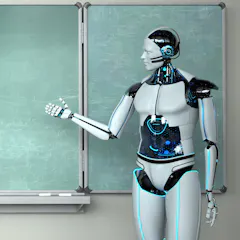
AI’s potential needs to be explored through experimentation. But this works best if managed under controlled environments.

Big EdTech is increasingly filling a gap left by university underfunding. But tertiary stakeholders must question whether such “solutions” really contribute to a university education.

Educators and parents should ignore information unrelated to educational quality, like star ratings — and instead look for benchmarks of quality when choosing an EduApp.

Measuring student engagement through online platforms may sound like a good idea. But we need a much clearer understanding of what we are actually measuring here.

Private tech companies screening international students on behalf of public schools should be required to disclose more about their algorithms and training data.
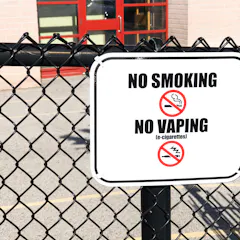
In an underfunded education system, in a context of deteriorating public supports, we are turning toward intrusive technologies to contain and control the social pain of young people.

Technology is being used in schools without extensive research to show whether it has a positive impact.
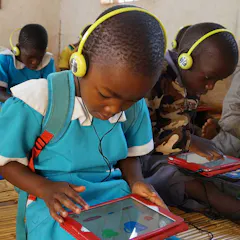
Child-directed educational technology can deliver high quality education for millions of marginalised children worldwide.

There are clear potential time saving benefits. But how these tools might affect the teaching profession more broadly needs to be considered.

Humanity is the only species on earth for whom intelligence is also an ethical liability.

Policymakers, tech companies and schools should all be part of conversations about how our society is responsible for the new realities of tech in the home after COVID-19 lockdowns.
With a rapidly expanding ‘edtech’ market, it’s easy for teachers and parents to be confused about what’s on offer, how to use it and whether it will help students learn.
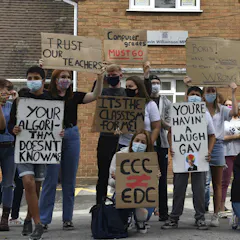
A UK controversy about school leavers’ marks shows algorithms can get things wrong. To ensure algorithms are as fair as possible, how they work and the trade-offs involved must be made clear.

Hearing technologies combined with artificial intelligence can be used to enrich the learning environment.

Interviews with students, tutors, tech workers and university administrators reveal the problems with online exam monitoring systems — but also show they’re unlikely to go away.

The coronavirus pandemic has entrenched educational technologies in schools. Parents and guardians have been forced to relinquish their children’s privacy, without assurance of protection.

At the national and school levels, education technology (also known as EdTech) is closing the learning gap.
Top contributors
-

Lecturer - Education and Digital Technologies, University of Bristol
-
Researcher, University of Sydney
-
PhD Student, Sociology, York University, Canada
-
Professor of Media, School of Media, Film, and Journalism, Monash University
-
Research Fellow at the ARC Centre of Excellence for the Digital Child, Deakin University
-
Professor of Developmental Psychology, University of Nottingham
-
Research fellow, Deakin University
-
Research Fellow, Humanising Machine Intelligence Grand Challenge, Australian National University
-
Associate Professor in Sociology, Australian National University
-
Professor and UNESCO/ICDE Chair in Open Educational Resources, Athabasca University
-
Distinguished Research Professor, Monash University
-
Senior Lecturer in Communications and Media, Monash University
-
Senior Research Scientist, African Population and Health Research Center
-
Professor of Reading and Children’s Development, The Open University
-
Senior Lecturer in the Centre for Teaching, Learning and Curriculum, University of Bristol