

Any work to ease current shortages and price hikes while the Strait of Hormuz remains closed will take years and billions of dollars.
Articles on Economic forecasts
Displaying 1 - 20 of 24 articles
Partisan bias doesn’t stop with voters. When Republicans hold the White House, Republican economists consistently overshoot on growth forecasts.

New Zealanders have often been frustrated with crucial economic decisions being made using months’-old data. A new tool is starting to bridge that gap.
‘Forecasting is for the weather,’ economists say. But it can be fun anyway.

Interest rates and inflation are lower than expected this time last year. The next set of predictions is likely to be brighter still.

The good news includes a return to real wage growth and a restrained increase in unemployment. The bad news includes even higher home prices and a per-capita recession.
The Conversation’s 29-member panel expects very weak economic growth and recessions in much of the rest of the world, but there’s good news down the track for Australians’ buying power.
The panel believes Australia will avoid a recession the year ahead, but is much less certain about the United States. It expects real wages to go backwards and economic growth to sink.
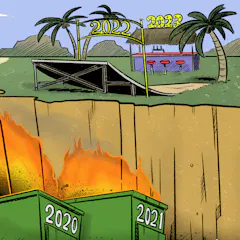
Jobs, economic growth, wages growth and even home price growth are likely to look less threatening by the time we are asked to vote.
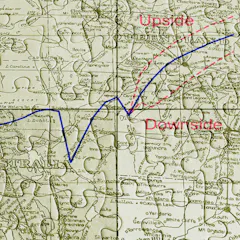
In its quarterly statement on the economy the Bank is at pains to suggest it won’t be lifting interest rates quickly.

The bank’s decision to focus on just one thing puts the onus on the government to take action to rein in home prices.
From wage growth to renewable energy to religion, projections are being treated as predictions. We’d be better off insisting on genuine forecasts.
The Reserve Bank’s best case scenario is that its forecasts are wrong.
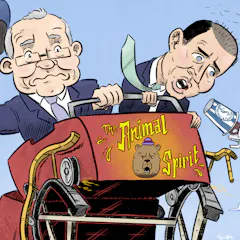
The Conversation’s distinguished panel predicts unusually weak growth, dismal spending, no improvement in either unemployment or wage growth, and an increased chance of recession.
Expect two more interest rate cuts, but they mightn’t be enough.
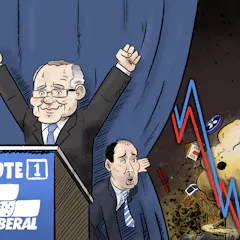
The Conversation has assembled a forecasting team of 19 academic economists from 12 universities across six states. Together, they assign a 25% probability to a recession within two years.
Independent research estimates that Theresa May’s deal could reduce UK GDP per capita by between 1.9% and 5.5% over ten years.
The 2017 budget update will show an improvement in the outlook for debt compared with projections in May.
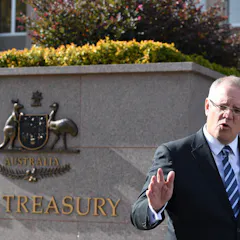
Polled economists say another independent body wouldn’t necessairly do a better job of economic forecasting for the budget than Treasury.

Wonky forecasts show it’s time for a new approach that adopts more conservative forecasts, and makes a genuine commitment to budget repair.
Top contributors
-

Visiting Fellow, Crawford School of Public Policy, Australian National University
-
Professor of International Trade and Economic Development, University of St.Gallen
-
Visiting Professor, Anglia Ruskin University and Professor of Practice in International Political Economy, City St George's, University of London
-
Professorial Fellow, University of Canberra
-
Emeritus Professor of Economics (Griffith University) and Teaching Associate (University of Queensland), Griffith University
-
Professor of European Politics and Foreign Affairs, King's College London
-
Professiorial Fellow, The University of Melbourne
-
Chief executive officer, Grattan Institute
-
Researcher, UK in a Changing Europe, King's College London
-
Lecturer in Economics, University of the Witwatersrand
-
Lecturer in Economics, University of the Witwatersrand
-
Senior lecturer, Canberra School of Government, University of Canberra
-
Scientia Professor of Economics, UNSW
-
Professor, School of Economics, The University of Queensland
-
Industry Professor, University of Technology Sydney