
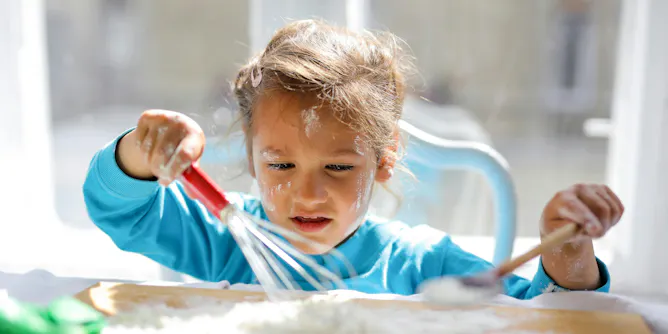
Parents do not need to be experts to help build their child’s science skills at home.
Articles on Early education
Displaying 1 - 20 of 41 articles
While Alberta says Bill 6 will strengthen early literacy, the plan doesn’t measure the broader skills essential for reading success by Grade 4.
An Australian study suggests early education is not making as much of a difference as it should when it comes to young children’s development and learning.
Supervision gaps can lead to child sexual abuse. Much more needs to be done to fix this long-neglected issue.

Parents have been left reeling by news a male Melbourne childcare worker has been charged with alleged sexual abuse of young children in his care.
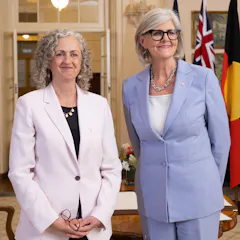
Education Minister Jason Clare has announced new rules to improve childcare safety. Next week, state and federal ministers will consider what else they can do.
More reports of horrific abuse at childcare centres have emerged. Mechanisms supposed to stop situations going from unacceptable to unfathomable have failed.

Understanding how the brain functions is important for teachers. We surveyed more than 500 early childhood educators about their neuroscience knowledge.

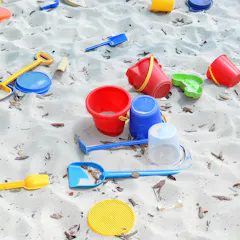
New research shows how the beach provides many ways to teach young children about biology, chemistry and physics.
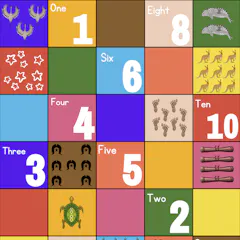
The latest Closing the Gap data contains some good news – there is a marked increase in early childhood enrolments for Aboriginal and Torres Strait Islander children.
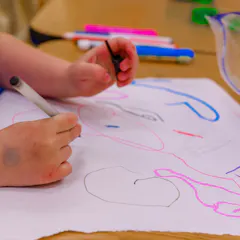
Scholars who study disparities in early care and education answer five questions about Michigan’s Great Start Readiness Program.

In a bush kinder young children are regularly taken into the natural environment.
About 100 early childhood experts are meeting in Canberra today for a national summit on children who are five and under.
In a process called ‘reverse socialisation’, children can help their elders become more green - but eco education is key.
Developmental language disorder affects more than seven per cent of children, yet is not well known. If your child struggles in school, social interactions or reading, the underlying issue may be DLD.

Research shows napping helps young children learn, as well as enhancing their emotional well-being.
Early STEM skills are as important as early literacy skills. Parents can help their preschoolers develop STEM skills by working these simple techniques into everyday activities.
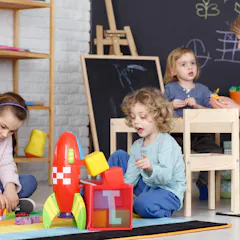
Despite good progress in recent years, there is still more to do, including improving access to early childhood education for three-year-olds.

For decades, parents have fretted over ‘screen time,’ limiting the hours their children spend looking at a screen. But as times change, so does media… and how parents should (or shouldn’t) regulate it.
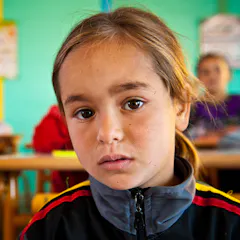
For young children, how we speak is often more important than what we say. Even ‘positive’ generalizations can lead children to adopt negative stereotypes.
Top contributors
-

Policy Fellow, Mitchell Institute, Victoria University
-
Research fellow, Research for Educational Impact Institute, Deakin University
-
Senior lecturer, Music education, North-West University
-
PhD in Education, School of Communication and Education, Jönköping University
-
Burke and Elizabeth High Baker Professor of Child Developmental Psychology, Washington University in St. Louis
-
Clinical Professor of Law and Director of the Education and Health Law Clinic, Rutgers University - Newark
-
Honorary Senior Fellow, The University of Melbourne
-
Professor, Deakin University
-
Assistant Professor of Cybersecurity Education, University of South Florida
-
Associate Research Scientist, African Population and Health Research Center
-
Assistant Professor of Pediatrics, The University of Texas Medical Branch
-
Assistant Professor of Early Childhood Education, University of Hawaii
-
Professor of Clinical Psychology, Deakin University
-
Professor of Developmental Psychology, City St George's, University of London
-
Professor of Psychology, University of Washington