

In Darlington, residents have raised worries about noise, privacy and theft over the new drone delivery service.
Articles on Drones
Displaying 21 - 40 of 370 articles
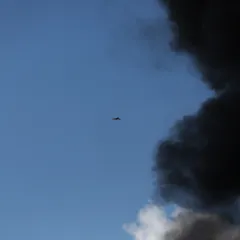
Bureaucratic hurdles mean the US military typically has to wait a decade between the time it sees a new threat and the employment of a new system to defend against it.
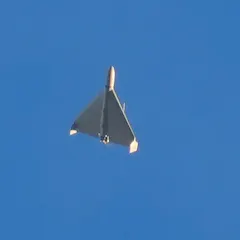
One-way attack drones have changed the face of the Russia-Ukraine war and give Iran a boost in countering US and Israeli forces.
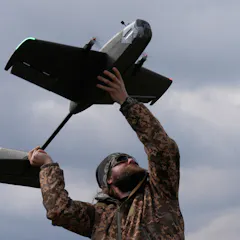
In modern conflict, the ability to build weapons systems quickly and cheaply is proving to be as important as technological sophistication.

The government will invest between $12–15 billion in uncrewed and autonomous systems over the next decade to 2035–36.
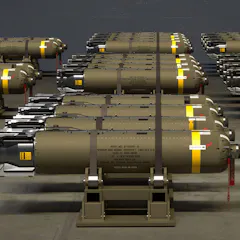
Explosions don’t just destroy buildings. Here’s what missiles and drones actually do to the human body, and why the worst damage is often invisible.

Inspired by bats, a new ultra-low-power sensing system enables tiny drones to navigate through darkness, smoke and dust, where cameras and other light-based sensors fail.

Drones with the right sensors and AI analyzing the data could quickly find a person lost or stranded in the wilderness, crucial to keeping them alive.
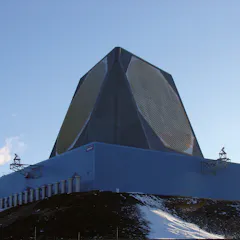
Tracking Iranian missiles and drones requires a network of satellites and numerous radars on land, sea and air.
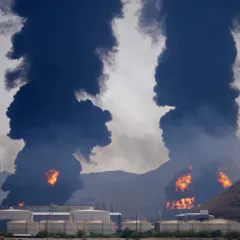
The Trump administration’s miscalculation of Iran is the latest entry in an old and lethal tradition in international politics: the catastrophic gap between what leaders believe and what war delivers.
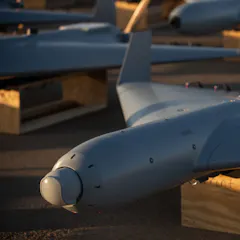
Arun Dawson talks to The Conversation Weekly podcast about the history of Iran’s Shahed drones and how the US cloned them.
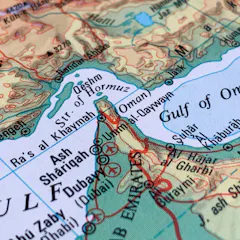
The UK military is considering sending interceptor drones and mine hunters to the Middle East.
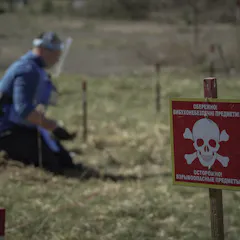
Using drones makes detecting land mines safer. Using AI to fuse data from multiple types of sensors on the drones makes it more efficient.
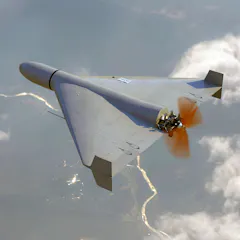
Struck by the success of large-scale, low-cost drone attacks, the US made covert efforts to capture Iranian Shahed-136s for technical analysis.
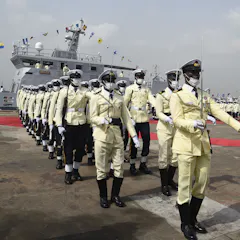
Across Africa, governments are finding ways to reduce dependence on foreign arms suppliers and building capabilities they can control, maintain and adapt.
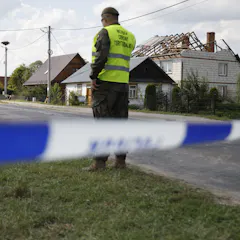
With each year of the Ukraine-Russia war, Moscow has upped its violations of neighboring states’ airspace – testing NATO’s resolve.
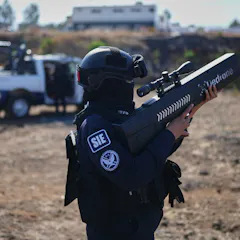
Companies are selling a range of anti-drone devices, from guns that fire nets to powerful laser weapons, but no one system is sufficient for defending airports, power plants and other critical sites.

In Colombia’s coca-cultivating Catatumbo region on the border with Venezuela, community care and survival efforts amid escalating violence are in a state of emergency.
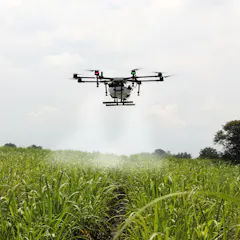
Pressure on farming is intensifying. AI promises some relief through productivity gains – but could create other problems.

Ukraine has warned that Russia could soon be pumping out 1,000 drones a day. Iranian technology has driven that growth.
Top contributors
-

Professor of International Security, University of Birmingham
-
Professor of Applied Ethics and Director, Security and Risk Research, University of Portsmouth
-
Associate Professor in Human Geography, University of Reading
-
Senior Lecturer in Design (People, Places, Products), Lancaster University
-
Professor of International Politics in the Department of Political Science and International Studies, University of Birmingham
-
Professor in Robotics, Queensland University of Technology
-
PhD Candidate, Department of War Studies, King's College London
-
Professor, National University of Singapore
-
Visiting Fellow, Strategic Studies, Griffith University
-
Associate Professor (Adj), Griffith Asia Institute; and Fellow, Strategic and Defence Studies Centre, Australian National University
-
Associate Professor of Media, UNSW
-
Professor of Computer Science and Engineering, Texas A&M University
-
Chair in Science Communication & Future Media, University of Salford
-
Ecologist, Adelaide University
-
PhD Candidate in the School of International Relations, University of St Andrews